Femmes d'Alger dans leur intérieur — History & Facts
When Femmes d'Alger dans leur intérieur was first exhibited at the Salon of 1834, it caused a sensation for its intimate, almost voyeuristic glimpse into a world few Europeans had ever seen. Eugène Delacroix painted it after his brief but transformative journey to North Africa in 1832, when he was granted rare access to a harem in Algiers—a privilege almost never extended to outsiders, let alone foreign artists. The painting became a touchstone for Orientalist art, sparking fascination and controversy for its depiction of exoticism and private female space.
It was so influential that decades later, Pablo Picasso would create a whole series in response to it. In the painting, three women lounge amid sumptuous carpets and embroidered textiles, their gestures languid, their gazes meeting the viewer with a mixture of indifference and curiosity. The fourth figure, a black servant, moves quietly in the background, reinforcing the sense of enclosure and hierarchy. The scene is neither overtly narrative nor staged; instead, it captures a fleeting, everyday moment, charged with a sense of both luxury and confinement.
The intricate patterns of the fabrics and the play of light across skin and silk draw the eye in, echoing the sensory overload Delacroix described in his journals. Unlike Jean-Auguste-Dominique Ingres’s coolly idealized Grande Odalisque, Delacroix’s women are painted with a frank realism that hints at both their individuality and their distance from the artist’s world. After its debut, Femmes d'Alger dans leur intérieur entered the collection of the French state and has since remained a highlight of the Louvre’s holdings. Its journey from Delacroix’s Paris studio to the museum walls mirrors the artist’s own evolution from Romantic rebel to a central figure in French art.
The painting’s influence spread far beyond its own era, inspiring not only the Orientalist movement but also later modernists who grappled with its legacy. Today, it stands as both a document of 19th-century fascination with the “Orient” and a testament to Delacroix’s relentless pursuit of color, light, and human complexity.
More Artworks by Eugène Delacroix

Liberty Leading the People
Eugène Delacroix

A Young Tiger Playing with Its Mother
Eugène Delacroix

The Massacre at Chios
Eugène Delacroix

Women of Algiers
Eugène Delacroix

Women of Algiers in Their Apartment
Eugène Delacroix

Death of Sardanapalus
Eugène Delacroix

The Barque of Dante
Eugène Delacroix

Jacob Wrestling with the Angel
Eugène Delacroix

la liberté guidant le peuple
Eugène Delacroix
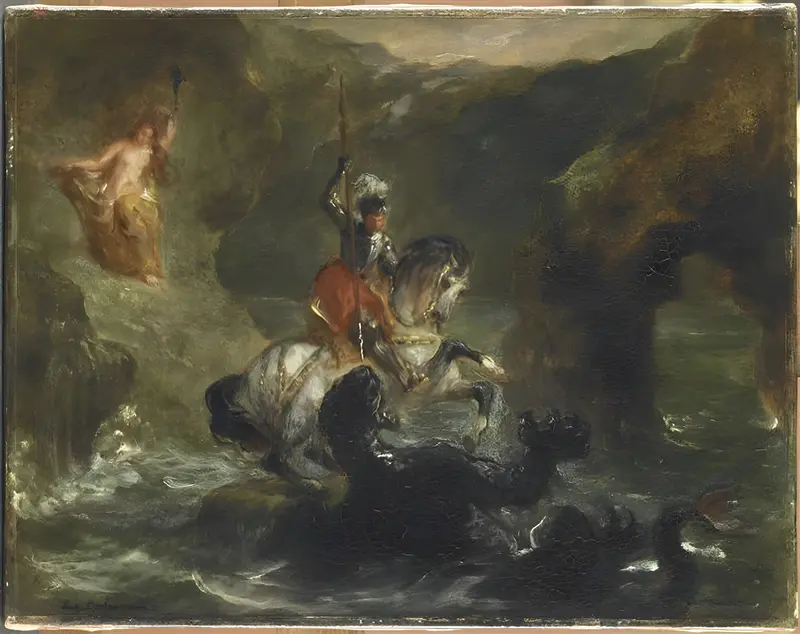
Saint George fighting the dragon
Eugène Delacroix