
Interior de Iglesia — History & Facts
The echoes of time linger in the air, inviting silent reflections and whispered prayers that transcend the confines of this sacred space. Look closely at the intricate details of the altar, where golden accents catch the soft, diffused light filtering through the stained glass. Notice how the warm hues of ochre and earth tones harmonize with the somber shadows, creating a sense of depth that draws the eye upward toward the ornate ceiling. Each brushstroke reveals not just the architecture, but also the spiritual weight of the moment captured, as if the walls themselves hold memories of those who have sought solace within. The interplay between light and shadow introduces a profound stillness, evoking both reverence and introspection.
The juxtaposition of the empty pews against the elaborate decorations speaks to the passage of time, suggesting that while the physical space remains, the congregants’ presence is fleeting. Symbols of faith and devotion stand timeless, yet their significance shifts, reflecting the myriad of stories and emotions contained within this ecclesiastical setting. Genaro Pérez Villaamil created this work during a period of artistic innovation in Spain, potentially around the mid-19th century. His focus on capturing architectural forms resonated with the Romantic movement's emphasis on emotion and nature, amidst a rapidly changing society.
This painting reflects his keen ability to meld realism with an evocative sense of spirituality, a testament to his role in the evolving landscape of Spanish art during that era.
More Artworks by Genaro Pérez Villaamil
Browse all →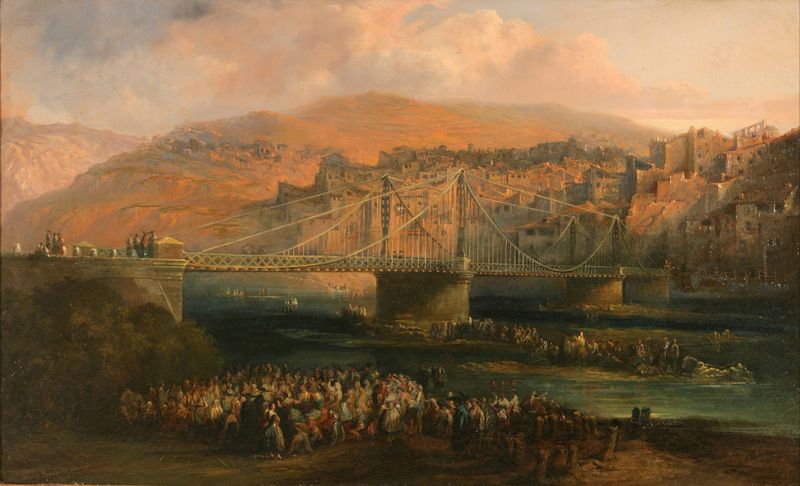
View of City of Fraga and its Hanging Bridge
Genaro Pérez Villaamil
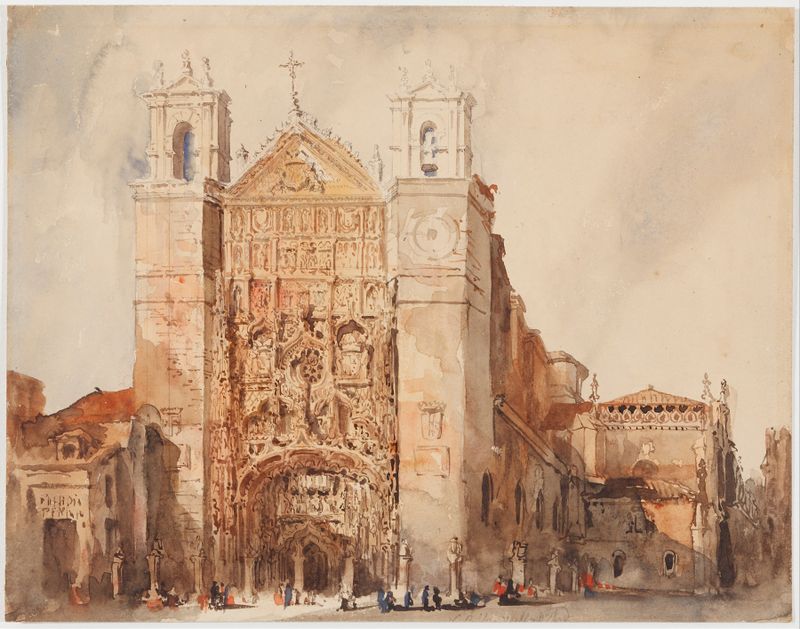
Church of Saint Paul, Valladolid
Genaro Pérez Villaamil
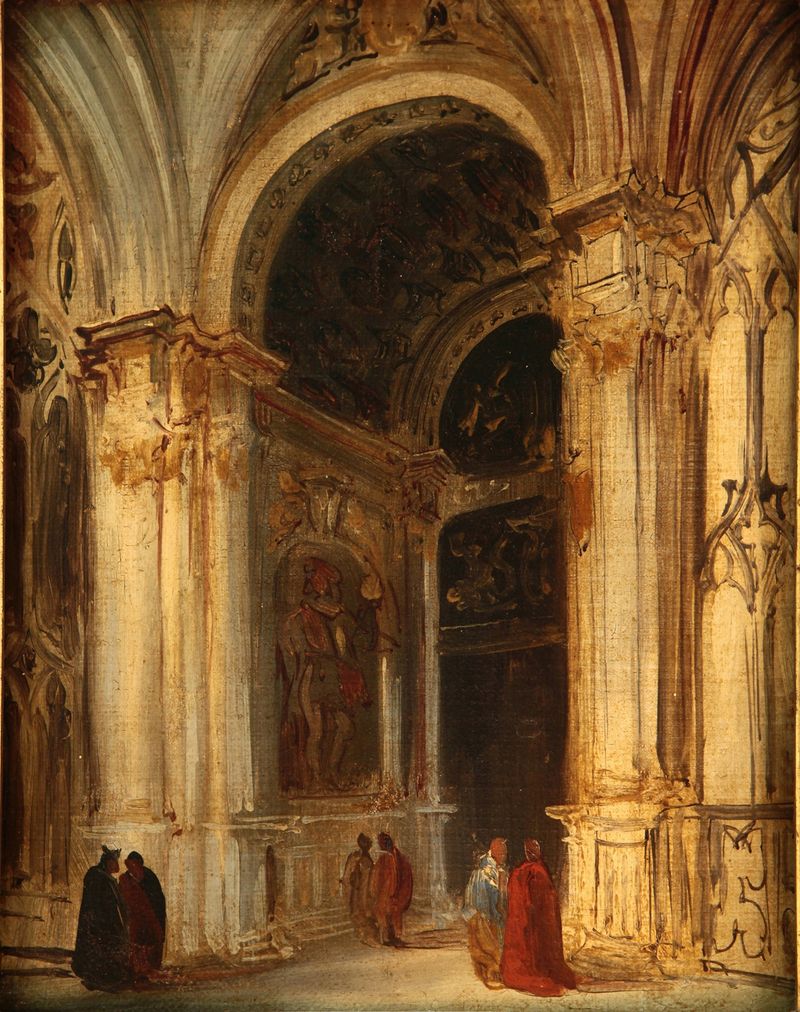
Interior de iglesia
Genaro Pérez Villaamil
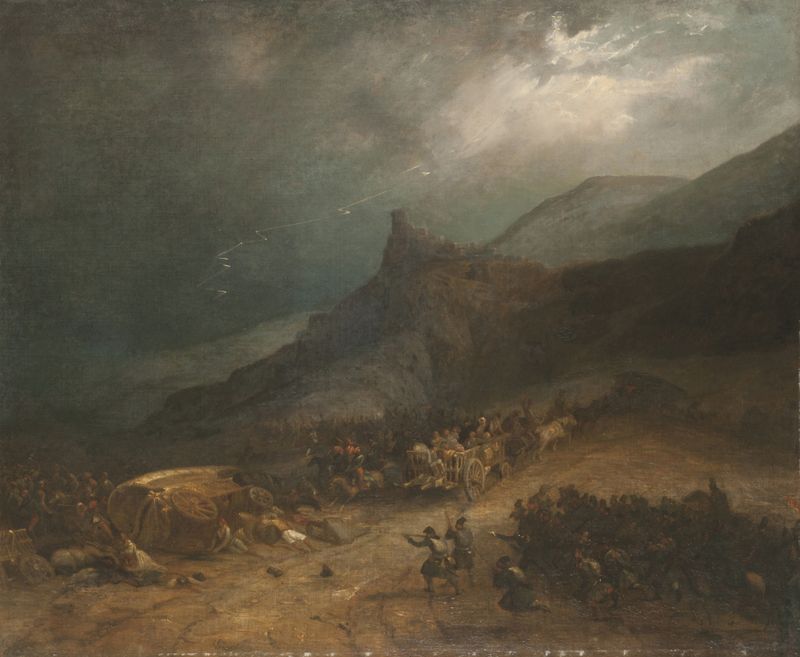
Ataque a un convoy carlista (La batalla de Arlabán)
Genaro Pérez Villaamil
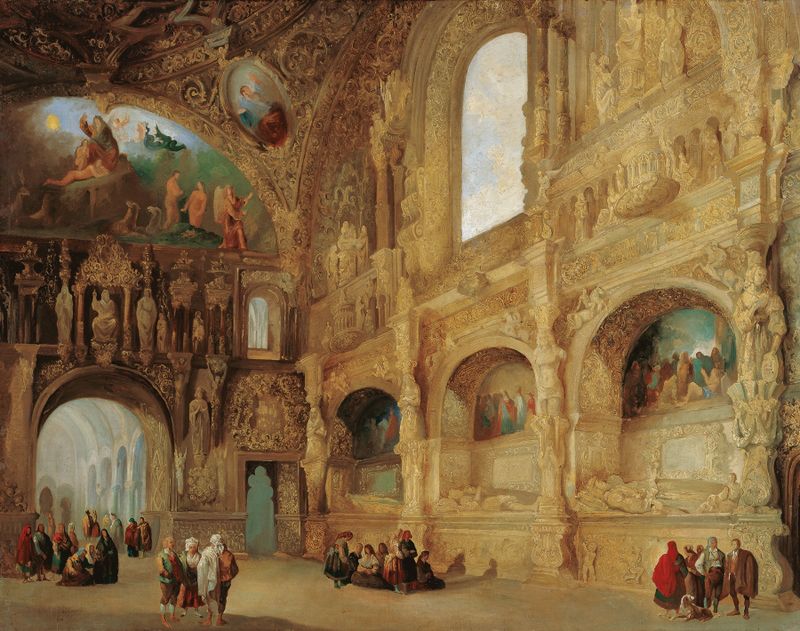
The Benavente Chapel at Medina de Rioseco
Genaro Pérez Villaamil
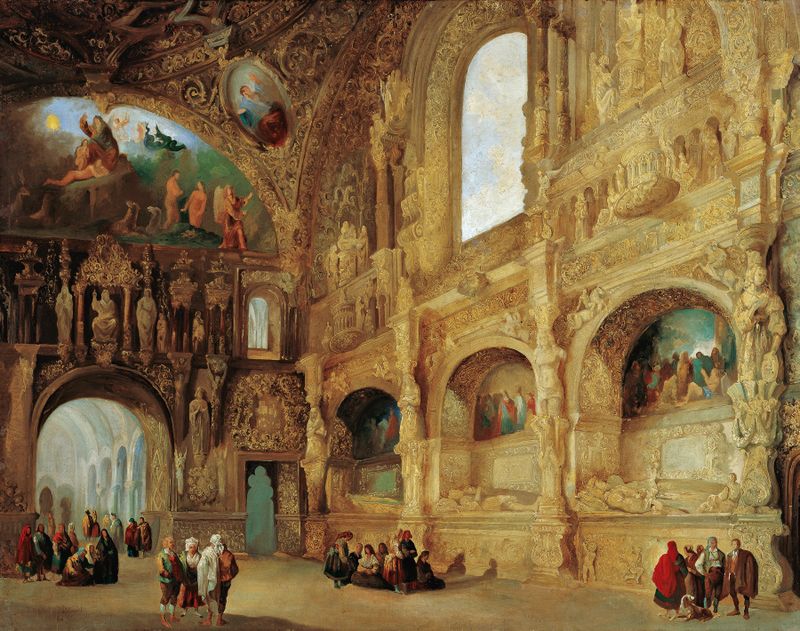
The Chapel Of The Benavente Family In Medina De Rioseco
Genaro Pérez Villaamil
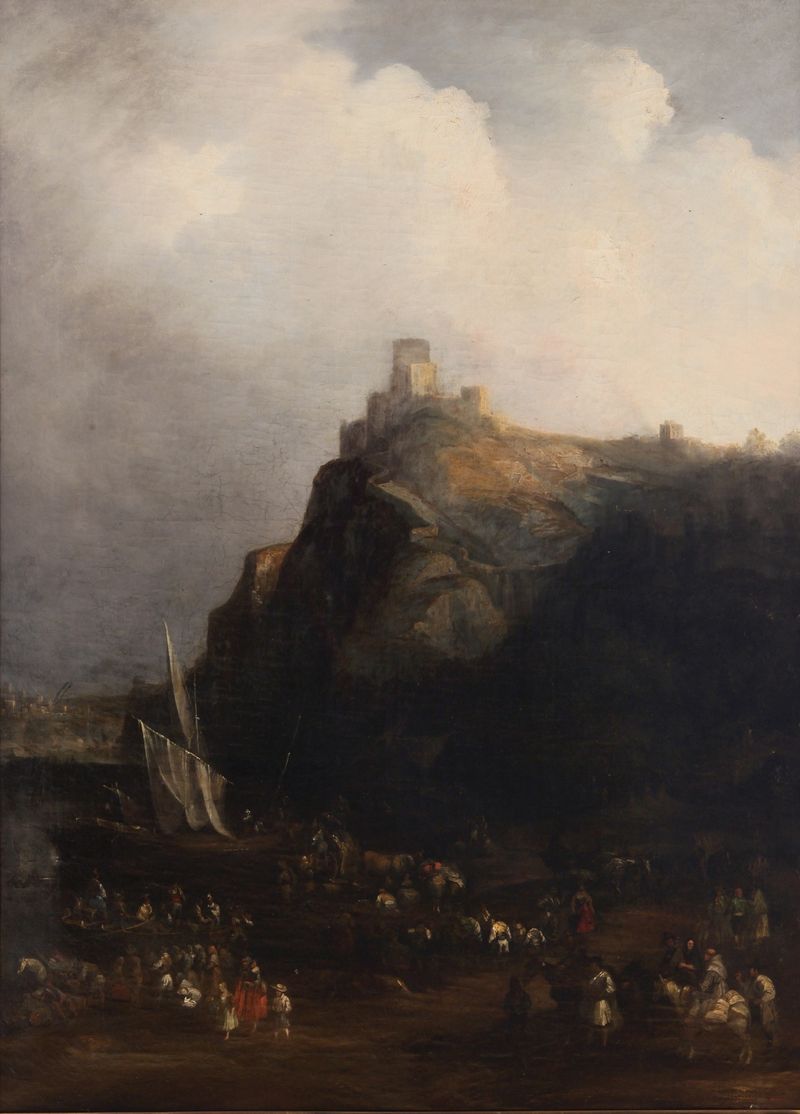
El Castillo de Gaucin
Genaro Pérez Villaamil
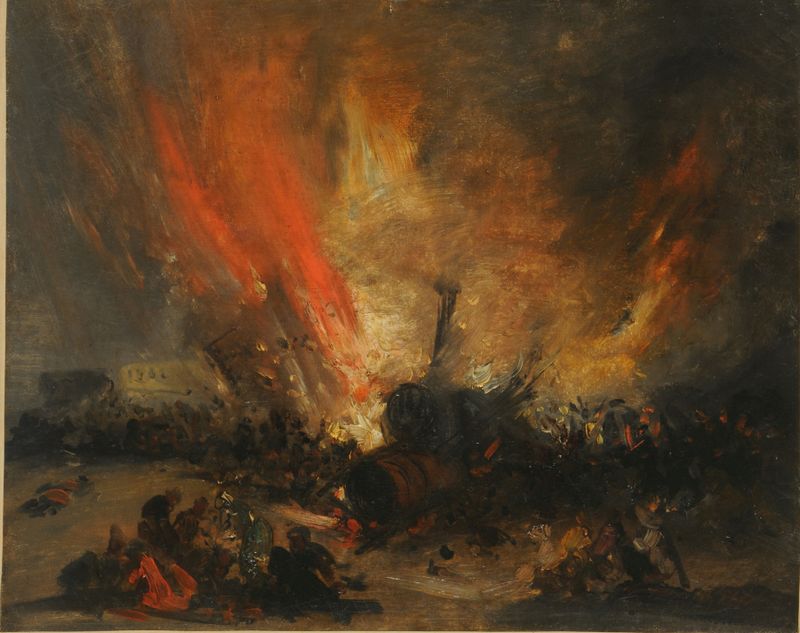
Explosión de una locomotora
Genaro Pérez Villaamil
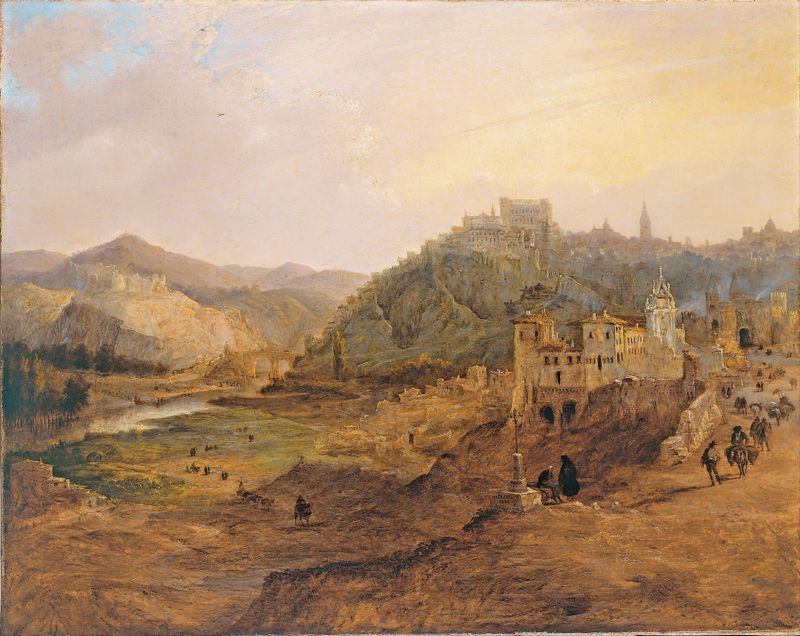
General View of Toledo from the Cross of the Canons
Genaro Pérez Villaamil
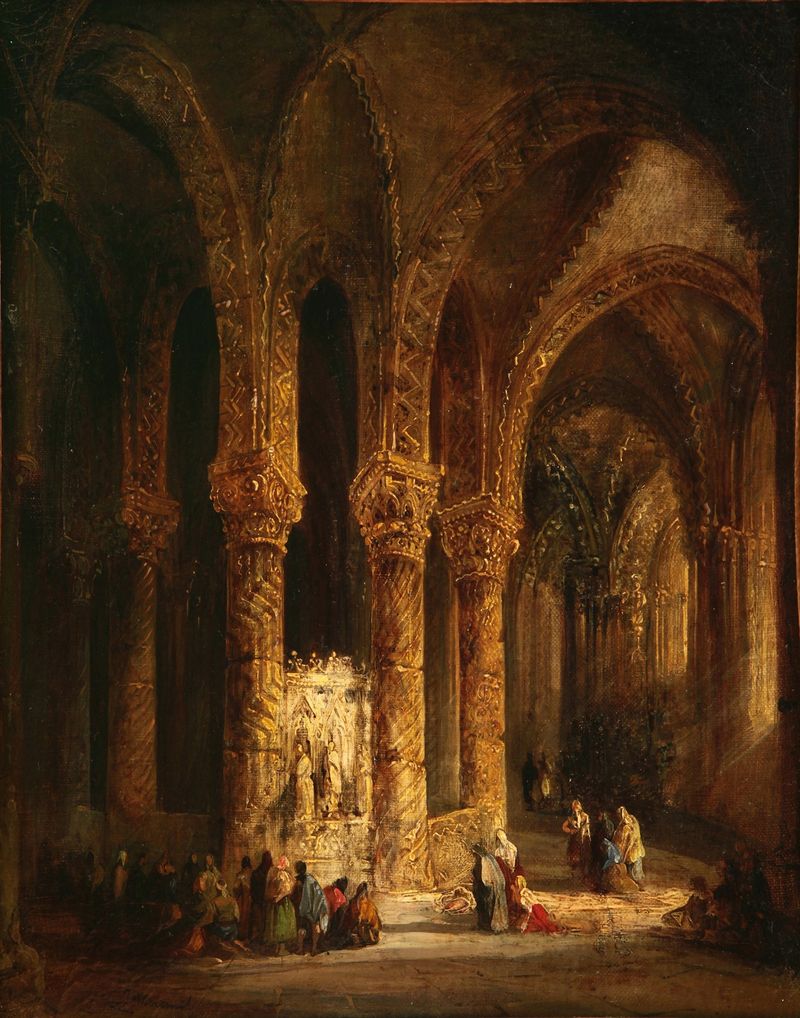
Cripta
Genaro Pérez Villaamil
More Religious Art
Browse all →
The Return of the Prodigal Son
Rembrandt van Rijn

The Garden of Earthly Delights
El Bosco

Count Orgaz’ funeral
El Greco

The Hundred Guilder Print: the central piece with Christ preaching, the plate arched
Rembrandt van Rijn

The Descent from the Cross
Rogier van der Weyden

The return of the prodigal son
Rembrandt van Rijn