
The Benavente Chapel at Medina de Rioseco — History & Facts
Can beauty exist without sorrow? This question echoes through the serene yet haunting lines of the chapel's architecture, inviting viewers to ponder the intertwining of fate and grace. Look to the left, where the intricate stonework emerges, bathed in a soft golden light that hints at ancient stories waiting to be unveiled. The brushstrokes, delicate yet deliberate, capture the play of light and shadow with palpable precision, creating a sense of depth that draws the eye into the architectural grandeur. Notice how the muted palette evokes a tranquil melancholy, allowing the viewer to feel both the weight and the beauty of history. Delve deeper into the artwork, and you'll discover the emotional tensions at its core.
The juxtaposition of shadow and light symbolizes the duality of existence—each stark contrast hinting at life’s transience. The chapel, while a monument of faith, also stands as a testament to the passage of time, a reminder of the destinies intertwined within its walls. Every detail, from the worn steps to the lofty arches, holds echoes of prayers whispered by those who have come and gone. In 1842, while residing in Madrid, the artist captured this scene amid a burgeoning Romantic movement, which sought to emphasize emotion, nature, and the sublime.
Genaro Pérez Villaamil, influenced by his travels and the landscapes of Spain, painted the chapel during a time when there was a growing appreciation for the historical and cultural significance of architectural sites. His work reflects not only personal aspirations but also the broader artistic currents of his era, showcasing a deep connection to his nation's history.
More Artworks by Genaro Pérez Villaamil
Browse all →
Interior de Iglesia
Genaro Pérez Villaamil
View of City of Fraga and its Hanging Bridge
Genaro Pérez Villaamil
Church of Saint Paul, Valladolid
Genaro Pérez Villaamil
Interior de iglesia
Genaro Pérez Villaamil
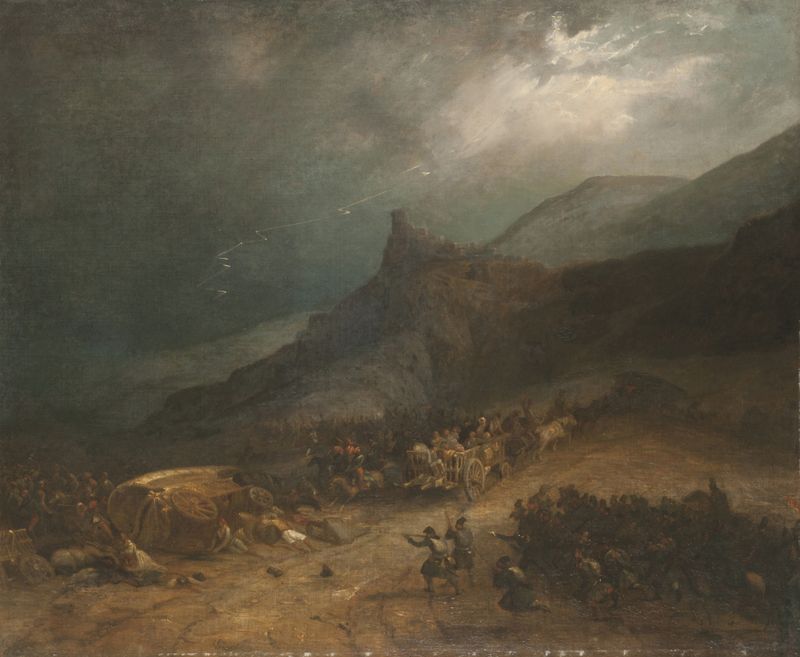
Ataque a un convoy carlista (La batalla de Arlabán)
Genaro Pérez Villaamil
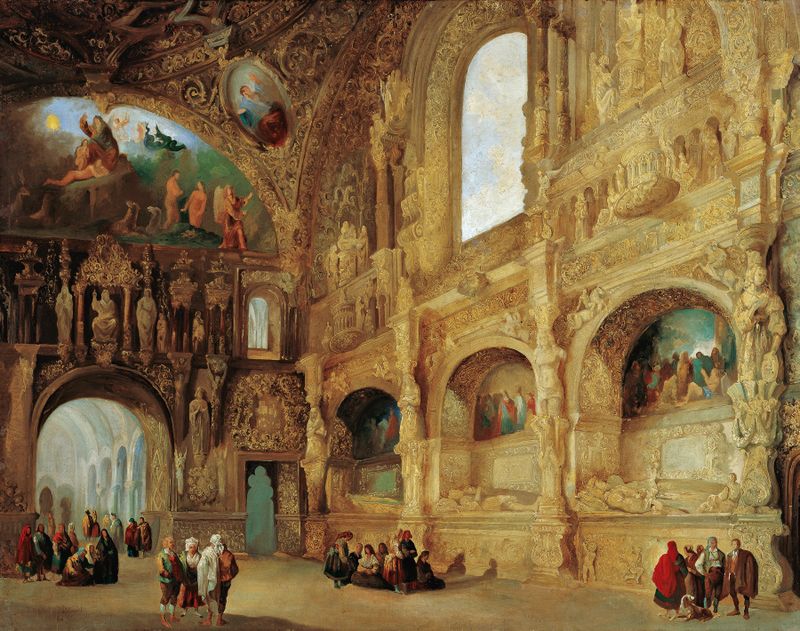
The Chapel Of The Benavente Family In Medina De Rioseco
Genaro Pérez Villaamil
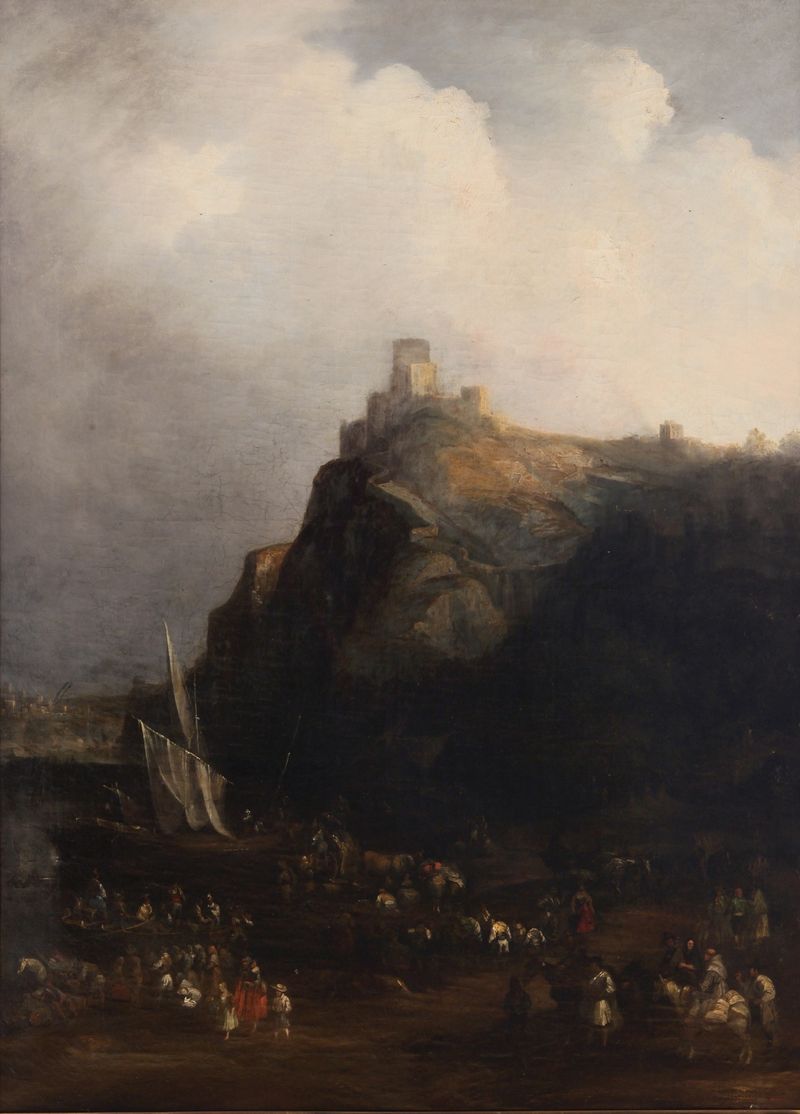
El Castillo de Gaucin
Genaro Pérez Villaamil
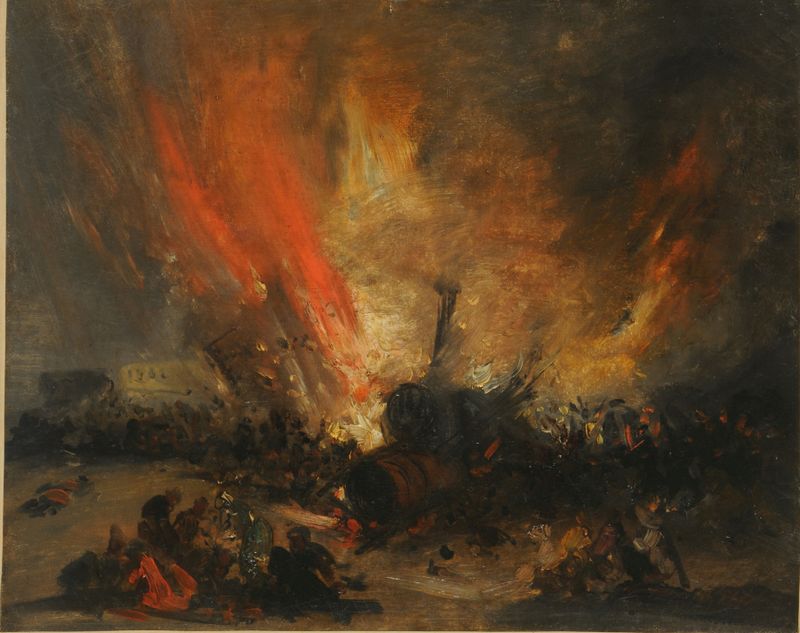
Explosión de una locomotora
Genaro Pérez Villaamil
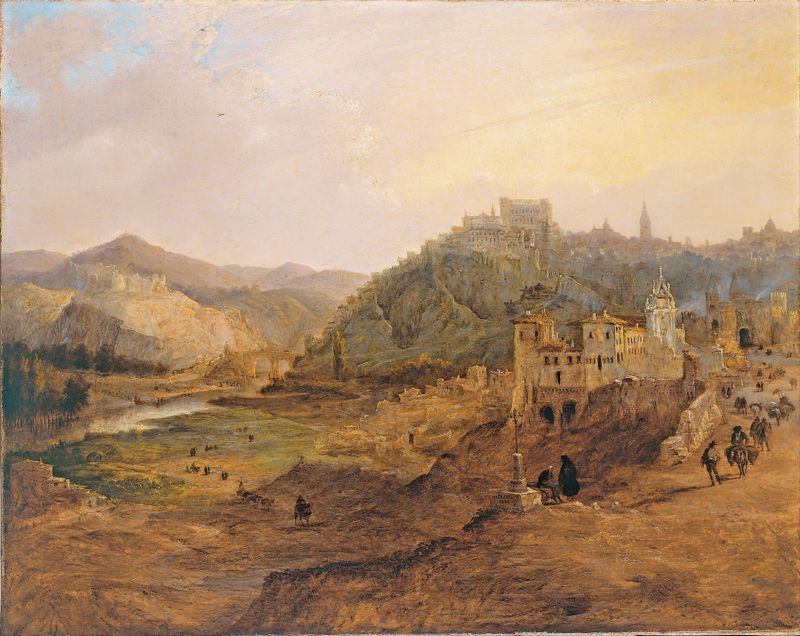
General View of Toledo from the Cross of the Canons
Genaro Pérez Villaamil
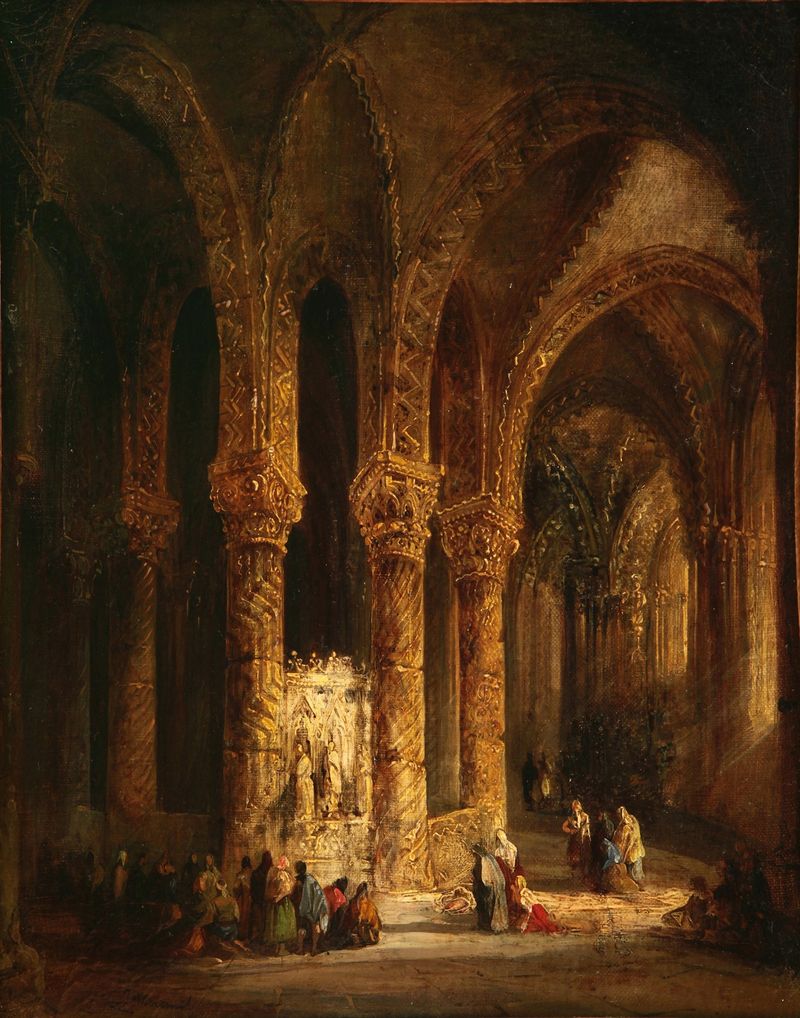
Cripta
Genaro Pérez Villaamil
More Architecture Art
Browse all →
The statue of Liberty
Frédéric Auguste Bartholdi

View of Houses in Delft, Known as ‘The Little Street’
Johannes Vermeer

View of Houses in Delft, Known as ‘The Little Street’
Johannes Vermeer

The Cathedral in Rouen. The portal, Grey Weather
Claude Monet

The yellow house
Vincent van Gogh

The Church in Auvers-sur-Oise, View from the Chevet
Vincent van Gogh