
Intocht van prins Maurits te Amsterdam — History & Facts
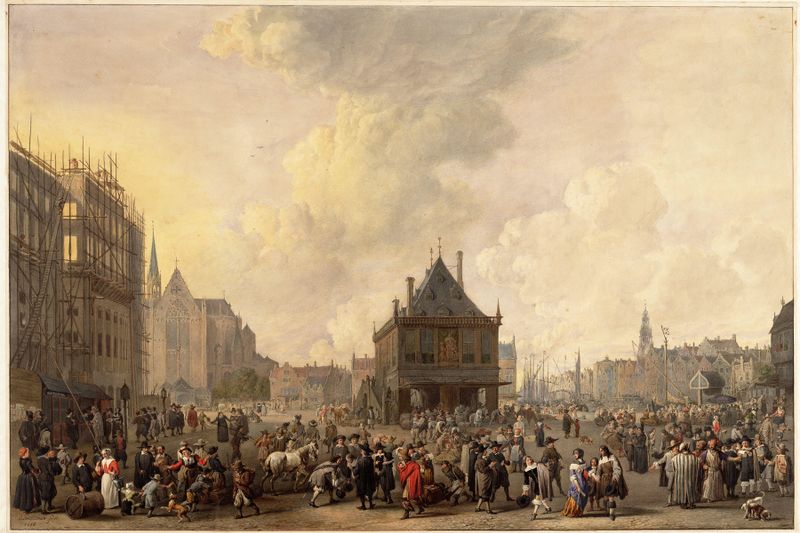
What if silence could speak through light? In Reinier Craeyvanger’s Intocht van prins Maurits te Amsterdam, the air hums with the weight of unspoken emotions, where joy is palpable yet marred by a lingering grief. Look to the left at the vivid red and gold banners that flutter in the gentle breeze, a striking contrast to the somber expressions of the gathered crowd. Notice how the light cascades down, illuminating the figures in a way that emphasizes their varied reactions—a blend of celebration and melancholy. The meticulously painted architecture stands as a backdrop, a testament to the historical significance of this moment, while the artist’s careful brushwork captures the details of costumes and expressions, inviting us to delve deeper into this historical pageant. Beneath the surface, the tension between public celebration and private sorrow unfolds.
The festive parade, heralding the arrival of Prince Maurits, juxtaposes the undercurrents of loss felt by those who remember the sacrifices made in pursuit of freedom. The distance between the proud prince and the crowd reflects the emotional chasm between collective triumph and individual grief. Each figure, frozen in the moment, reveals a narrative of contrasting emotions—some eyes gleam with hope, while others are shadowed by remembrance. In 1842, Craeyvanger created this work during a period of national pride in the Netherlands, reflecting on its rich history while grappling with the tensions of modernity.
The artist was inspired by scenes of historical significance and national identity, capturing a specific event that resonated deeply with audiences. This painting stands not only as a depiction of celebration but as an exploration of the complex emotions that accompany moments of public joy intertwined with a historical legacy marked by conflict and loss.
More Artworks by Reinier Craeyvanger
Browse all →

More Historical Art
Browse all →
The Night Watch Militia Company of District II under the Command of Captain Frans Banninck Cocq
Rembrandt van Rijn

Lincoln Memorial
Henry Bacon

The Third of May 1808
Francisco de Goya

Isaac and Rebecca, Known as ‘The Jewish Bride’
Rembrandt van Rijn

The Charge of the Mamelukes (1814)
Francisco de Goya

De vier ruiters van de apocalyps
Albrecht Dürer