Stadsgezicht, bij avond — History & Facts
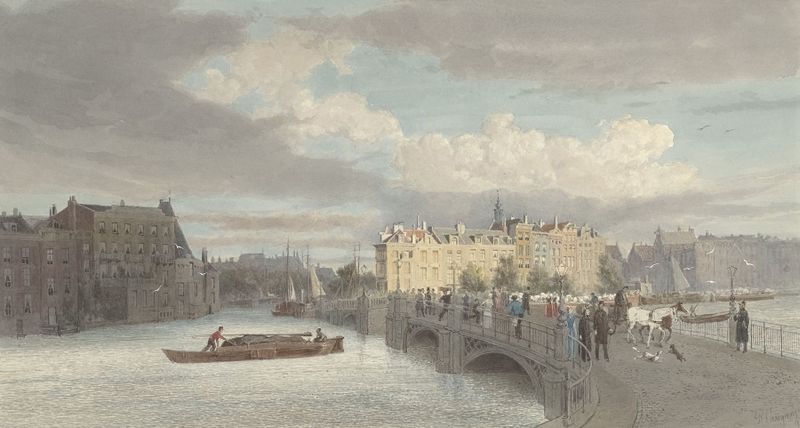
In the twilight glow of Stadsgezicht, bij avond, the canvas whispers stories of destiny intertwined with the quietude of an evening cityscape. The painting invites viewers to ponder the lives unfolding beneath the dimming sky, suggesting that every fleeting moment carries the weight of fate. Focus your gaze on the horizon, where delicate strokes of amber and indigo blend seamlessly, evoking the ethereal transition from day to night. Notice how the silhouettes of buildings rise against this vivid backdrop, their forms softened by the encroaching darkness.
The careful play of light and shadow captures a stillness that feels both serene and foreboding, urging the viewer to explore further into the depths of this urban tapestry. Amidst this tranquil scene, there lies a palpable tension between light and shadow, reflecting the duality of existence. Each structure, bathed in twilight, carries a sense of history and untold stories, while the scattered figures hint at lives touched by chance encounters. The presence of flickering lights in windows suggests warmth and life, contrasting starkly with the shadows that loom, alluding to the unseen forces shaping human destiny. Reinier Craeyvanger painted Stadsgezicht, bij avond during a transformative period in the 19th century, when Dutch art was leaning towards realism, capturing the nuances of everyday life.
Working primarily in his native Holland, he sought to reflect the beauty and complexity of urban settings, often influenced by the socio-political dynamics of his time. Creating this piece between 1822 and 1880, he contributed to the growing appreciation for atmospheric landscapes, reminding viewers of the beauty inherent in the mundane.