Intérieur de l’église Saint-Jean-Saint-François — History & Facts
Within the stillness of Intérieur de l’église Saint-Jean-Saint-François, a fragile tranquility breathes, inviting contemplation and a sense of reverence. Look to the right at the softly illuminated altar, where golden light spills over intricate carvings, casting delicate shadows that dance upon the stone. The warm hues of ochre and umber envelop the interior, imbuing it with a sense of history and reflection. The perspective draws you toward the far end of the nave, where the soaring arches cradle the viewer with an embrace of spiritual serenity. Beneath the surface, the interplay of light and shadow evokes a powerful contrast between the sacred and the ephemeral.
The subtle details—the peeling paint on aged walls, the worn steps leading to prayer—speak to the passage of time and the fragility of both faith and structure. Each element invites a deep emotional connection, revealing the artist’s intent to convey a world that exists in both beauty and decay, a moment caught between the eternal and the transient. Giuseppe Canella painted this masterpiece in 1829, during a period when the Romantic movement was gaining momentum in art, emphasizing emotion and individual experience. Working in Italy, he was influenced by the grandeur of architecture and the subtlety of light, capturing the essence of spirituality amidst the changing tides of society.
This work emerges from a time when artists sought to express deeper human connections to sacred spaces, making it a significant reflection of its era.
More Artworks by Giuseppe Canella
Browse all →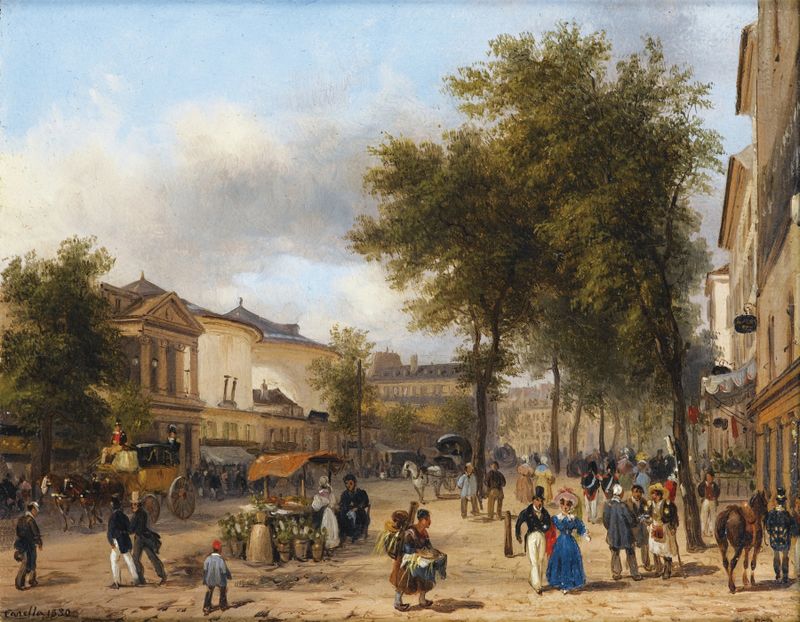
Paris, Vue du Théâtre des Variétés sur le Boulevard Montmartre
Giuseppe Canella

L’Hôtel de Ville et la place de Grève, vus de l’Ile de la Cité
Giuseppe Canella
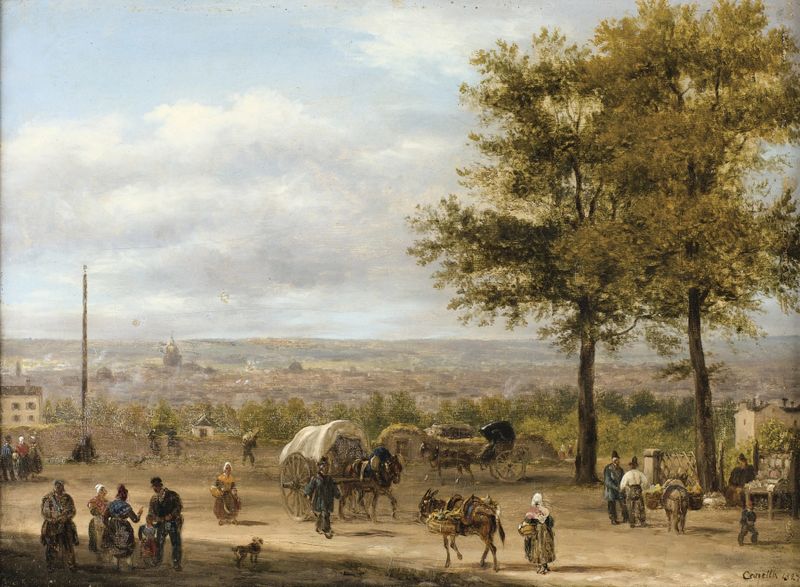
Vue des hauteurs de Paris
Giuseppe Canella
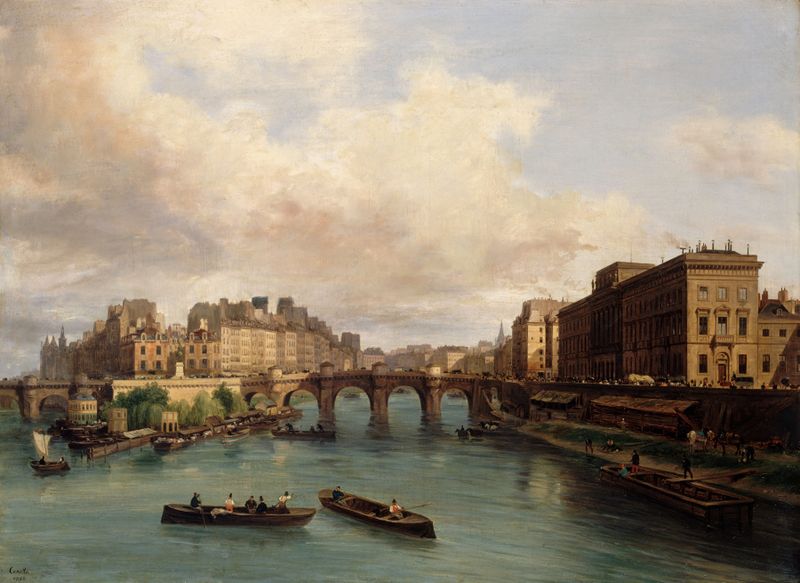
L’Ile de la Cité et le quai Conti, vus de la passerelle des Arts
Giuseppe Canella

Amsterdam, A View of the Royal Palace
Giuseppe Canella

Les Halles et la rue de la Tonnellerie
Giuseppe Canella
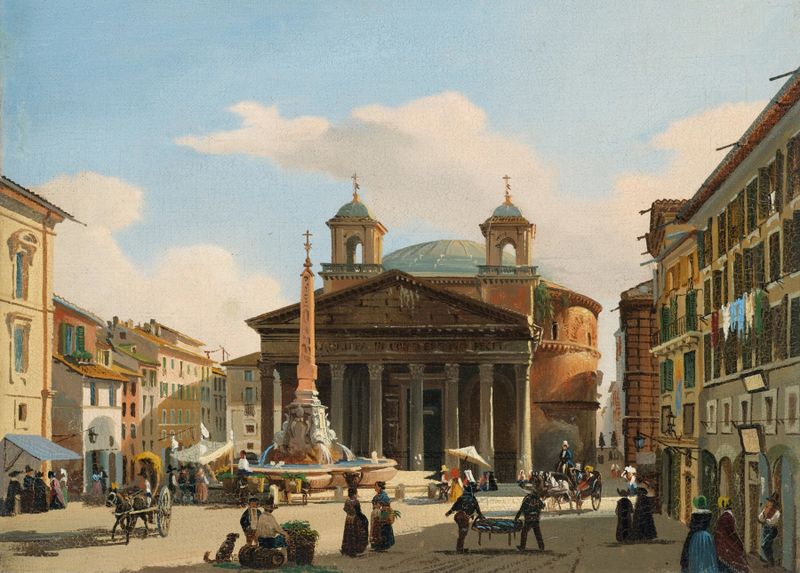
Vue du Panthéon à Rome
Giuseppe Canella
Venice, A View Of Piazza San Marco From Piazzetta Dei Leoncini
Giuseppe Canella
Le marché aux fleurs, la Tour de l’Horloge, le Pont au Change et le Pont-Neuf
Giuseppe Canella

A Venetian scene with a gondola on a lagoon
Giuseppe Canella