Irises — History & Facts
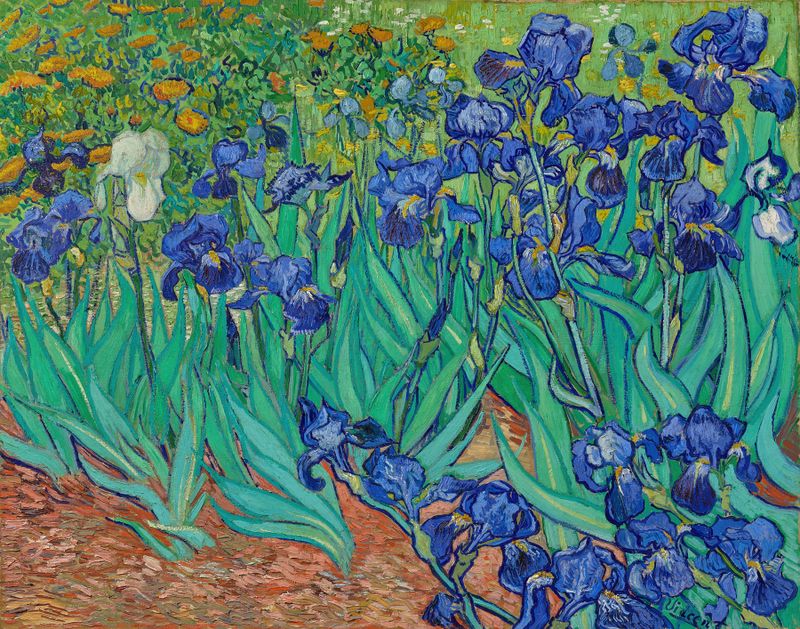
Who listens when art speaks of silence? In Irises, Iwan Trusz captures a moment of fragile beauty that whispers of both tranquility and underlying tension. Look to the center of the canvas, where vibrant irises unfurl their petals, evoking a sense of life and energy. The deep blues and purples contrast against the lush greens, creating a vivid tapestry that draws the eye. Notice how the brushstrokes convey both precision and spontaneity, as if the flowers breathe with an intensity that belies their serene appearance.
The play of light across the petals reveals delicate textures, inviting the viewer to explore the interplay between shadow and luminescence. Yet, amidst this lush depiction lies a subtle disquiet. The irises, while stunning and alive, stand resilient against an ambiguous backdrop, suggesting an unseen struggle. The juxtaposition of their beauty against the muted tones surrounding them evokes a sense of isolation, hinting at violence lurking in the periphery—an unspoken tension between nature's splendor and the chaos of life.
Each bloom seems to carry the weight of unvoiced emotions, reflecting a fragile existence. Trusz painted Irises in 1937, a time when he was deeply influenced by the tumultuous social and political currents of Eastern Europe. Living in Poland, he experienced the rise of nationalism and the impending shadows of conflict that would soon engulf the continent. This period marked a fervent exploration of metaphors in art, as many artists sought to express the complexities of their realities through vivid imagery, making his work a poignant reflection of both beauty and strife.