
Istanbul, Valide and the Suleymaniye mosque — History & Facts
Did the painter know this moment would outlive them? The vibrant life of Istanbul, with its bustling streets and sacred architecture, captures time in a way that echoes through generations. Look to the right at the majestic silhouette of the Suleymaniye mosque, rising gracefully against a sky that dances between shades of gold and azure. Notice how the light bathes the mosque in a warm glow, emphasizing the intricate details of its domes and minarets. The composition draws the eye in a fluid movement, guiding the viewer through the lively scene of everyday life below, where figures engage in the rhythm of the city, their forms almost merging with the vibrant brushstrokes that define the atmosphere. Hidden within this lively portrayal are deeper contrasts: the serenity of the mosque juxtaposed against the dynamic energy of the people.
The artist imbues the scene with a sense of harmony, where spirituality and daily life blend seamlessly. Each figure, busy navigating their own path, adds to the greater narrative of the city, suggesting that life moves in cycles, echoing the eternal presence of the sacred structure above. In 1922, while living in Germany, Ernest Karl Eugen Koerner painted this piece during a time of great change in Europe, marked by societal shifts following World War I. His work reflects a fascination with urban landscapes and the interplay between human experience and architecture, capturing Istanbul's essence at a moment when the world was grappling with tumult and transformation.
More Artworks by Ernest Karl Eugen Koerner
Browse all →
Evening in Egypt by the Nile at Gebel es-Silsila
Ernest Karl Eugen Koerner

Twilight on the Nile
Ernest Karl Eugen Koerner
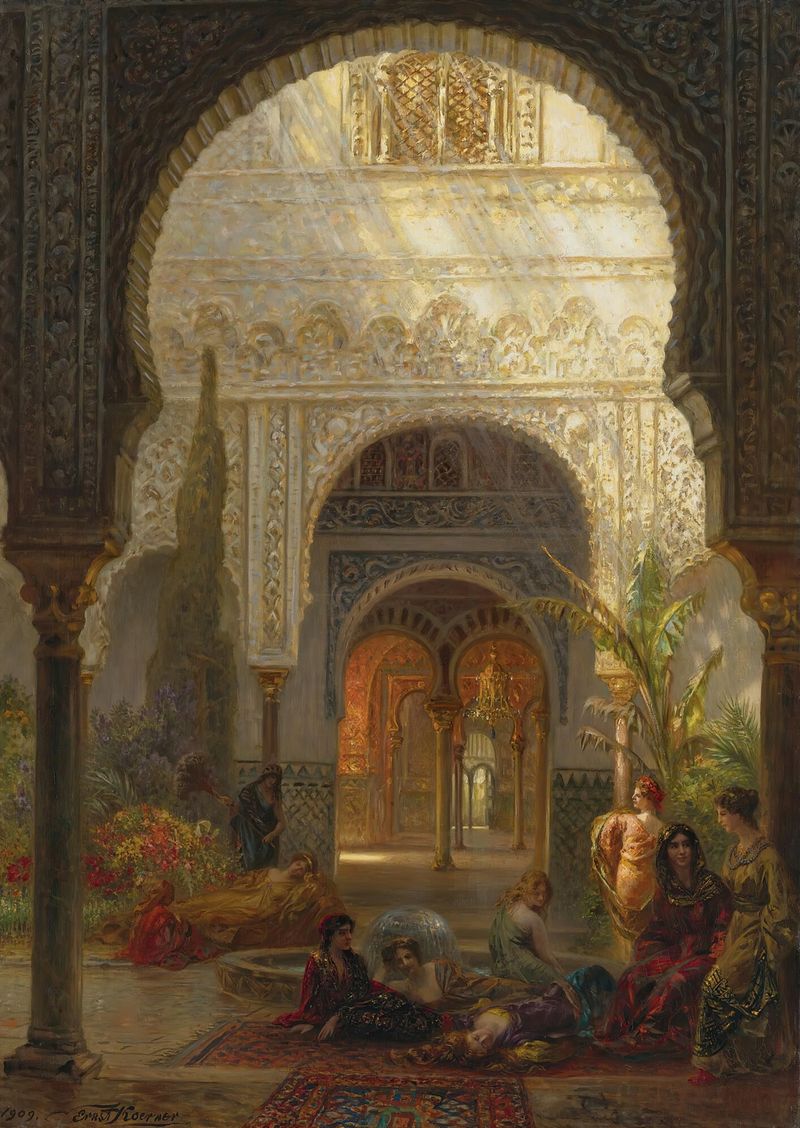
The Patio Della Reina, The Alcazar, Sevilla
Ernest Karl Eugen Koerner
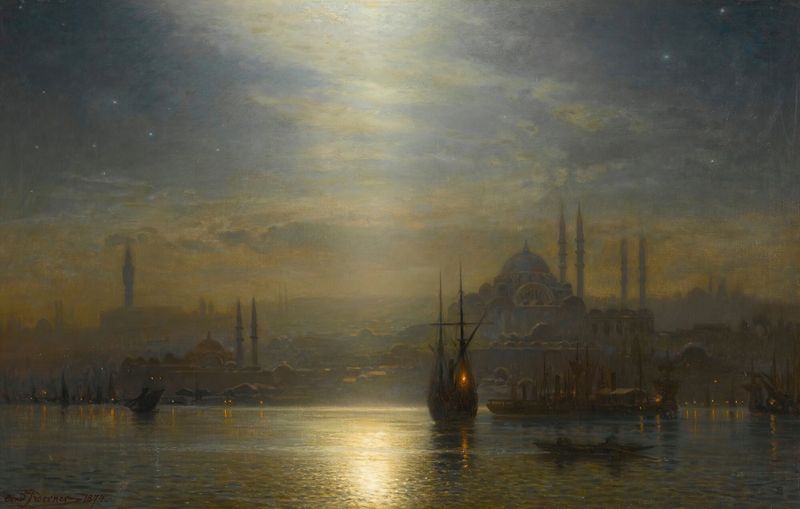
Night view over the Bosphorus
Ernest Karl Eugen Koerner
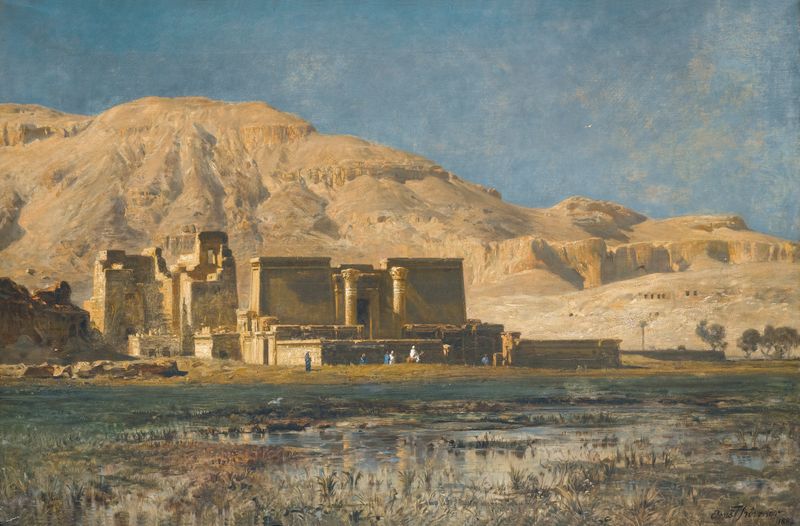
The Plain Of Thebes
Ernest Karl Eugen Koerner
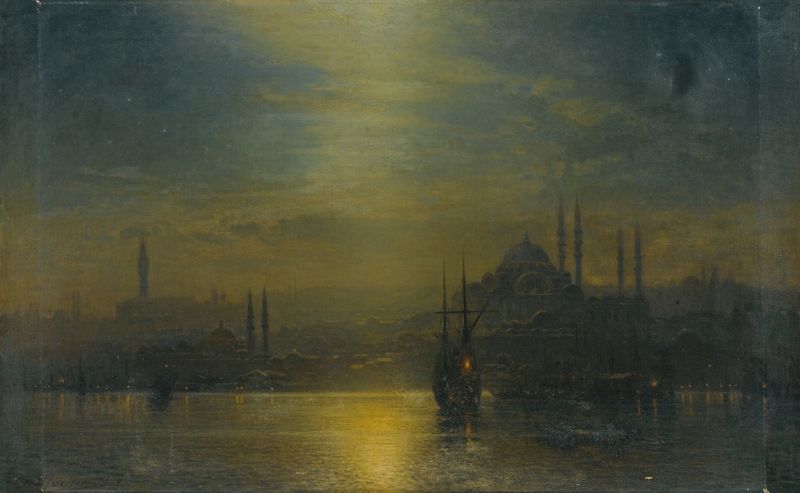
The Golden Horn – A Nocturne
Ernest Karl Eugen Koerner
More Architecture Art
Browse all →
The statue of Liberty
Frédéric Auguste Bartholdi

View of Houses in Delft, Known as ‘The Little Street’
Johannes Vermeer

View of Houses in Delft, Known as ‘The Little Street’
Johannes Vermeer

The Cathedral in Rouen. The portal, Grey Weather
Claude Monet

The yellow house
Vincent van Gogh

The Church in Auvers-sur-Oise, View from the Chevet
Vincent van Gogh