
Twilight on the Nile — History & Facts
What if silence could speak through light? In Twilight on the Nile, shadows gather like whispered secrets, creating a quiet dialogue between day and night. Look to the left at the silvery reflections dancing across the water’s surface. The soft hues of twilight—lavender, pale blue, and hints of gold—merge seamlessly, inviting you into the tranquil embrace of the scene. Notice how the artist skillfully captures the gentle ripples, using delicate brushstrokes that evoke a sense of movement while maintaining an overall stillness.
The silhouetted palm trees stand like sentinels against the fading light, their dark forms starkly contrasting with the luminous sky. As you delve deeper, observe the way the shadows stretch and recede, echoing the eternal passage of time. The interplay between light and dark suggests a serene tension—perhaps a moment of reflection or contemplation amidst the vastness of nature. The viewer is drawn into a world where the familiar becomes ethereal, evoking feelings of nostalgia and melancholy, reminding us of our own fleeting moments. In 1899, Koerner was exploring a unique blend of realism and impressionism, finding inspiration in the landscapes and cultures he encountered during his travels.
Living in Munich, he was captivated by the light in Egypt, which profoundly influenced his work. This painting reflects not only his artistic evolution but also a broader shift in the art world towards capturing the emotional resonance of light and shadow.
More Artworks by Ernest Karl Eugen Koerner
Browse all →
Evening in Egypt by the Nile at Gebel es-Silsila
Ernest Karl Eugen Koerner
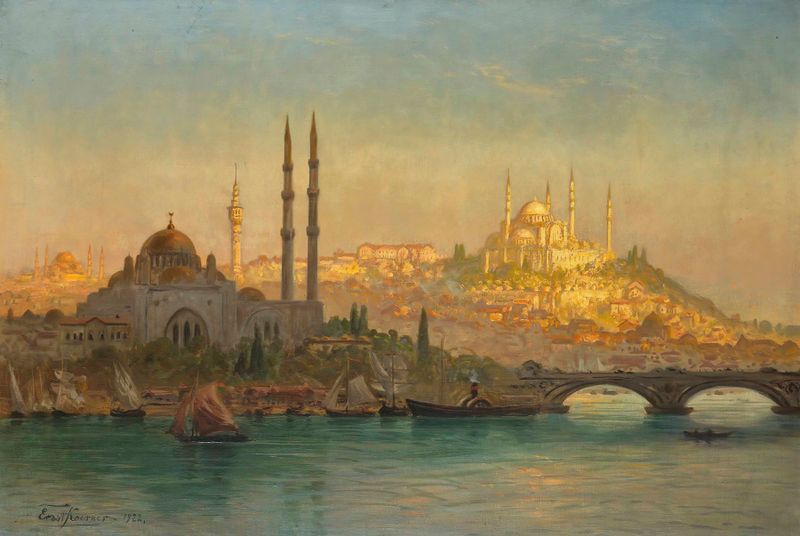
Istanbul, Valide and the Suleymaniye mosque
Ernest Karl Eugen Koerner
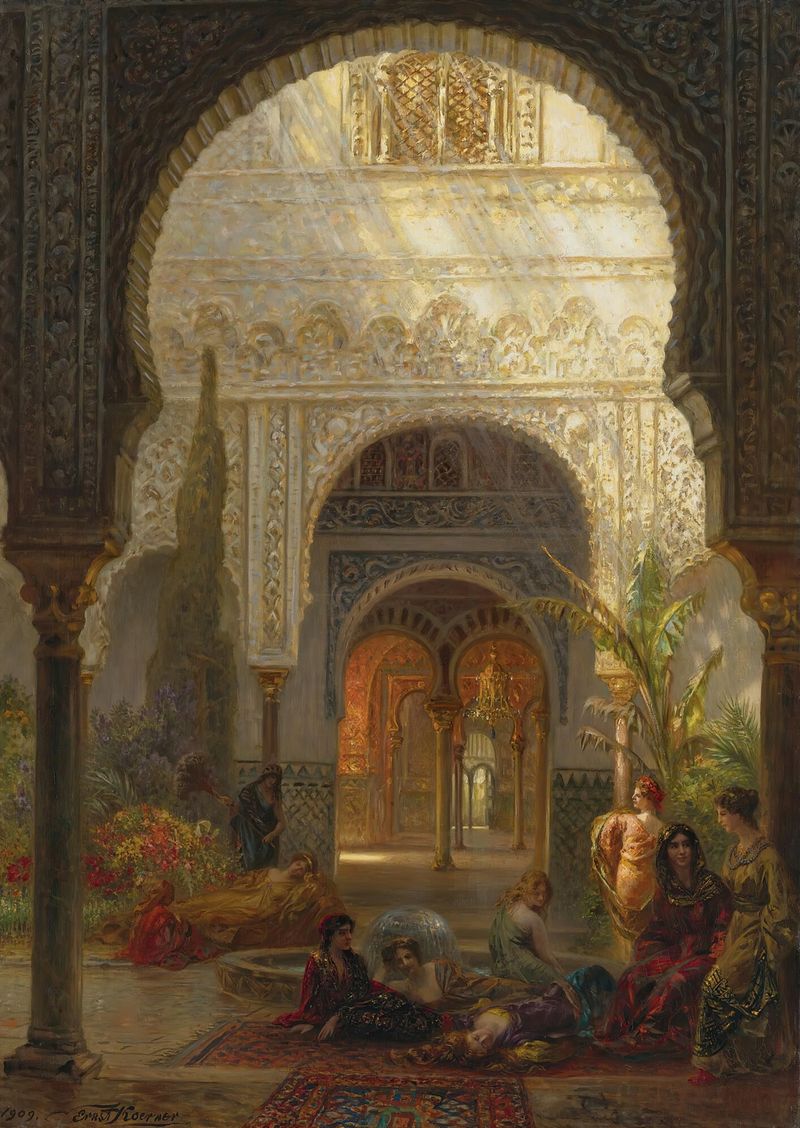
The Patio Della Reina, The Alcazar, Sevilla
Ernest Karl Eugen Koerner
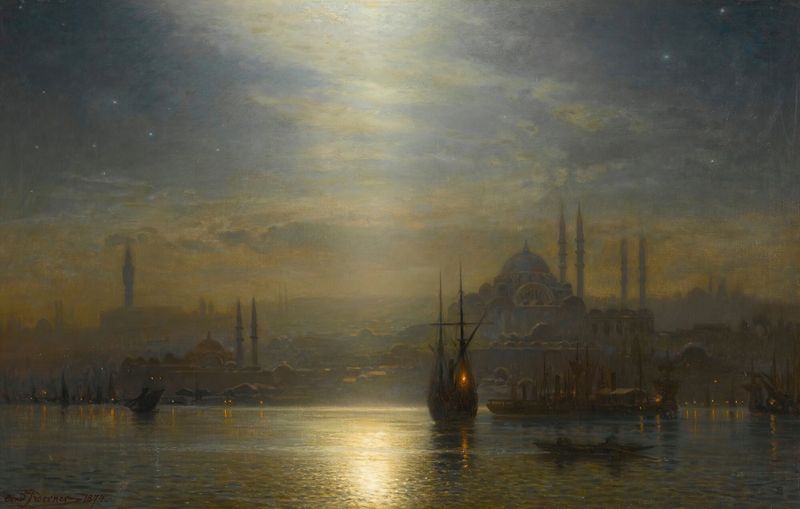
Night view over the Bosphorus
Ernest Karl Eugen Koerner
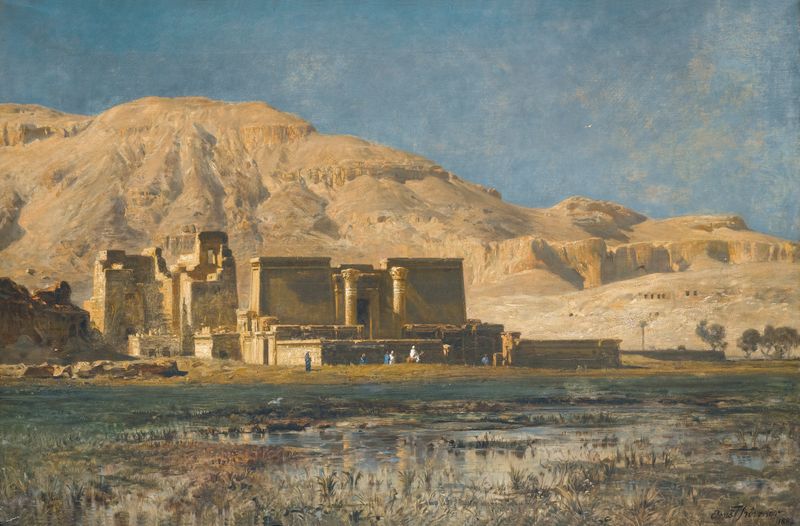
The Plain Of Thebes
Ernest Karl Eugen Koerner
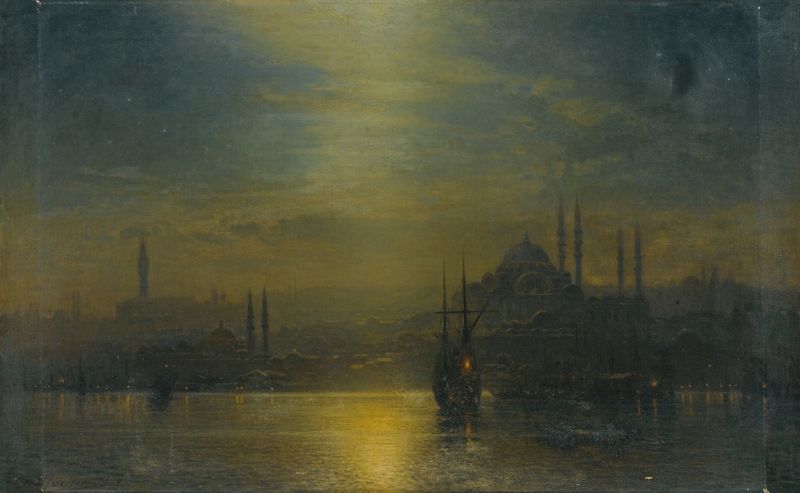
The Golden Horn – A Nocturne
Ernest Karl Eugen Koerner





