
The Plain Of Thebes — History & Facts
In the quiet of the artist's brush, longing transcends the canvas, weaving memories of a past that lingers just beyond reach. Look to the foreground where gentle, muted earth tones embody the vastness of the landscape. The horizon stretches infinitely, inviting you to wander into the depths of the scene. Notice how the warm golden light bathes the plain in a soft glow, enhancing the delicate interplay between shadows and highlights.
The brushwork captures the texture of the land, while the distant silhouette of Thebes looms, an echo of history framed by the ethereal beauty of the present moment. Amidst the serene beauty lies an undercurrent of yearning. The distant ruins subtly remind us of impermanence, a transient civilization cradled by the unyielding landscape. The expansive sky above—a canvas of soft blues and gentle whites—contrasts with the earthy tones below, signifying the tension between aspiration and reality.
This interplay invites contemplation on time's relentless passage and our own place within it. In the summer of 1882, Koerner found himself immersed in the ancient echoes of Egypt, drawing inspiration from the land's storied past. During this period, he sought to merge impressionistic techniques with historical subject matter, reflecting a growing interest in the mystical qualities of ancient civilizations. His work captures not just a geographical location, but the essence of nostalgia, inviting viewers to confront their own histories and longings.
More Artworks by Ernest Karl Eugen Koerner
Browse all →
Evening in Egypt by the Nile at Gebel es-Silsila
Ernest Karl Eugen Koerner
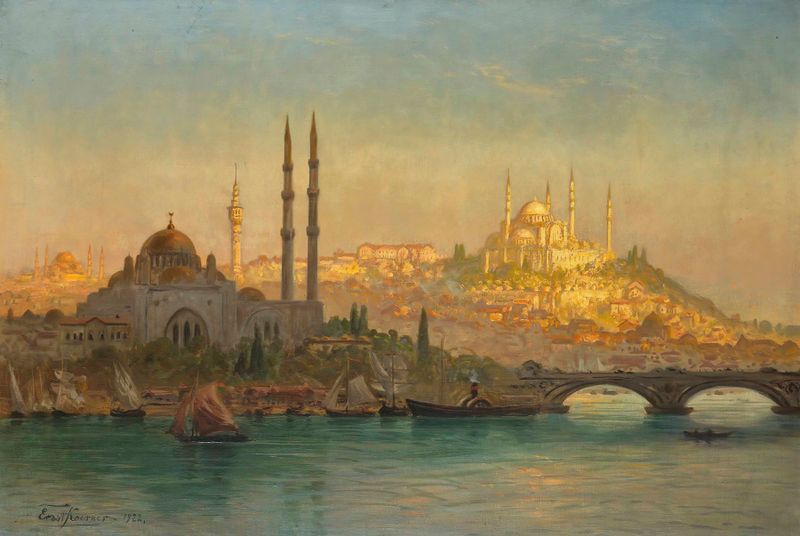
Istanbul, Valide and the Suleymaniye mosque
Ernest Karl Eugen Koerner

Twilight on the Nile
Ernest Karl Eugen Koerner
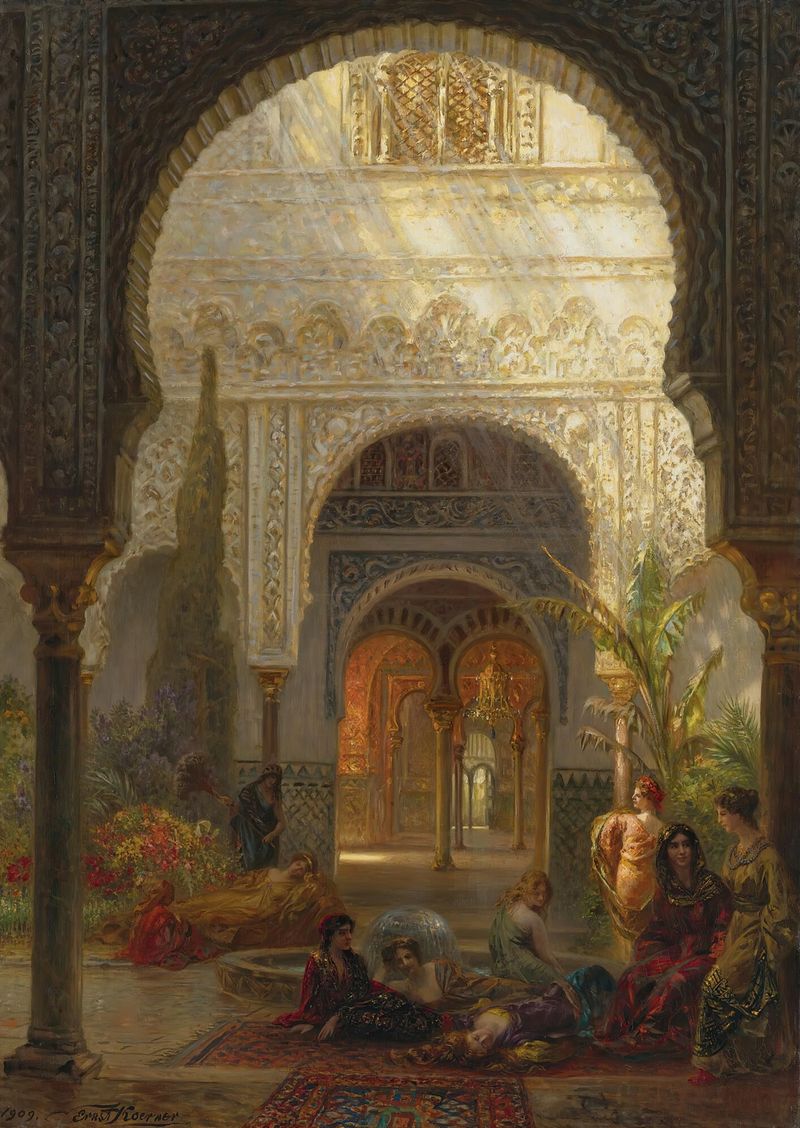
The Patio Della Reina, The Alcazar, Sevilla
Ernest Karl Eugen Koerner
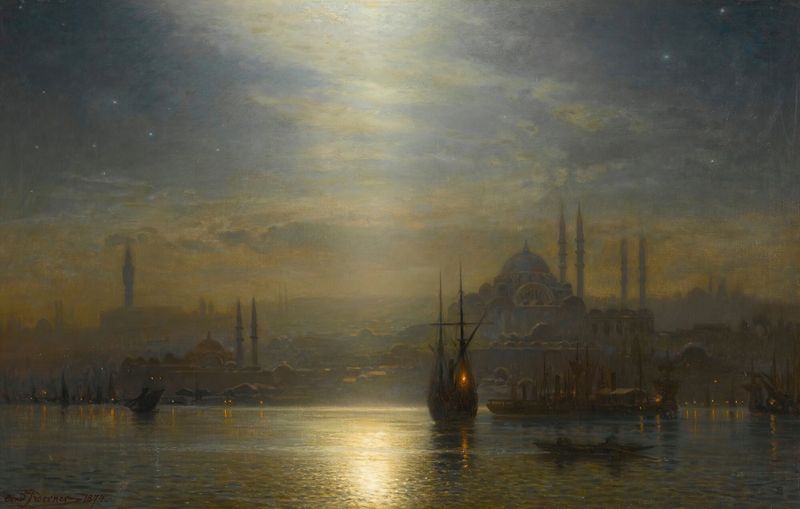
Night view over the Bosphorus
Ernest Karl Eugen Koerner
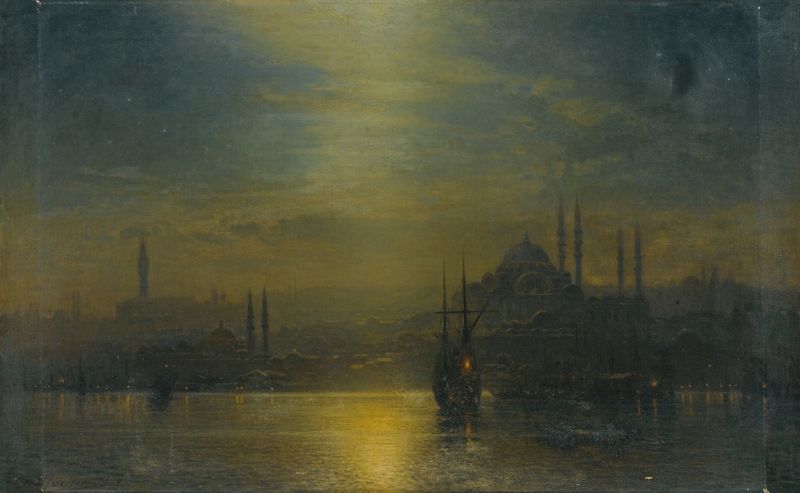
The Golden Horn – A Nocturne
Ernest Karl Eugen Koerner





