
The Golden Horn – A Nocturne — History & Facts
In the depths of night, when shadows veil the familiar, we find ourselves on the cusp of transformation, where light and darkness dance in a delicate balance. Look closely at the foreground, where the luminous reflections of city lights shimmer upon the water's surface, creating an enchanting pathway that pulls the viewer into the scene. Notice how the artist employs rich shades of blue and gold, interlacing them to evoke the serenity of the evening while hinting at the vibrancy of life that pulses beneath the moonlit sky. The composition is anchored by the silhouettes of boats and the soft outline of the skyline, drawing your gaze toward the horizon where sky meets water in a harmonious embrace. Beneath the surface beauty lies an emotional tension, a duality of tranquility and longing.
The stillness of the water suggests calmness, yet, the flickering reflections hint at the complexities of existence—moments of joy intertwined with the inevitability of change. The subtle play of light amplifies this contrast, illuminating both the allure and the mystery of night, inviting contemplation about what lies beneath the surface. In 1874, while residing in Munich, the artist captured this nocturnal vision, a testament to the evolving Romantic movement, which sought to explore the emotional landscapes of nature and human existence. The world of art was shifting, with emerging modernist ideas challenging traditional forms.
This period marked a significant chapter in Koerner's career, as he honed his unique style, blending realistic detail with a dreamlike quality, illustrating the delicate nuances of transformation within his surroundings.
More Artworks by Ernest Karl Eugen Koerner
Browse all →
Evening in Egypt by the Nile at Gebel es-Silsila
Ernest Karl Eugen Koerner
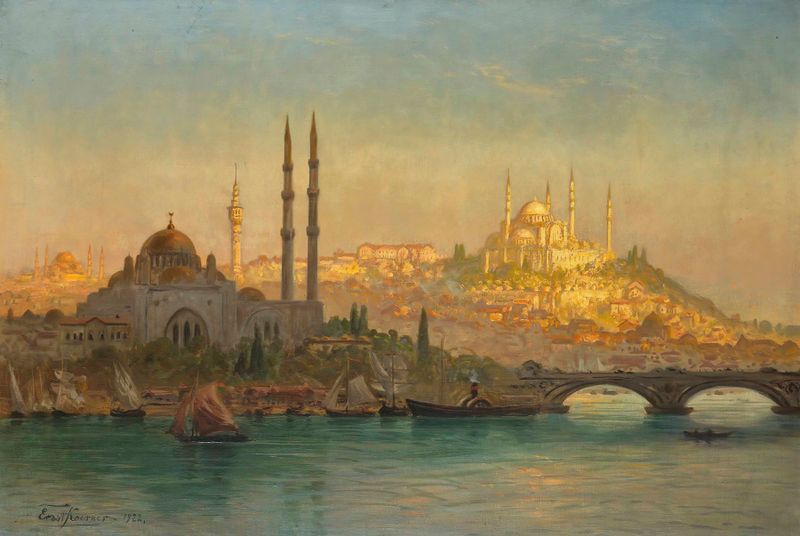
Istanbul, Valide and the Suleymaniye mosque
Ernest Karl Eugen Koerner

Twilight on the Nile
Ernest Karl Eugen Koerner
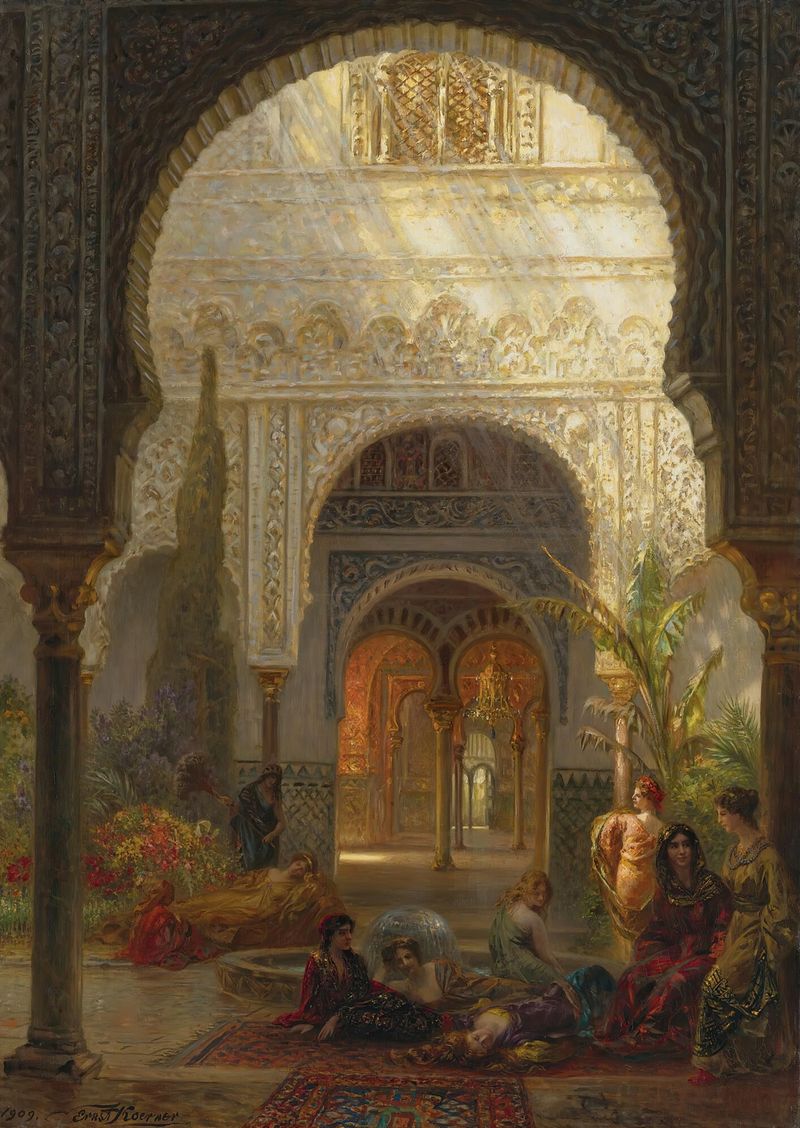
The Patio Della Reina, The Alcazar, Sevilla
Ernest Karl Eugen Koerner
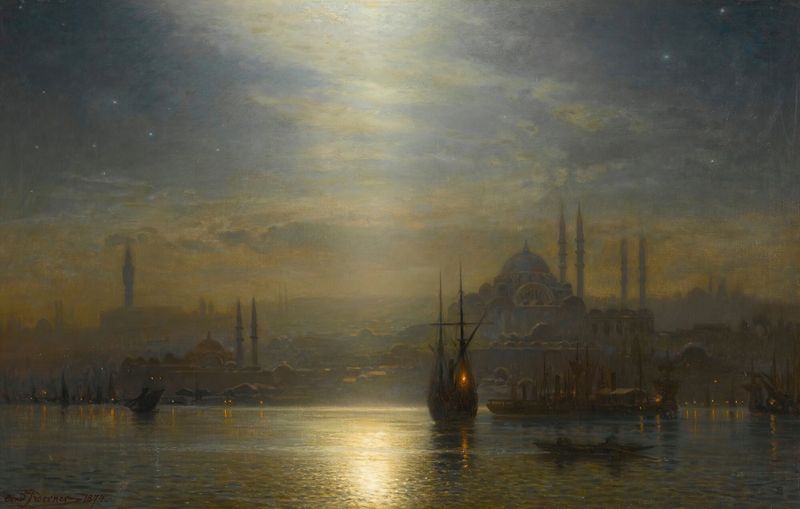
Night view over the Bosphorus
Ernest Karl Eugen Koerner
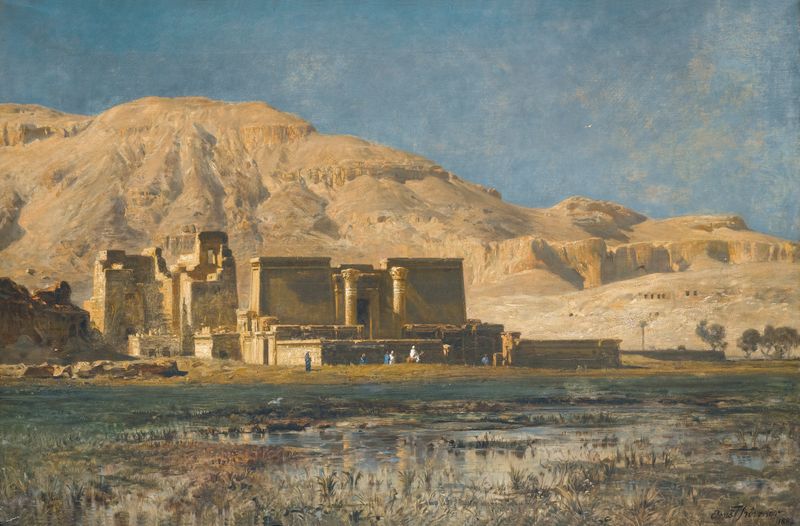
The Plain Of Thebes
Ernest Karl Eugen Koerner





