
Italiaans landschap, after Karel du Jardin, 1761 – 1800 — History & Facts
In the realm of color, true artistry transforms mere landscapes into emotional tapestries. Look to the foreground where vibrant greens dance in harmony with splashes of golden light. The artist masterfully layers pigment, creating a verdant expanse that invites you to wander into the scene. Notice how the distant hills are bathed in a soft blue-gray mist, their contours gently softened by the horizon.
The juxtaposition of lively hues in the foreground against the muted tones of the background draws the eye, creating a depth that feels boundless, almost ethereal. As you delve deeper, consider the playful tension between light and shadow. The radiant patches of sunlight breaking through the foliage evoke warmth and vitality, while the cooler tones reserve a sense of calm reflection. This interplay suggests a dialogue between the exuberance of life and the quietude of nature.
The swirling clouds overhead, tinged with hints of lavender and gold, symbolize an ever-changing sky, a reminder of the transient beauty found in the natural world. Created in a period where Neoclassicism dominated, the artist produced this work in the late 18th century, a time of artistic exploration and the revival of classical themes. Daniël Dupré, influenced by predecessors like Karel du Jardin, sought to capture the essence of the Italian countryside, reflecting both personal and collective aspirations for enlightenment and beauty amidst evolving artistic landscapes.
More Artworks by Daniël Dupré
Browse all →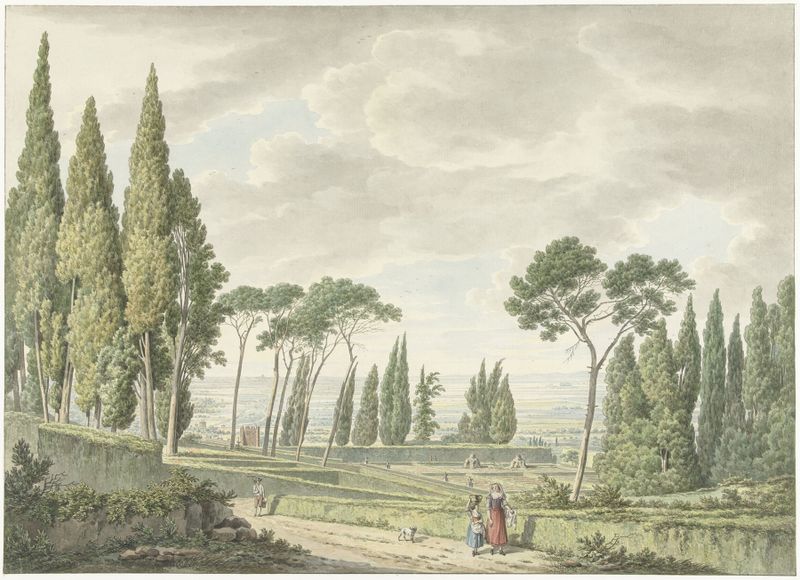
View of the terraces of the Villa d’Este in Tivoli
Daniël Dupré
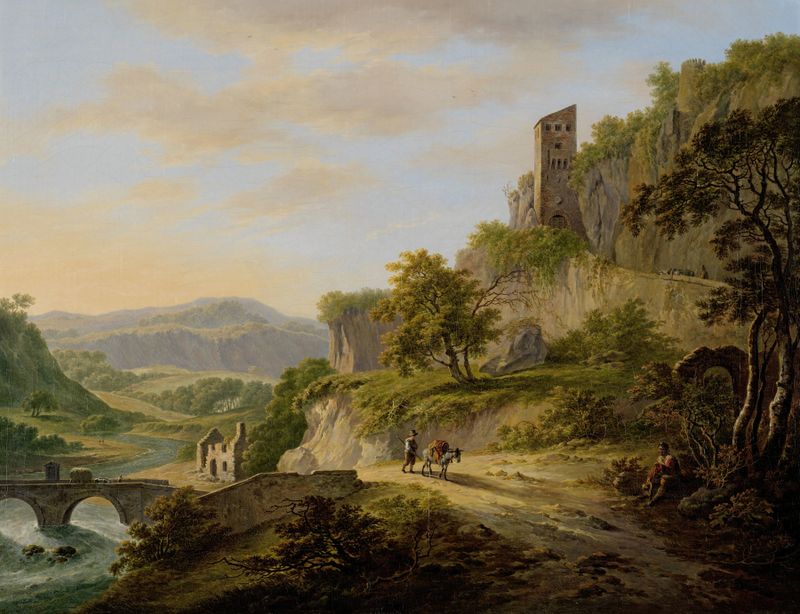
Gezicht op Civita Castellana
Daniël Dupré
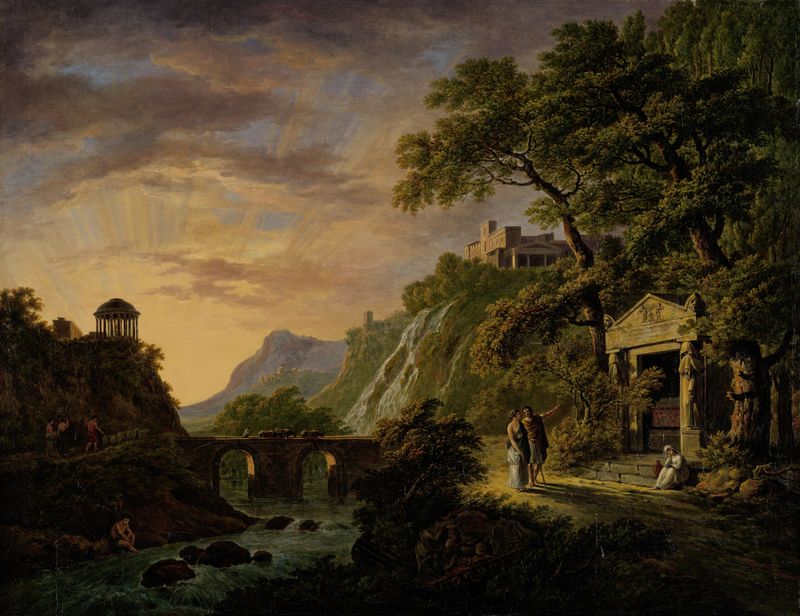
Arcadisch landschap met ondergaande zon
Daniël Dupré
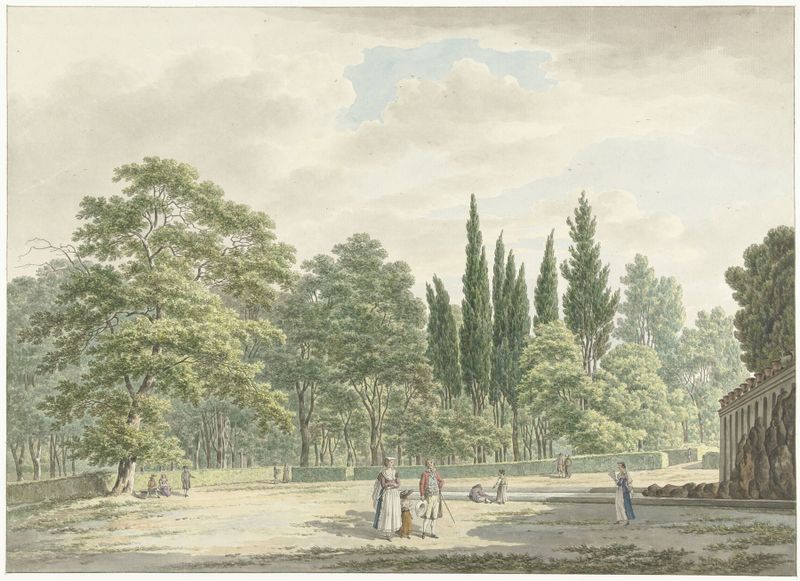
Wandelaars op een terras van de Villa Conti te Frascati
Daniël Dupré
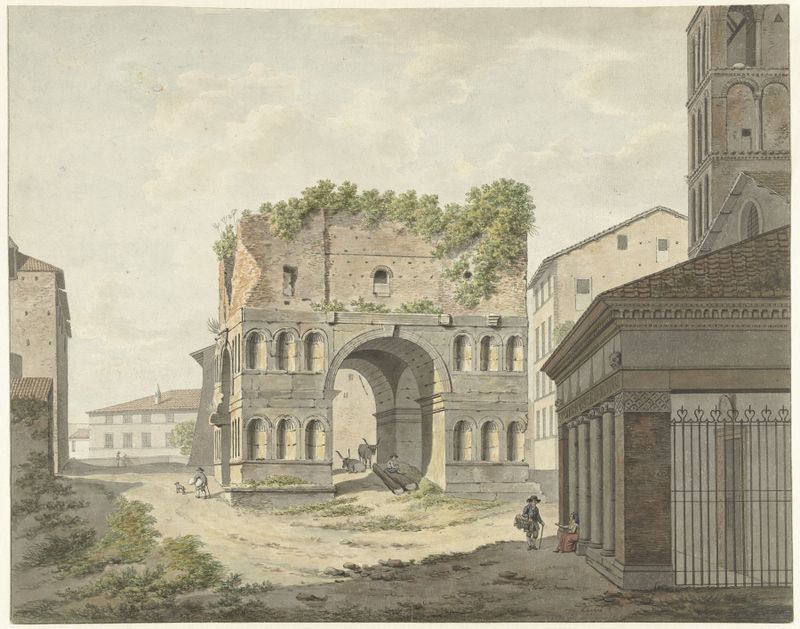
De boog van Janus quadrifons en een deel van de S. Giorgio in Velabro te Rome
Daniël Dupré
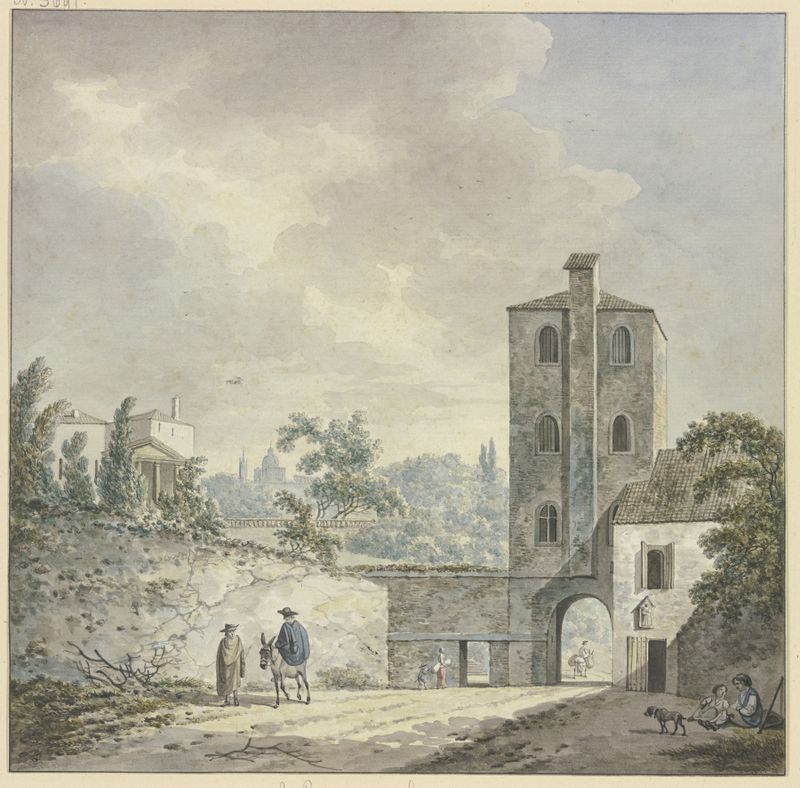
Porta della Luppia del Monte
Daniël Dupré
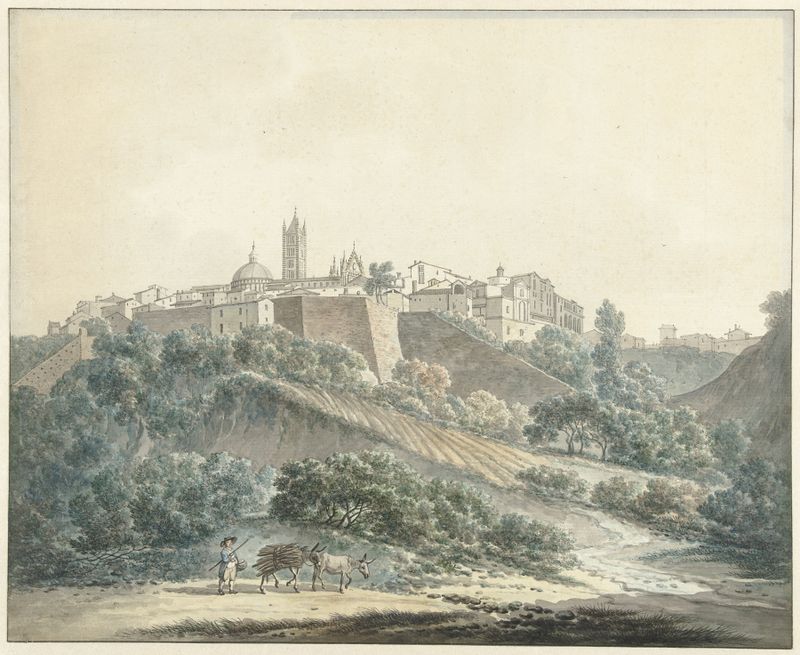
Gezicht op Siena
Daniël Dupré





