
Italian Landscape with Figures at a Fountain among Antique Ruins — History & Facts
In moments where nature and human presence intertwine, transformation transcends mere representation, echoing through the remnants of antiquity. Look to the left of the canvas, where the gentle curve of the fountain draws the eye, its crystalline waters cascading amid dilapidated ruins. Notice how the figures, small yet animated, engage in conversation—each gesture alive with purpose. The soft earthy tones of ochre and green envelop the scene, while dappled sunlight filters through branches, illuminating their faces as they share a fleeting moment of joy in a timeless landscape. Beneath the surface of this picturesque tableau lies a poignant interplay between past and present.
The weathered stones of the ruins suggest decay, a reminder of history's inevitable passage, while the vibrant figures breathe life into the scene, symbolizing resilience. This juxtaposition of vitality against the backdrop of fading grandeur invites reflection on the essence of existence—how life persists amidst decay, how the chaos of nature finds its way to grace. Painted between 1645 and 1650, this work emerged during a dynamic period for the artist, who sought to capture the essence of his experiences in Italy. At that time, freshly inspired by the landscapes and classical ruins, he reflected the burgeoning interest in the idealized nature that characterized the Baroque period.
His exploration of light and form reveals the transformative nature of art against the shifting tides of history.
More Artworks by Thomas Wijck
Browse all →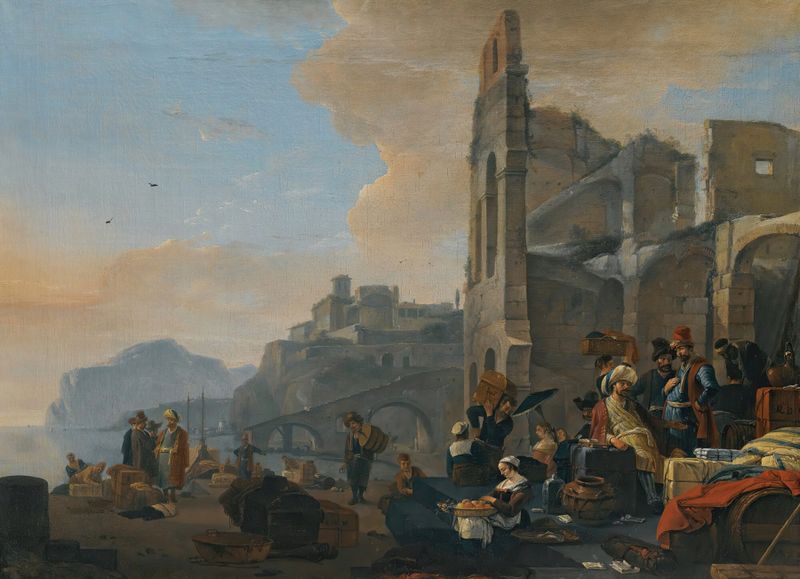
An Italianate Coastal Landscape With Figures In Oriental Dress At Market
Thomas Wijck

View Of The Thames At Westminster On Lord Mayor’s Day
Thomas Wijck
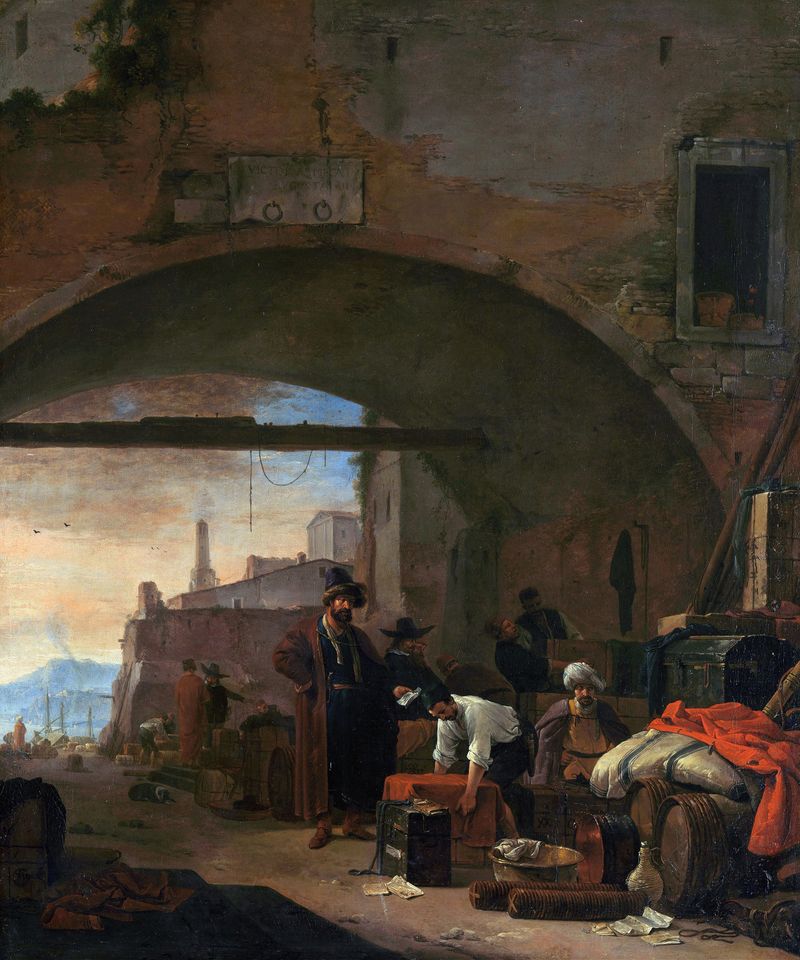
View of a Levantine Port
Thomas Wijck
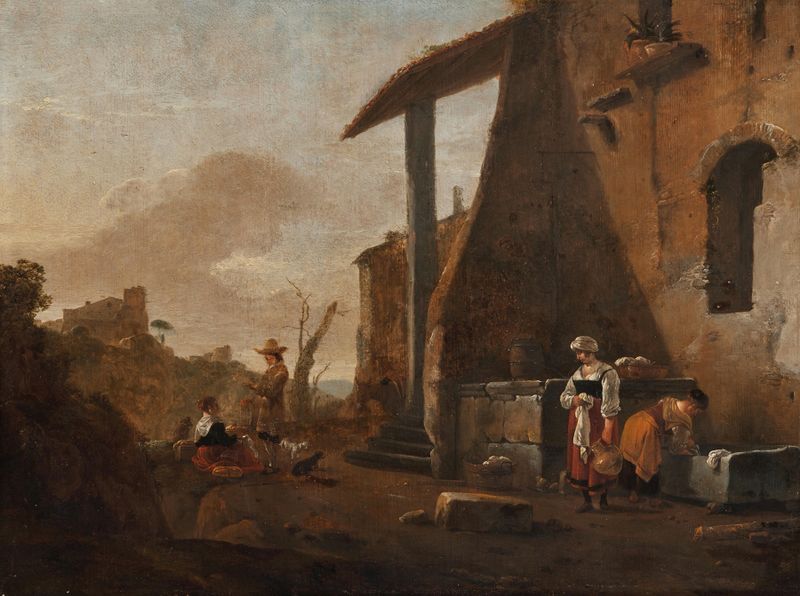
Maidservants washing laundry and another maid selling apples in a courtyard, a hilly landscape beyond
Thomas Wijck
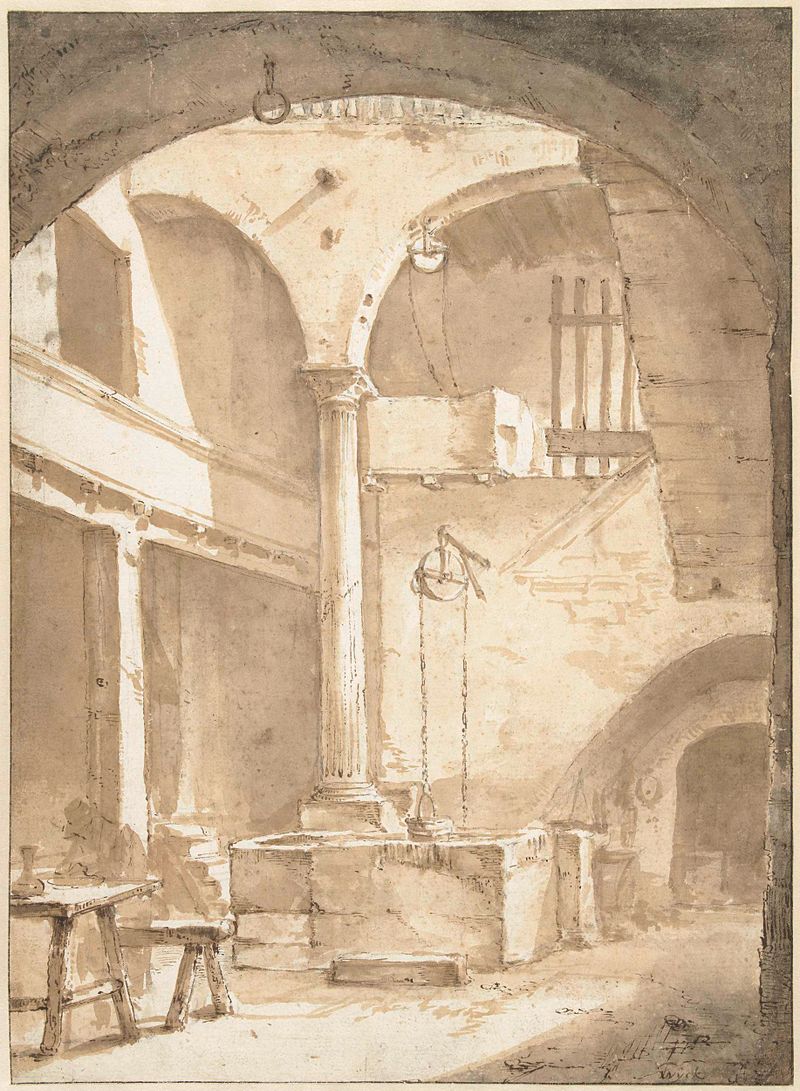
Italiaanse binnenplaats met een waterput
Thomas Wijck





