Italienische Ideallandschaft am Abend — History & Facts
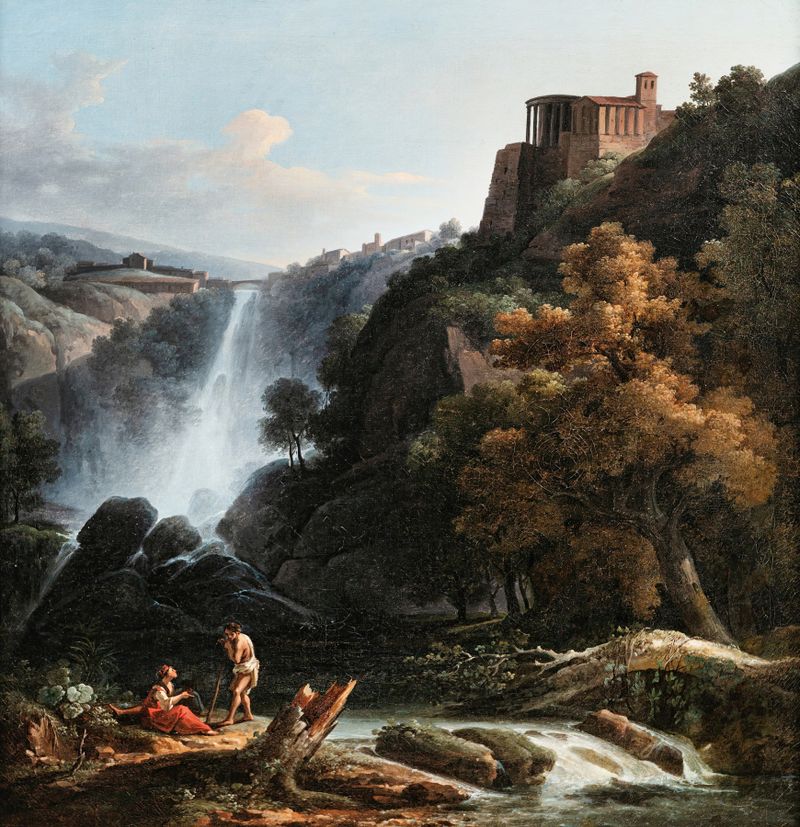
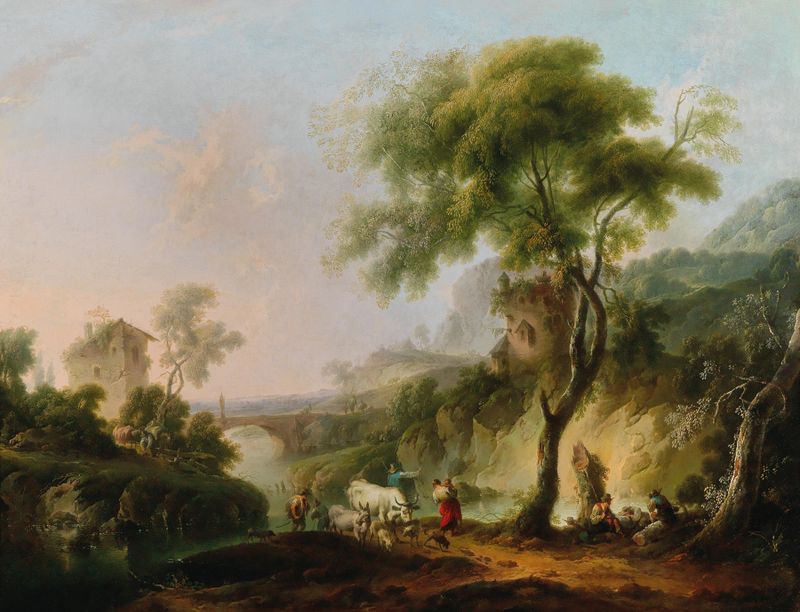
Could a single brushstroke hold eternity? In Italienische Ideallandschaft am Abend, the illusion unfolds before our eyes, inviting us to wander through a landscape that feels both dreamlike and tangible, suspended in a timeless embrace. Look to the horizon where the soft, warm hues of twilight blend seamlessly into the deepening blue of the sky. Notice how the delicate strokes of the painter's brush create a sense of depth, drawing you into a gentle undulation of rolling hills and distant mountains. The golden light, captured with a remarkable nuance, bathes the scene in a serene glow, while wisps of clouds dance gracefully above, framing this idyllic vista.
Every element is arranged with precision, guiding your gaze to the tranquil waters that reflect the fading light. Upon closer inspection, the painting reveals layers of meaning. The juxtaposition of the lush greenery and the encroaching dusk suggests an inevitable passage of time, a fleeting moment caught between day and night. The harmony between nature and light evokes a sense of nostalgia, as if the landscape is a memory longing to be preserved.
Small details, like the solitary figure on the path, hint at the human experience within this vast setting, bridging the gap between the individual and the eternal. Michael Wutky created this work during an era marked by the Romantic movement, when the beauty of nature was celebrated as a profound source of inspiration. Although the exact date of this painting remains uncertain, it is believed to have been crafted in the late 18th century, a time when artists were beginning to explore the emotional and spiritual connections to the natural world. Wutky's landscape reflects not only his personal vision but also the broader artistic trends that sought to elevate the sublime beauty of the Italian countryside.