Jacob and the Angel — History & Facts
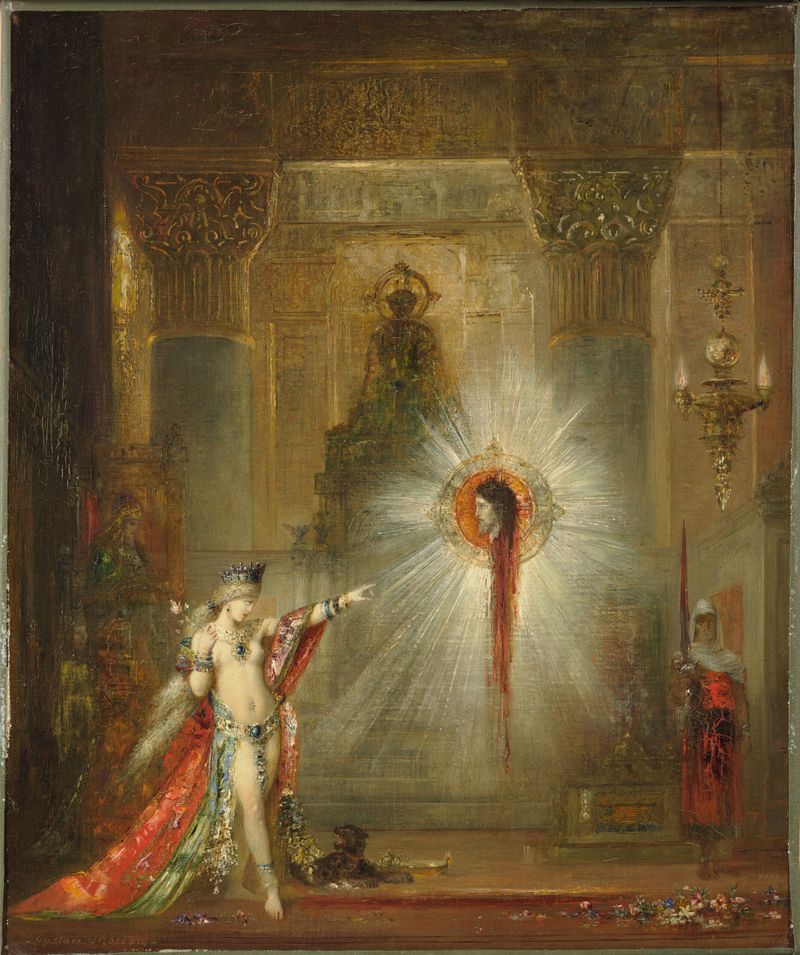
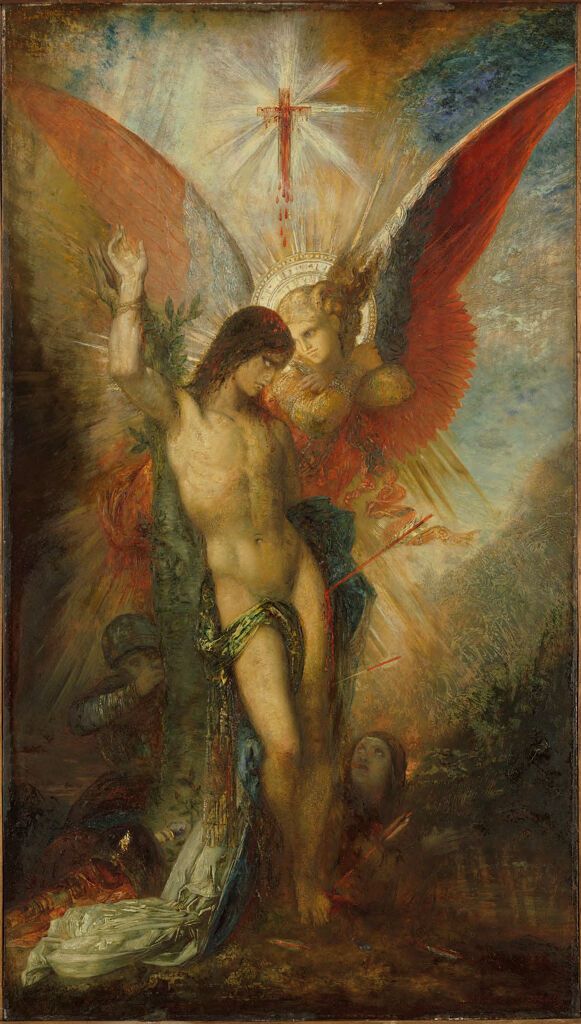
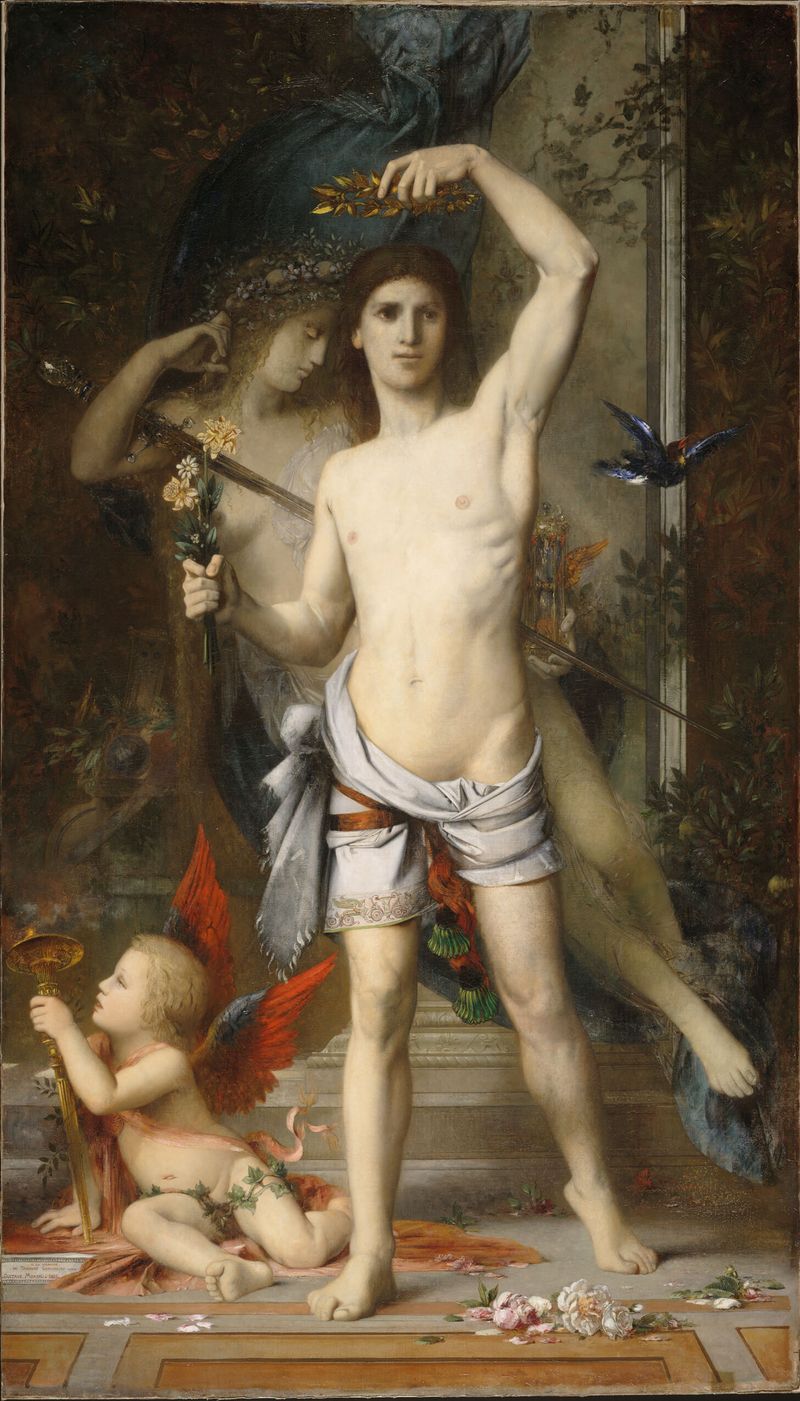
In the ethereal realm of Gustave Moreau's vision, innocence stands on the precipice of transformation, caught in moments that echo eternity. Look to the left at the arching figure of Jacob, his body poised in a delicate struggle as he faces an equally captivating angel. The muted palette of soft blues and warm golds envelops the scene, inviting the viewer to engage with the tension that vibrates just beneath the surface. Notice how the layers of paint intertwine, creating a sense of depth that pulls you closer, revealing intricate details in both figures and their surroundings.
The interplay of light and shadow casts an aura of reverence, emphasizing the spiritual struggle and the pivotal nature of this encounter. Beneath the surface beauty lies a profound exploration of innocence and the sacrifices that accompany spiritual awakening. The angel, with its delicate features and shimmering wings, symbolizes divine intervention, but also the inevitable loss of purity as one grapples with faith and moral choices. Jacob's expression reflects a blend of awe and trepidation, representing the duality of aspiration and fear that accompanies transformative experiences.
The rich textures and intricate symbolism invite deeper contemplation on the nature of human striving in the face of the transcendent. During the years 1874 to 1878, Moreau was deeply engaged in the Symbolist movement, creating works that emphasized emotional and spiritual experiences over realism. Living in Paris, he was influenced by his contemporaries, who sought to explore the subconscious and the mystical. This period marked a significant evolution in his artistic style, moving towards the dreamlike and the allegorical, which culminated in masterpieces like this one, illustrating his fascination with biblical themes and the complex interplay of human emotion and divine presence.