
Jalais Hill, Pontoise — History & Facts
What if silence could speak through light? In Jalais Hill, Pontoise, the canvas hums with the fear of unspoken thoughts and the quietude of an ordinary day transformed into a moment of reflection. Look to the left at the towering trees, their slender trunks reaching upward, dappled sunlight filtering through their leaves. The vibrant greens and earthy browns create a tapestry of life, yet an undercurrent of anxiety runs through the brushstrokes. Focus on the figures in the foreground, seemingly absorbed in their tasks, their postures hinting at a tension beneath their calm demeanor — a reminder of the fragility of peace.
The composition guides your gaze toward the hill, where the play of light dances upon the grass, illuminating the scene while simultaneously casting shadows that suggest an unease lurking just beyond sight. The juxtaposition between the serene landscape and the figures’ subtle anxieties reveals a deeper narrative. The stillness of the hill belies the fear of encroaching change, perhaps an echo of uneasiness felt by the artist himself. The colors, warm yet muted, evoke both beauty and a sense of foreboding, striking a balance between nature's allure and the human condition's complexity.
Each brushstroke invites contemplation of the unspoken tensions that can lie beneath the surface of even the most idyllic vistas. In 1867, Camille Pissarro created this work while living in Pontoise, a time when he was exploring the interplay of light and landscape in his art. The period marked significant developments in Impressionism, as artists sought to capture transient moments in nature while grappling with personal and political strife. During this time, Pissarro was influenced by his contemporaries, experimenting with new techniques that would later define the movement.
More Artworks by Camille Pissarro
Browse all →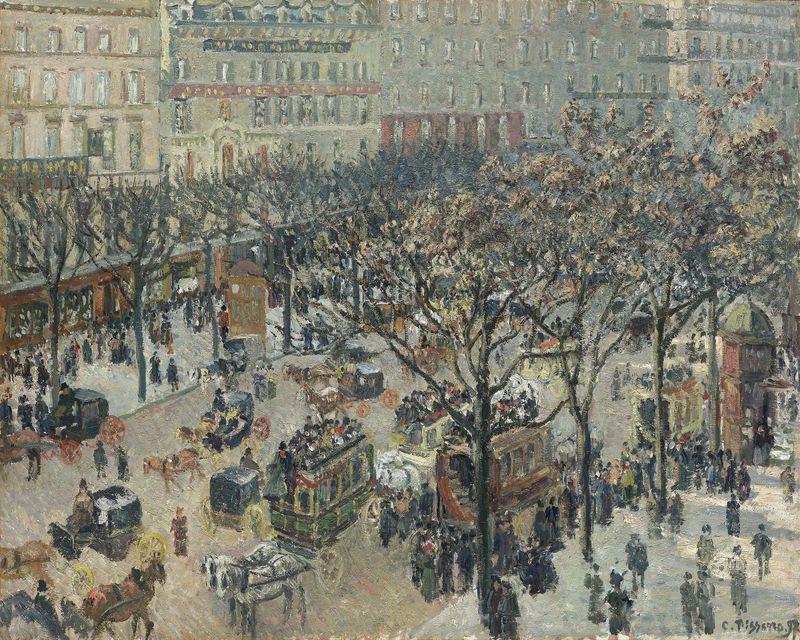
Boulevard des Italiens,Morning_Sunlight
Camille Pissarro
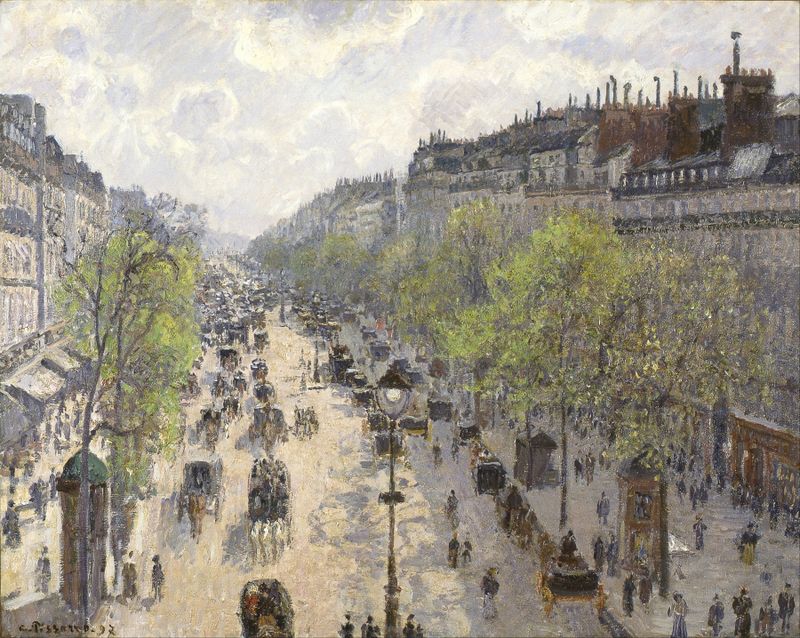
Boulevard Montmartre, Spring
Camille Pissarro
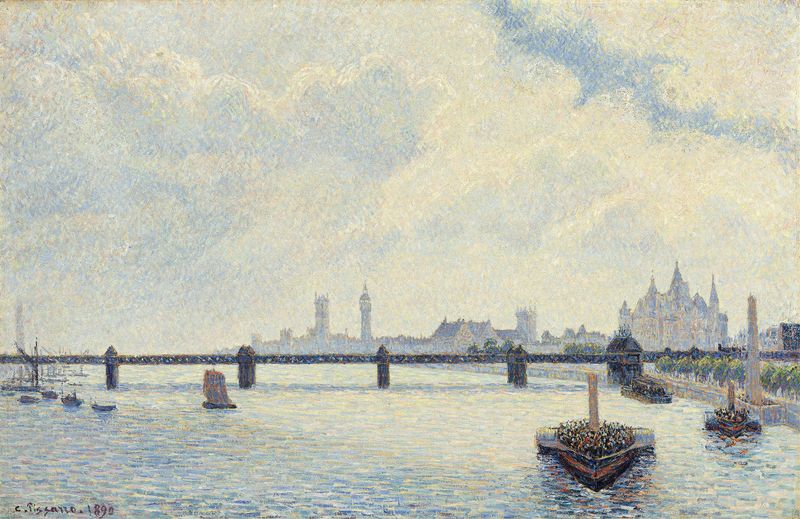
Charing Cross Bridge,London
Camille Pissarro
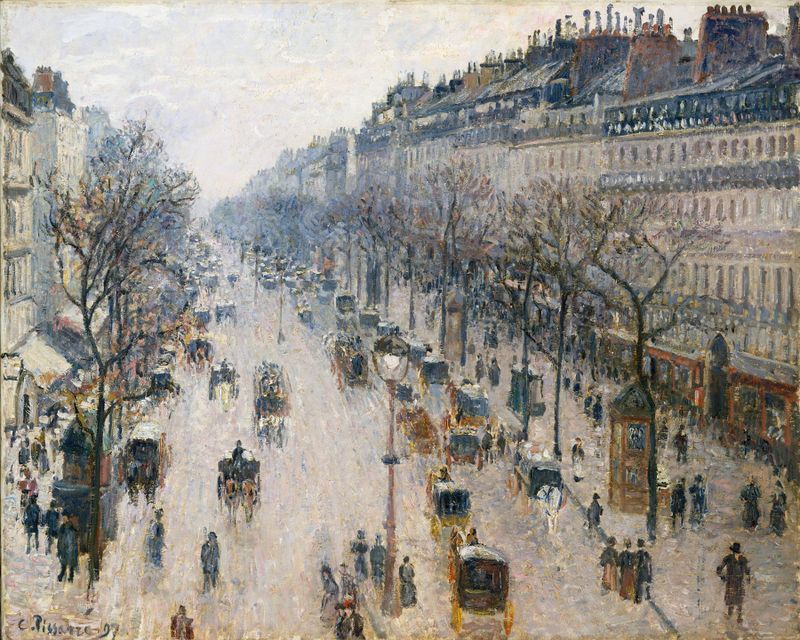
The Boulevard Montmartre on a Winter Morning
Camille Pissarro
La Place du Théâtre Français
Camille Pissarro

Rue Saint-Lazare, Paris
Camille Pissarro
L’hermitage En Été, Pontoise
Camille Pissarro

Place du Theatre Francais,Fog Effect
Camille Pissarro
La barrière du chemin de fer, aux Pâtis près Pontoise
Camille Pissarro
Port de Bruxelles
Camille Pissarro





