Jephthah And His Daughter — History & Facts
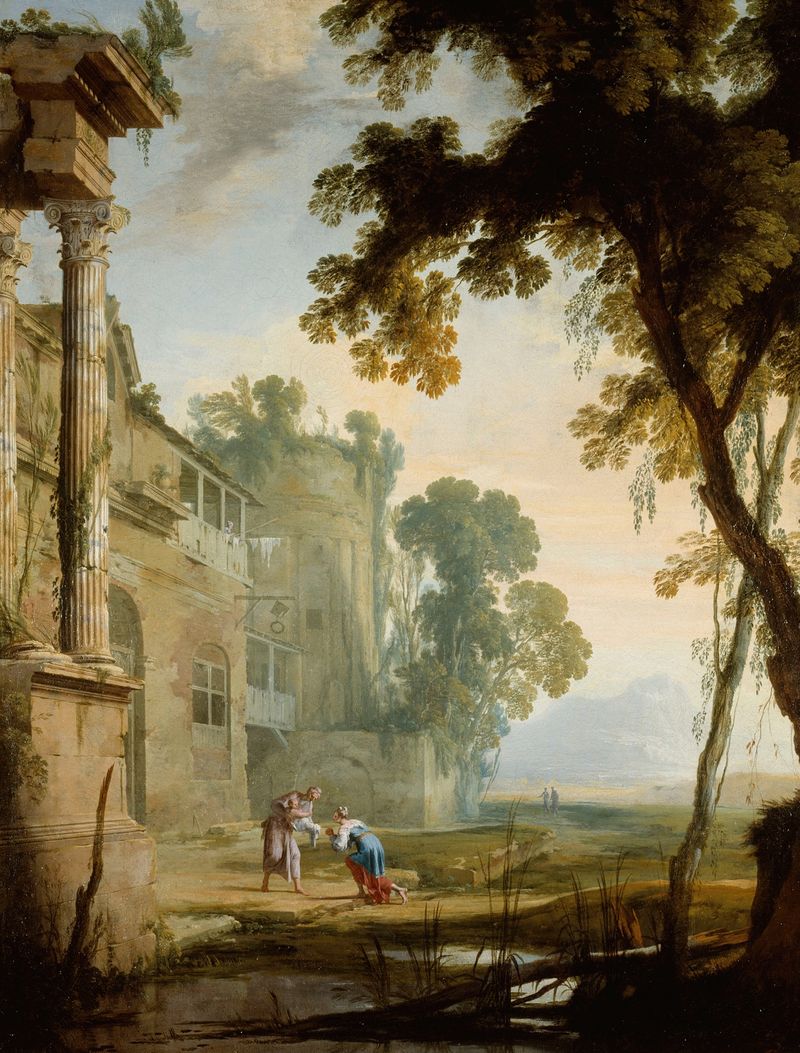
Is this a mirror — or a memory? In Jephthah And His Daughter, the emotive play of light captures an eternal moment of sacrifice, reflecting the duality of love and loss. Look to the foreground, where a soft, golden light bathes the figures, illuminating the expressions etched on their faces. The father, resolute yet pained, stands in contrast to his daughter, whose wide eyes glimmer with a blend of acceptance and sorrow. Notice how the artist uses a rich palette of warm hues to enhance the emotional depth, guiding your gaze toward the poignant gesture of their clasped hands, a bridge between duty and devotion.
The drapery surrounding them flows like the last whispers of their shared bond, framing the scene in an intimate embrace. Delve deeper into the intricate details: the daughter’s delicate crown, signifying her forthcoming sacrifice, and the subtle shadows that dance around Jephthah, hinting at the looming darkness of his fateful promise. Every brushstroke embodies the tension between their roles — the warrior father bound by a vow and the innocent daughter caught in the crossfire of honor and tragedy. This juxtaposition speaks not only to familial duty but also to the universal themes of choice and consequence. Henri Mauperché created this evocative work between 1650 and 1700, a period marked by the Baroque movement's exploration of drama and emotional intensity.
Living in France, he was influenced by the shifting tides of art and life, where narratives steeped in personal sacrifice resonated with a society caught between faith and reason. This piece stands as a poignant reminder of the power of light, memory, and the human experience.