
Jerusalem — History & Facts
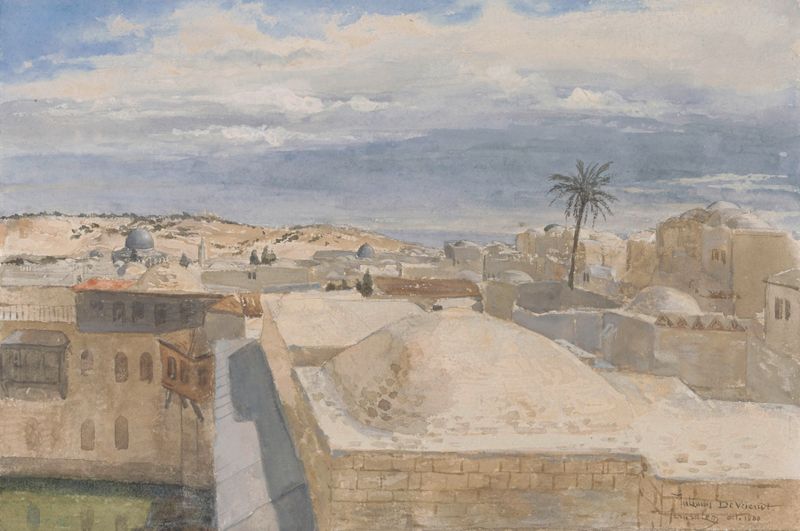
What if silence could speak through light? In Jerusalem, the interplay of illumination and shadow invites us to ponder the whispers of history etched into the ancient stones. Look to the right at the radiant glow casting gentle highlights upon the weathered architecture. The soft hues of ochre and warm beige seem to resonate with the spirit of the city, while deep blues and greens cradle the shadows in a comforting embrace. The composition draws your eye towards the majestic dome, its grandeur framed by the sky's expansive canvas, grounding the viewer in a moment of reverence and reflection. Beneath the surface, the painting reveals an emotional tension between the sacred and the mundane.
The serene skyline juxtaposes the textured, worn facades that speak of countless stories and prayers. Small details, like the flutter of a flag or the figures in the foreground, evoke a sense of life amidst the stillness, suggesting that the essence of Jerusalem lives not only in its stones but in the hearts of those who have walked its paths. In 1880, Juliaan De Vriendt created this work while living in Belgium, a time when interest in Orientalism and historical subjects was surging among European artists. This fascination was fueled by burgeoning travel to distant lands, offering artists like him a chance to interpret and immortalize the allure of foreign landscapes.
De Vriendt's choice to depict Jerusalem reflects both personal intrigue and a broader cultural movement, bridging the past with the present through his artistic lens.
More Artworks by Juliaan De Vriendt
Browse all →
More Architecture Art
Browse all →
The statue of Liberty
Frédéric Auguste Bartholdi

View of Houses in Delft, Known as ‘The Little Street’
Johannes Vermeer

View of Houses in Delft, Known as ‘The Little Street’
Johannes Vermeer

The Cathedral in Rouen. The portal, Grey Weather
Claude Monet

The yellow house
Vincent van Gogh

The Church in Auvers-sur-Oise, View from the Chevet
Vincent van Gogh