Tomb on the Southern Side of the Kidron Valley — History & Facts
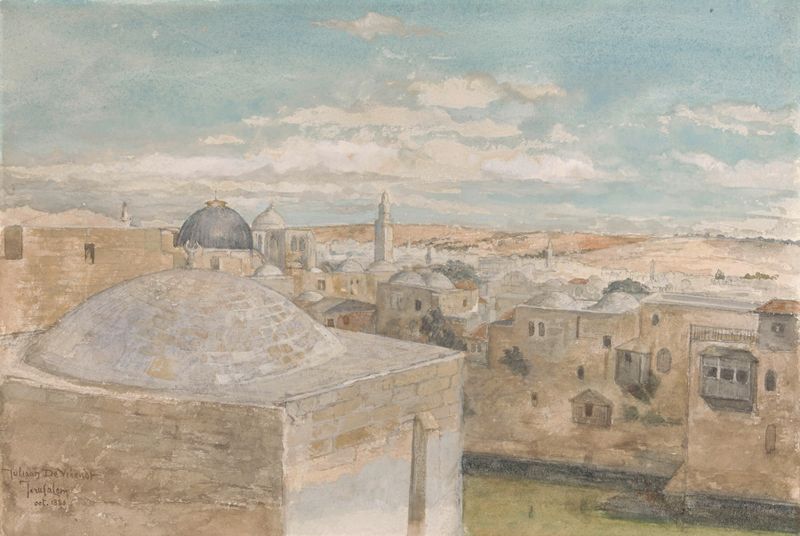
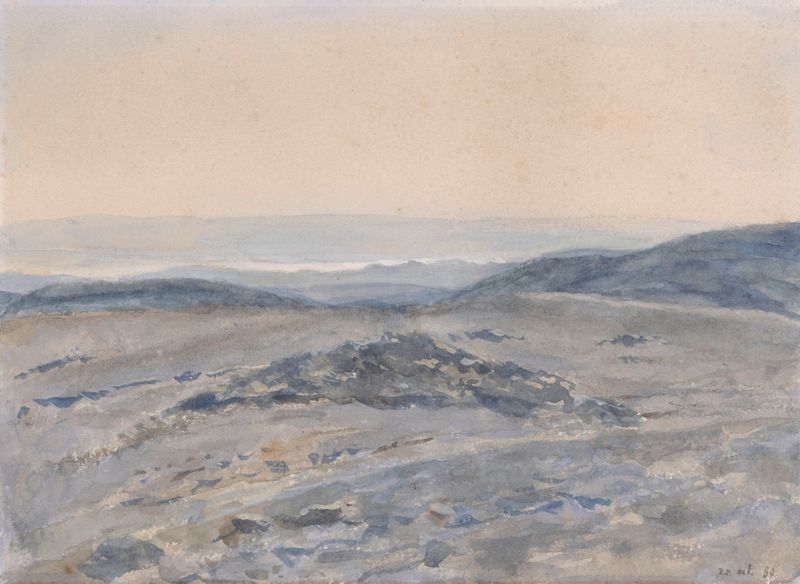
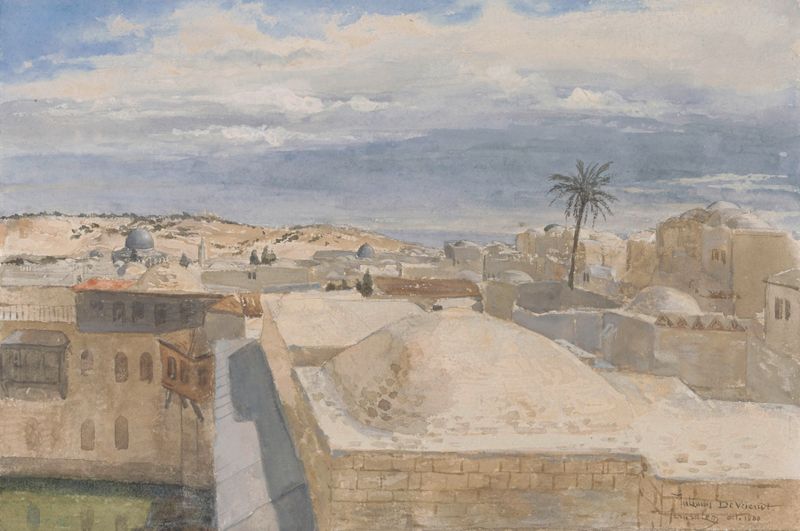
In the stillness of a forgotten landscape, nostalgia hangs palpably in the air, whispering stories of those who came before us. Look to the foreground where a solemn, ancient tomb emerges, bathed in a warm, golden light. The artist’s deft handling of shadow and light accentuates the weathered stones, inviting the eye to trace the contours of time etched into the surface. Notice how the earthy palette, rich with ochres and muted greens, creates a sense of intimacy, evoking both beauty and decay.
The distant hills stand sentinel, their hazy outlines juxtaposed against the stark clarity of the tomb, drawing attention to the fragility of human existence. Delve deeper into the composition and observe the interplay of silence and history. The tomb, a lone monument against the vast landscape, embodies both reverence and isolation, suggesting a profound connection to the past that persists through generations. The soft brushwork evokes a sense of longing, while the unyielding structure of the tomb reflects the permanence of memory amidst the transience of life.
This contrast resonates, making the viewer ponder the stories held within the stones and the lives that have faded into the shadows. In 1880, Juliaan De Vriendt created this evocative piece during a period of European fascination with archaeology and the exoticism of the East. Residing in Paris, he was influenced by the Romantic movement and its emphasis on emotion and nostalgia. This artwork reflects not only his personal journey but also a broader cultural moment, where artists sought meaning in the remnants of the past, celebrating the beauty found in solitude and history.