View from Mount Scopus in Jerusalem of the Dead Sea and the Moabite Mountains — History & Facts
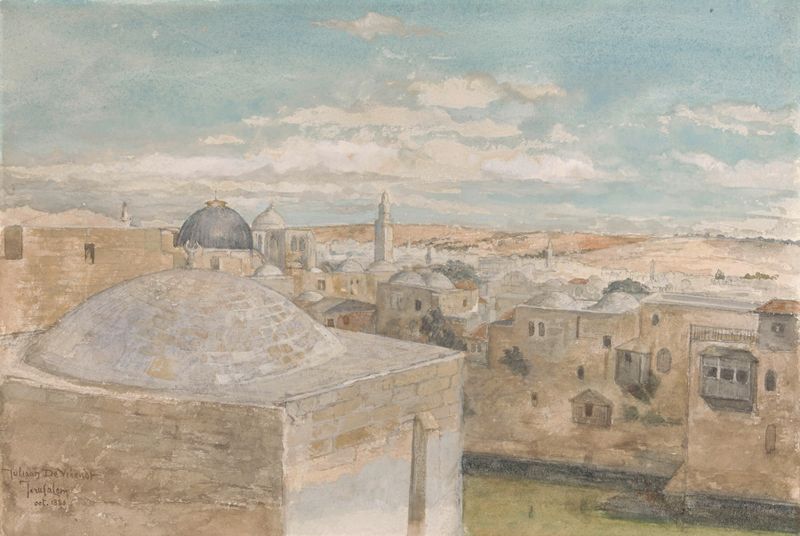
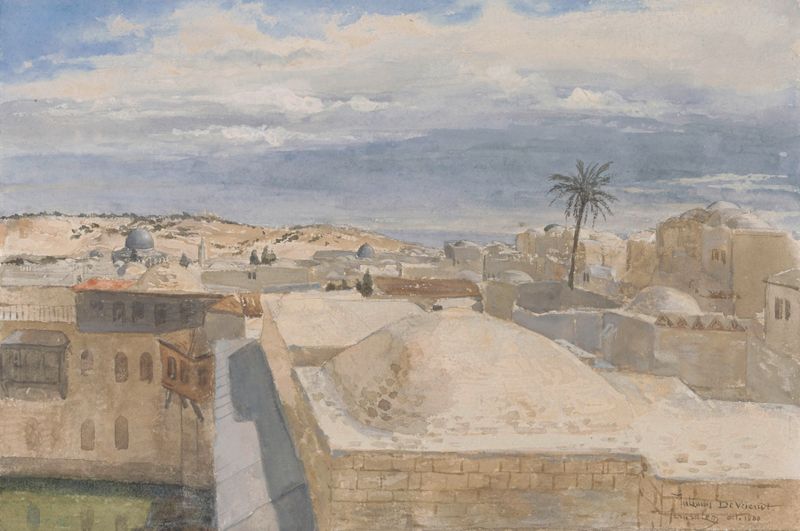
Did the painter know this moment would outlive them? The timeless beauty of landscapes often invites reflection on the fragility of human existence against the grandeur of nature. Each brushstroke captures not just a view but the very essence of awe that such vistas inspire. Look to the horizon where the sprawling, undulating hills are kissed by the soft hues of dusk. The warm golden light spills across the Dead Sea, intensifying the ethereal blues and greens, while shadows begin to stretch languidly over the Moabite Mountains.
Notice how the artist expertly layers the colors, creating depth and atmosphere, allowing the viewer to almost feel the gentle breeze that whispers through the scene. Dig deeper into the contrasts present in this piece. The vibrant tranquility of the water reflects the serene sky, yet the jagged mountains in the distance evoke a sense of solemnity. This juxtaposition invites contemplation of life's dualities—peace and turmoil, beauty and desolation.
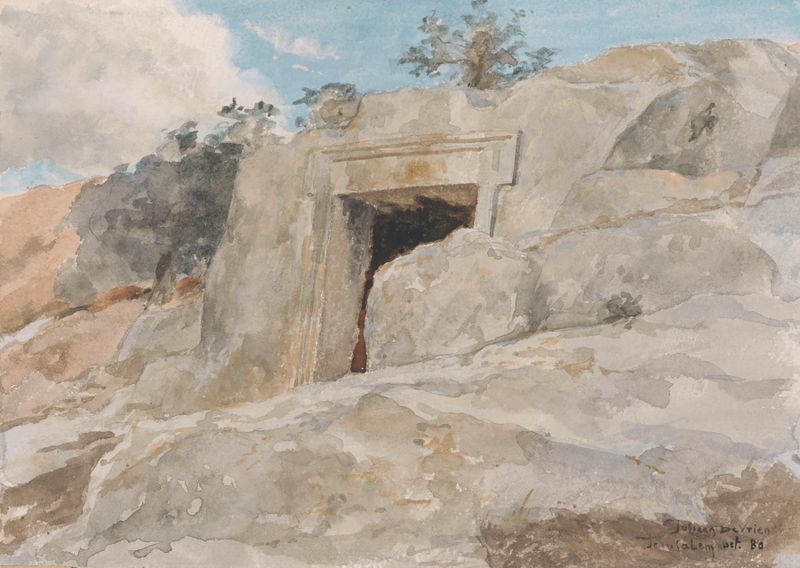
The brushwork conveys a sense of immediacy, while the expansive vista beckons thoughts of eternity, emphasizing the fleeting nature of human moments amidst the permanence of the natural world. In 1880, De Vriendt painted this masterpiece from Mount Scopus, a site imbued with historical significance. At this time, the artist was immersed in the Romantic tradition, reflecting the period's fascination with nature and its sublime qualities. The late 19th century was a dynamic era in art, as artists sought to convey their emotional responses to the landscapes around them, paving the way for modern interpretations of the world.