
Jonah and the Whale — History & Facts
A single moment of chaos grips the eye: a ship, battered by wild, curling waves, seems on the verge of being swallowed whole—not just by the sea, but by a monstrous whale whose head bursts from the water at the vessel’s side. The crew’s panic is unmistakable: arms flung skyward, bodies twisted in alarm, as one figure—Jonah—topples over the rail, offered up to the depths. The drama is heightened by the way light rakes across the foaming surf, picking out the tumult below the ship and drawing attention to the looming threat of the whale, its spout a white exclamation against the storm-dark sky.
The oval format tightens the scene, focusing our gaze on the central ship’s desperate struggle, while distant vessels, battered but upright, hint at the scale of the storm and the peril that unites all who sail these waters. Painted between 1610 and 1620, Jonah and the Whale by Adam Willaerts belongs to a world where the sea was both highway and hazard, a daily reality for the Dutch Republic’s merchants, sailors, and artists. Marine paintings like this were prized by collectors who saw in them both the grandeur of nature and the drama of biblical or mythological tales, often as reminders of faith, fate, and fortune. Willaerts, active in a period when Dutch maritime power was rising, fills the panel with the technical detail of rigging and hull, but also with the moral tension of a story known to every viewer.
History has kept few traces of this specific panel’s journey, but its stormy energy still invites us to stand on deck, feel the spray, and wonder what comes next for Jonah—and for ourselves.
More Artworks by Adam Willaerts
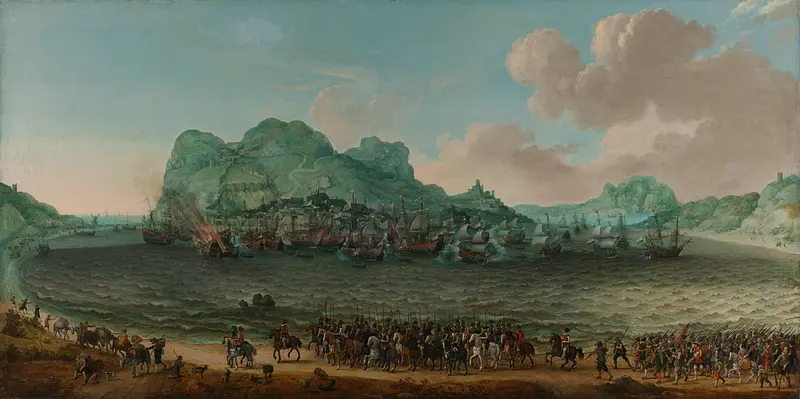
Victory over the Spanish near Gibraltar by a Fleet Commanded by Admiral Jacob van Heemskerck, 25 April 1607
Adam Willaerts
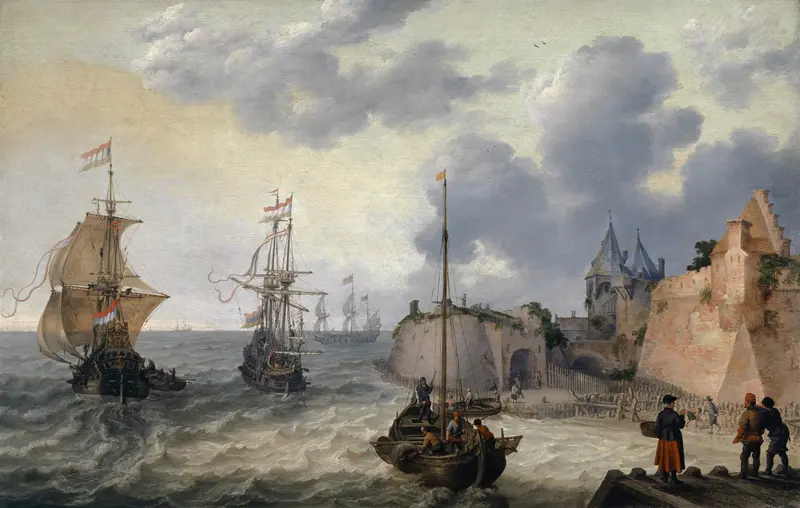
Dutch Harbour with Sailing Ships
Adam Willaerts
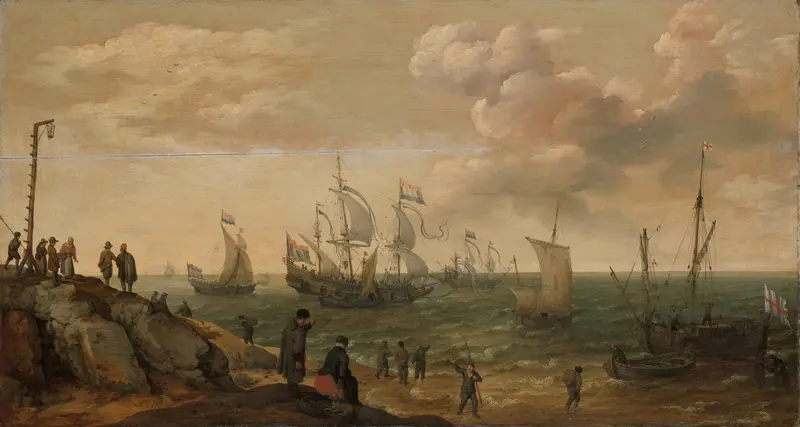
Ships along the Shore
Adam Willaerts
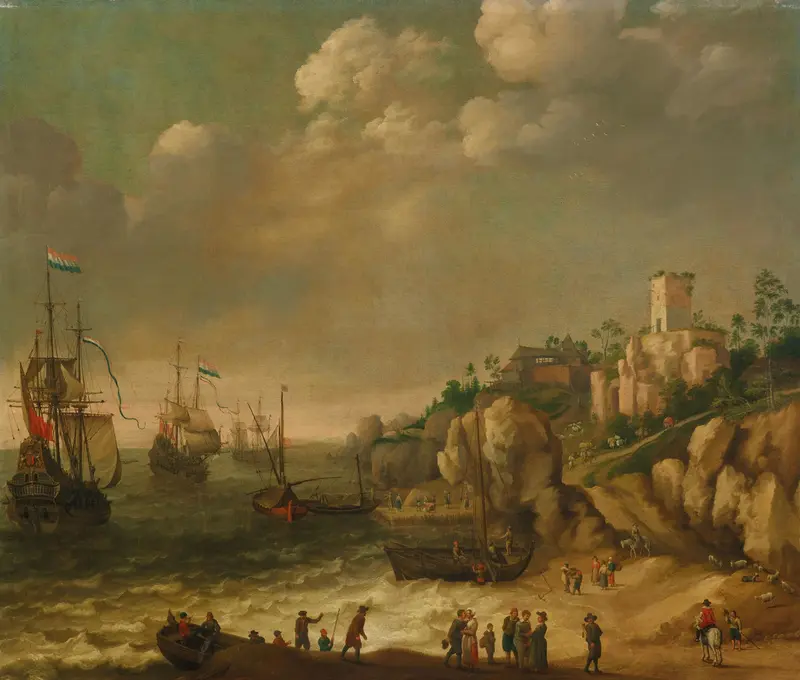
Dutch ships in front of a rocky coast with figures, buildings beyond
Adam Willaerts
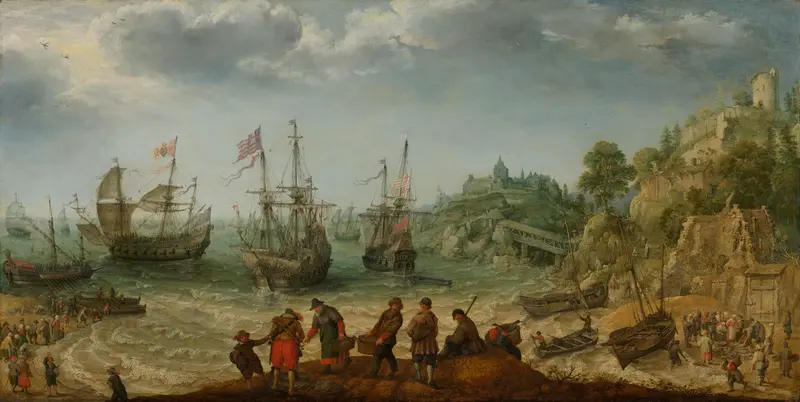
Ships off a Rocky Coast
Adam Willaerts
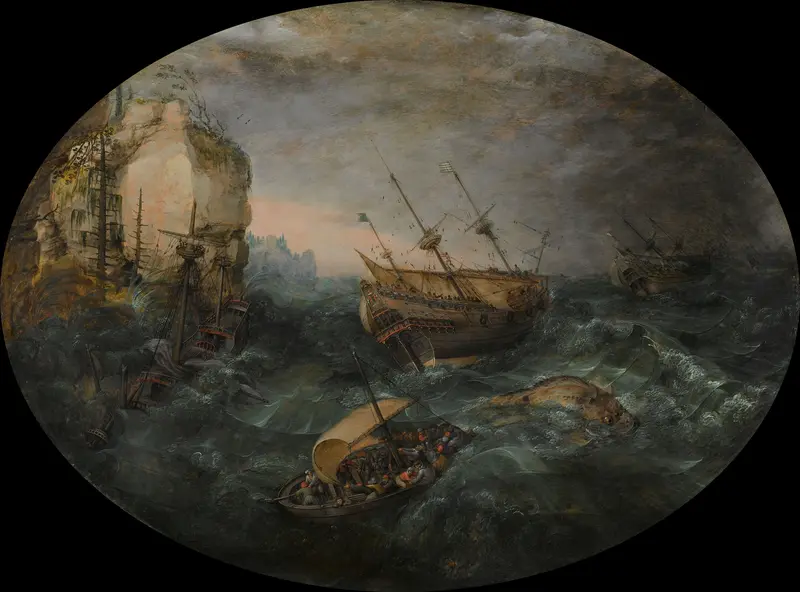
Shipwreck off a Rocky Coast
Adam Willaerts
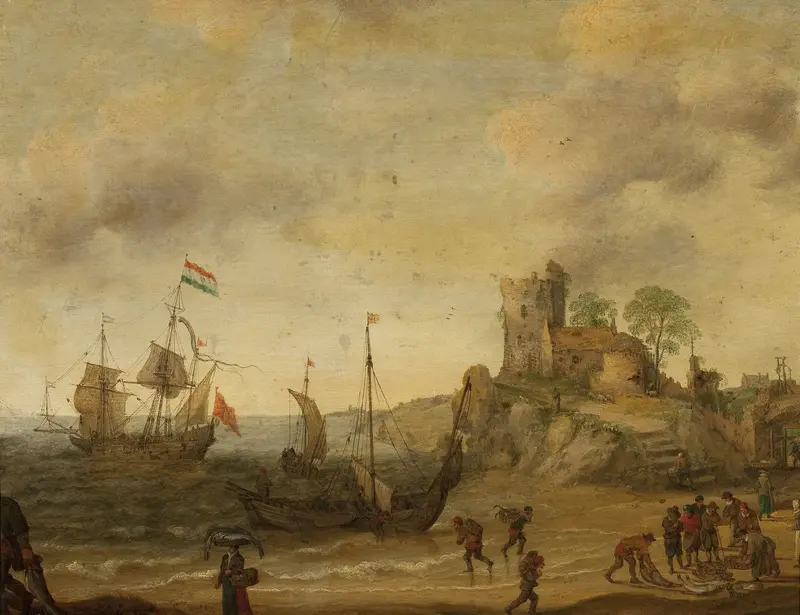
Fishermen at the seaside
Adam Willaerts
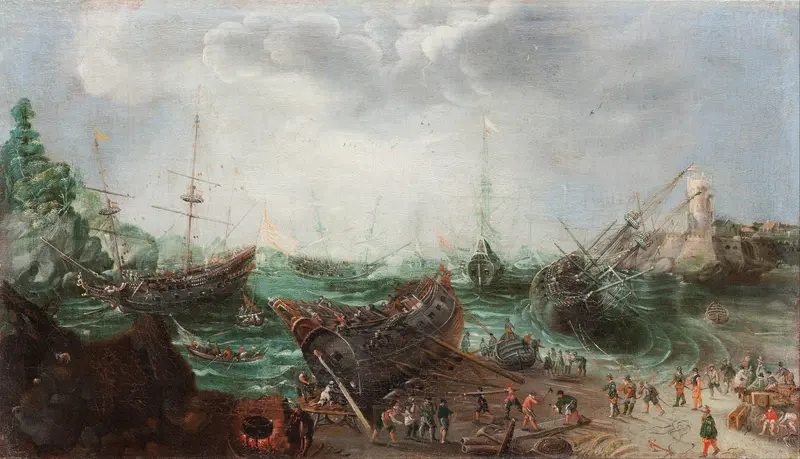
Harbour scene
Adam Willaerts
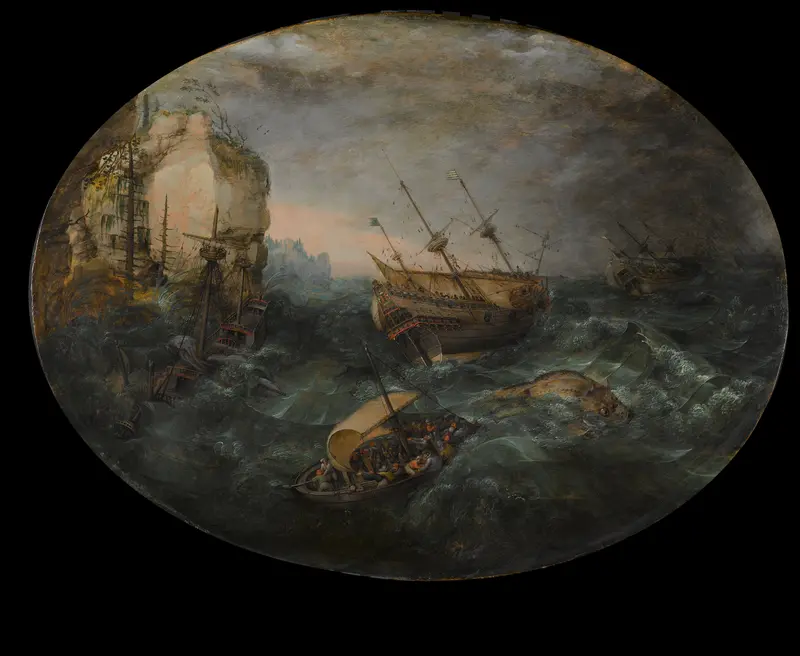
Shipwreck off a Rocky Coast
Adam Willaerts
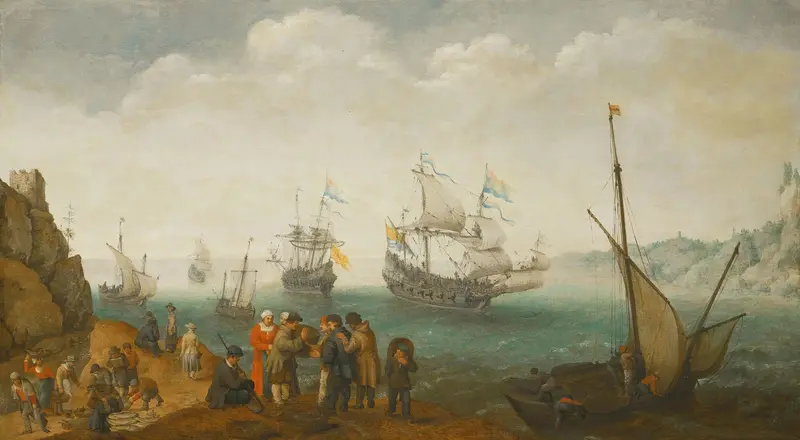
A Marine With Five Vessels Out To Sea And Another In Port, And With Groups Of Largely Male Figures Engaged In Buying Or Selling Fish Or Other Wares
Adam Willaerts





