July (‘Summer Luxuriance’) — History & Facts
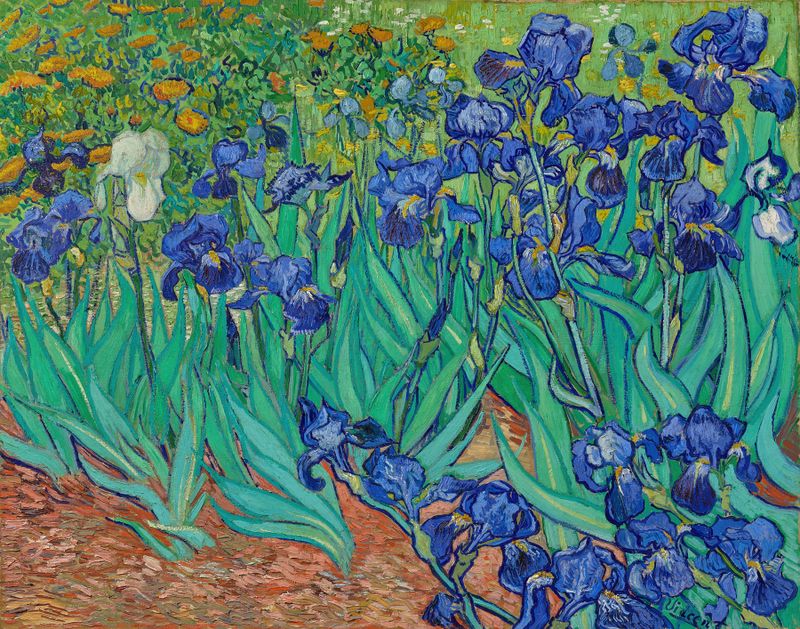
Can beauty exist without sorrow? In July ('Summer Luxuriance'), a radiant tableau beckons the viewer into a world where lushness conceals a darker undercurrent, whispering tales of betrayal beneath its vibrant surface. Look to the center, where an explosion of greens and yellows breathes life into the canvas, drawing your eyes to a cluster of sun-drenched flowers, their petals unfurling as if to embrace the light. The brushwork is both carefree and meticulous, creating a sense of motion that dances across the surface, while the interplay of colors evokes the warmth of a summer day. Notice how the light falls upon each bloom, illuminating the fragile beauty that belies the inevitable decay that follows, a reminder of the transience of life. Yet within this pastoral splendor lies a complexity that challenges initial perceptions.
The juxtaposition of bright blooms against the encroaching shadows hints at an underlying tension—a reminder of the ephemeral nature of beauty and the lurking presence of betrayal in relationships. The lushness, though captivating, becomes a veil that may conceal disappointment, as if the flowers themselves conspire to hide a deeper, more poignant truth. Created between 1890 and 1910, the artist worked during a period of transition in the art world, grappling with the implications of modernity while celebrating the natural world. Van Looy, influenced by the Symbolist movement, sought to convey emotion through color and form, capturing the essence of fleeting moments in his richly textured works.
In this painting, he encapsulates both the allure and fragility of summer, inviting viewers to ponder the bittersweet nature of beauty itself.