Junge Hirten in der Puszta — History & Facts
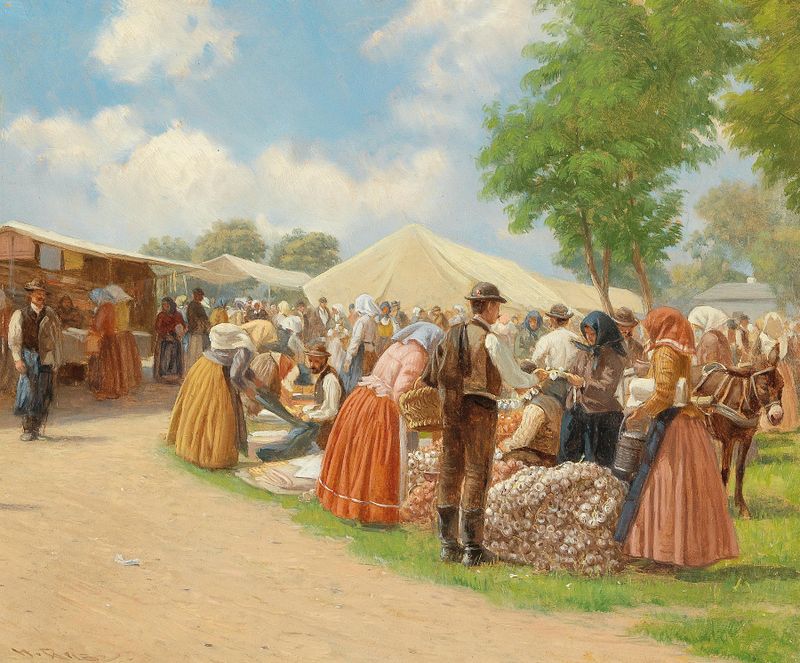
Can beauty exist without sorrow? In Junge Hirten in der Puszta, the answer lingers in the air, heavy yet tender, like a whisper of a past that echoes through the present. Look to the foreground, where two young shepherds stand, their posture relaxed yet contemplative. The soft browns and muted greens of the Puszta landscape envelop them, while the sky, painted in gentle hues of twilight, hints at the encroaching dusk. Notice how the light caresses their faces, illuminating the innocence of youth against the vast, empty plains, creating a poignant contrast between the serenity of the moment and the inevitable passage of time. Hidden within this pastoral scene lies an emotional tension that speaks of both freedom and isolation.
The shepherds, though surrounded by the expanse of nature, seem caught in a bubble of introspection. Each glance towards the horizon suggests dreams beyond the horizon, while their stillness hints at the weight of responsibility. The gentle brushstrokes invoke a sense of nostalgia, emphasizing the fleeting nature of youth and the bittersweet beauty of life’s transient moments. Hermann Reisz painted this evocative piece during a period of personal exploration in the late 19th century, when he was deeply influenced by his surroundings in Hungary.
At a time when artists grappled with themes of realism and romanticism, he sought to capture the essence of rural life, intertwining the simplicity of the landscape with the profound emotions of its inhabitants. In Junge Hirten in der Puszta, he invites us to reflect on the delicate balance between joy and grief, revealing the layers of human experience within an idyllic setting.