Juninatt I Haven — History & Facts
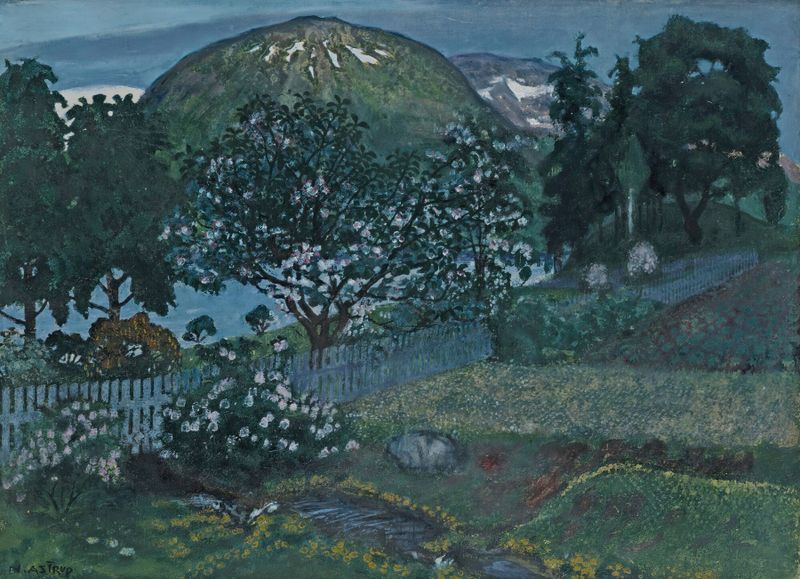
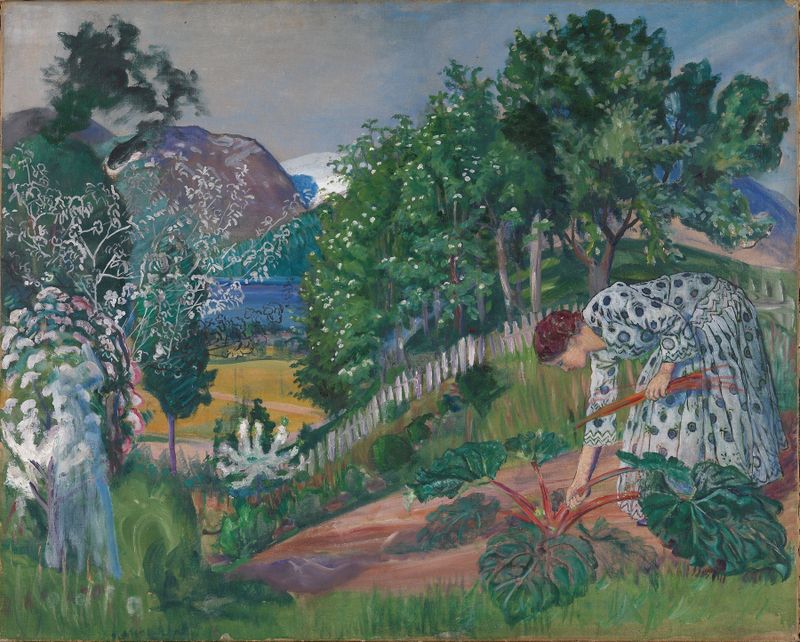
What secret hides in the quiet of the canvas? In the stillness of a summer’s night, serenity envelops the garden, inviting the viewer to ponder deeper truths. Look to the center of the composition, where a soft moonlight spills across the lush foliage. The play of light and shadow creates an intimate atmosphere, illuminating the deep greens and vibrant blues that Astrup employs masterfully. Notice how the brushstrokes weave together, blending the foliage and sky in a seamless transition, drawing your eyes towards the reflecting waters of the garden pond, where the luminous glow of the moon seems to dance in tandem with the flowers. The tranquility of the scene belies an undercurrent of longing and introspection.
The lush garden can symbolize abundance and vitality, yet the solitude depicted invites a deeper contemplation of inner peace juxtaposed with loneliness. The moon, a solitary figure in the vast night sky, reflects on the water, evoking thoughts of separation and connection, encapsulating the fragile balance between the beauty of nature and the quietude of solitude. Nikolai Astrup painted this piece during the early 20th century in Norway, a time of artistic exploration and personal strife. As he sought to express the rich landscapes and emotional depth of his homeland, this artwork emerged amidst a backdrop of burgeoning modernism.
Astrup's focus on the interplay of light and nature reveals his desire to connect with both his roots and the broader movements of the art world, showcasing his unique vision in a transformative era.