Ålhustunet, Jølster — History & Facts
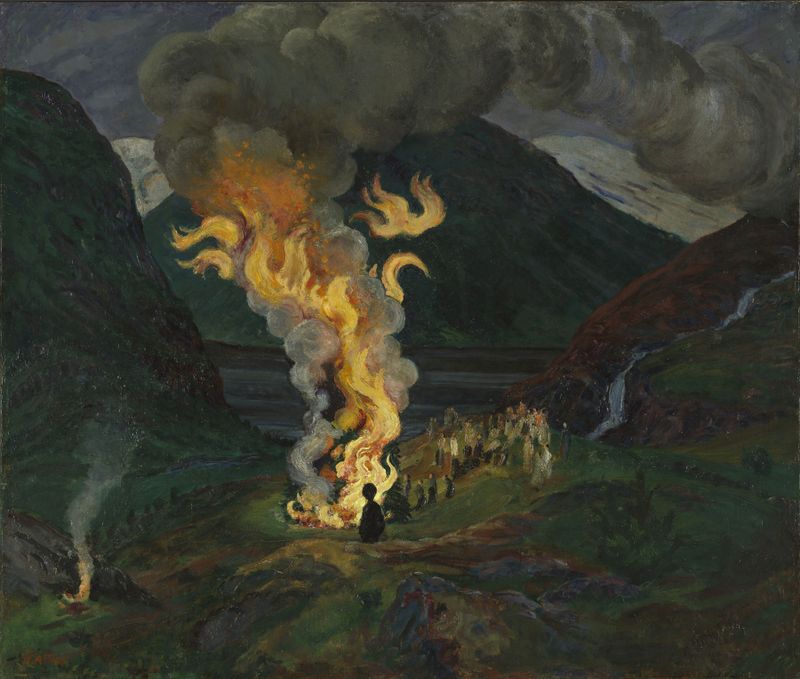
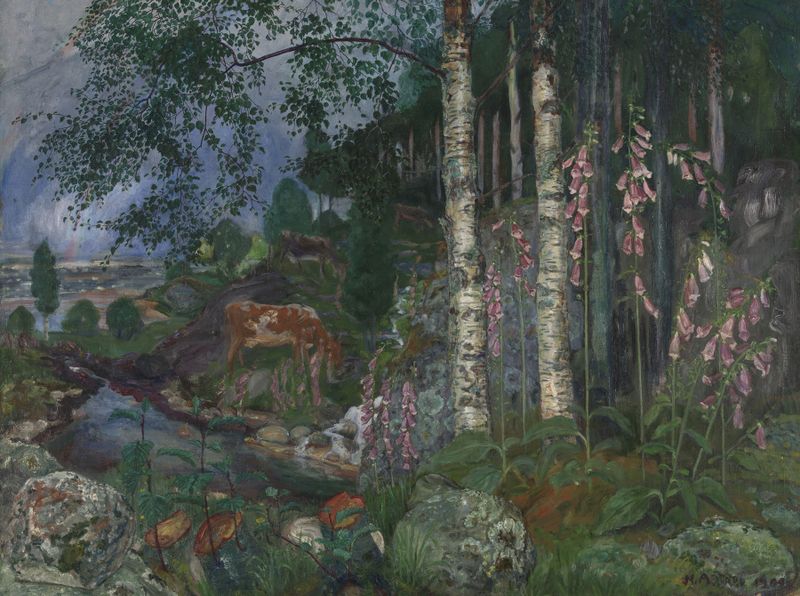
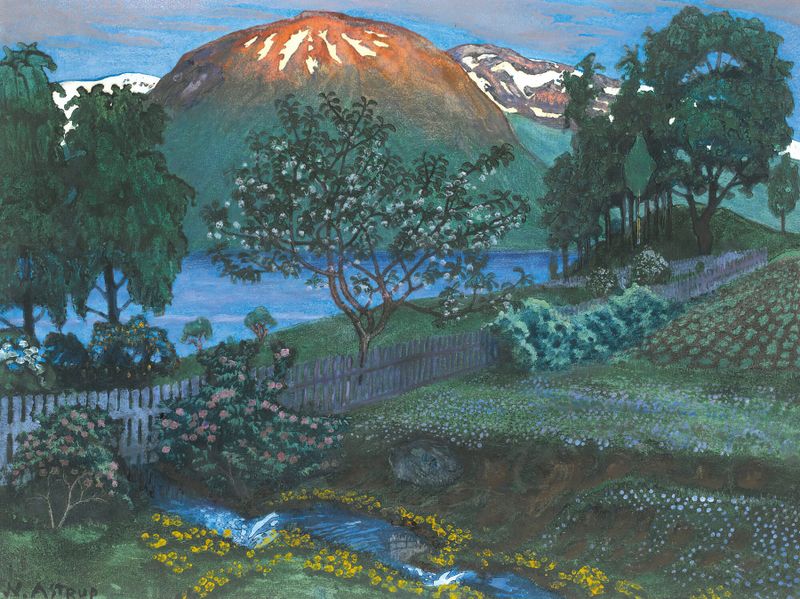
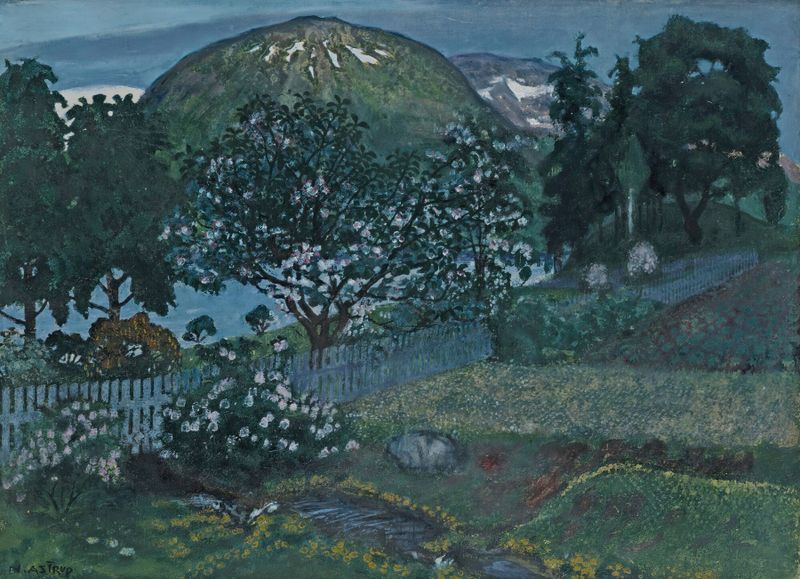
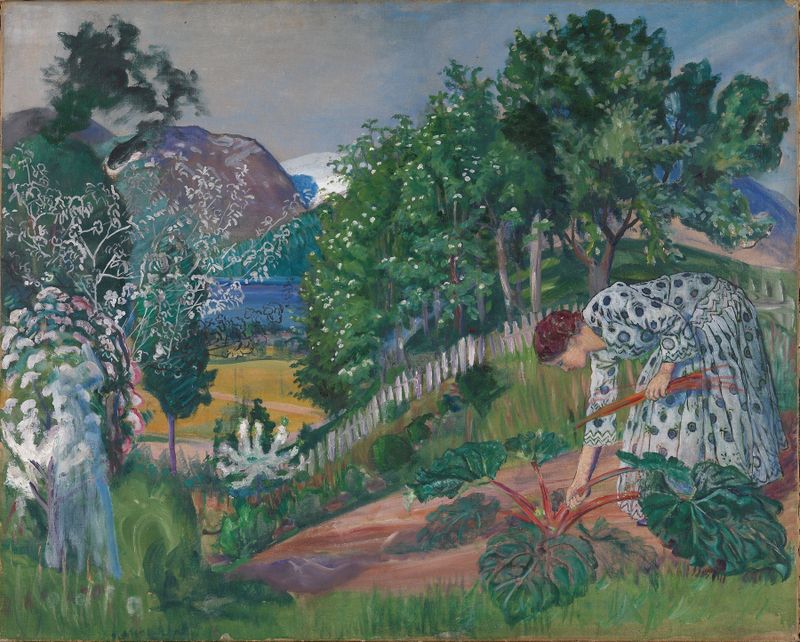
Could beauty survive in a century of chaos? In a world marked by turmoil, the essence of longing unfurls like the petals of a delicate flower emerging from frost. Look to the foreground where vibrant, emerald grass dances with the wind, leading the eye towards the rustic, wooden cabin nestled against the lush backdrop of rolling hills. The warm hues of the cabin contrast with the cool blues and greens of the landscape, inviting a sense of home amidst the wilderness. Notice how the sunlight filters through the trees, casting gentle shadows that create a rhythm of light and dark, evoking peace in the heart of nature's embrace. Delve deeper into the emotional resonance of the painting—each brushstroke embodies the artist's yearning for a connection with the land.
The sweeping curves of the hills suggest a nurturing presence, while the tethering of the cabin to nature embodies human intimacy with the wild. This tension between civilization and the untamed evokes a sense of nostalgia, as if recalling a place that exists both in memory and imagination. During the early 20th century, Nikolai Astrup found himself in the idyllic landscapes of Jølster, Norway, painting scenes that celebrated the beauty of his homeland. At this time, he sought to capture not only the physical world around him but also the emotional ties to nature that were increasingly overshadowed by modernity.
In a period of societal change, his works became a refuge for those yearning for a simpler, harmonious existence.