Foxgloves — History & Facts
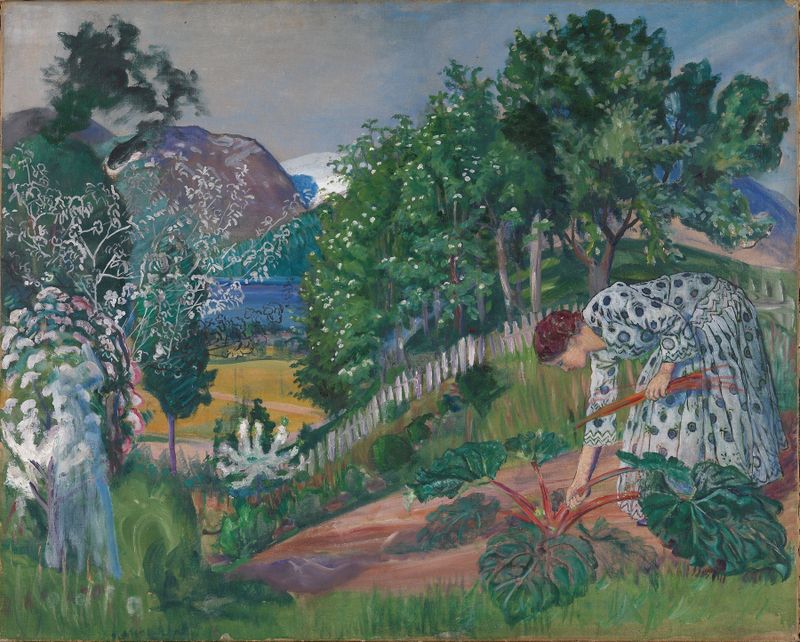
In Foxgloves, the essence of transcendence dances between the ephemeral and the eternal, inviting viewers to reflect on the fleeting beauty of life and nature. Look to the vibrant blooms that dominate the canvas—each foxglove a striking tower of magenta and lavender, reaching upwards with a sense of urgency. The lush green foliage enveloping them creates a rich tapestry of color, while the dappled light filtering through hints at a moment caught in the embrace of time. Notice how the brushwork varies, with soft strokes conveying the delicate petals and more vigorous techniques evoking a sense of growth and vitality, as if the flowers are alive and breathing. Delve deeper into the layers that Astrup weaves; the juxtaposition of the soft blooms against the stark wilderness hints at the fragility of beauty in an untamed world.
Each flower is a reminder of life's transitory nature, while the surrounding landscape subtly speaks of both calm and chaos, suggesting a balance that is often elusive. The choice of color and light creates a harmonious yet poignant dialogue about existence, evoking both joy and melancholy. In 1909, Nikolai Astrup painted Foxgloves during a time of personal and artistic exploration in Norway. His work reflected the rich folklore and natural beauty of the region, as he sought to capture the spiritual connection between humans and nature.
This piece emerged from a period where the artist was deeply influenced by the Symbolist movement, using color and form to transcend mere representation and delve into deeper emotional truths.