Spring Evening in Jølster — History & Facts
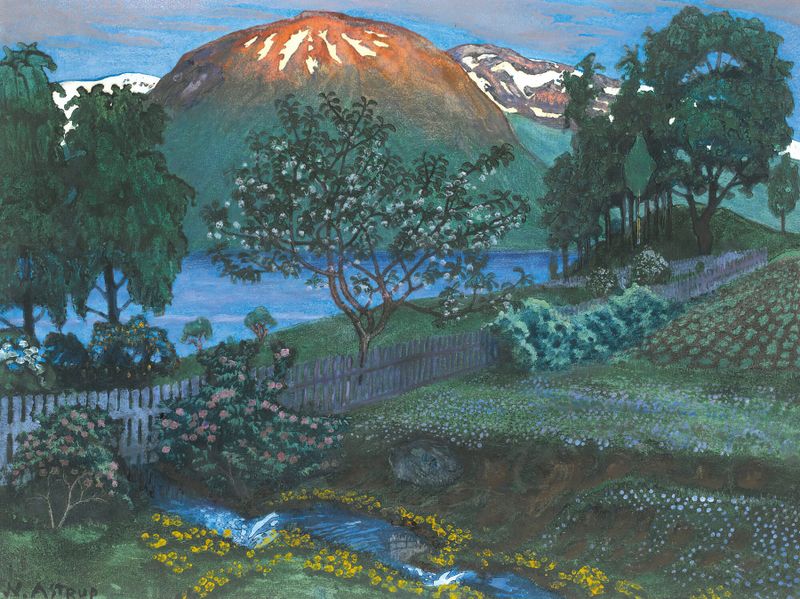
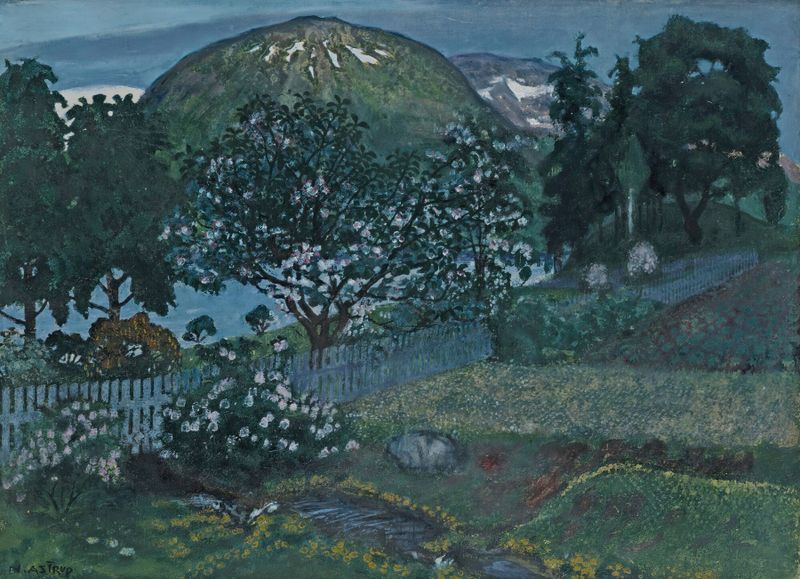
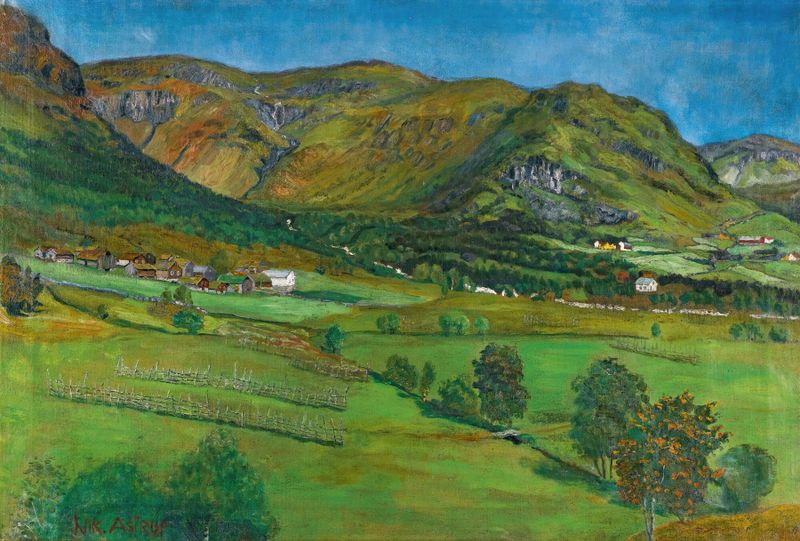
Can beauty exist without sorrow? In Spring Evening in Jølster, vibrant colors dance across the canvas, suggesting a delicate balance between joy and melancholy that resonates deeply with the viewer. Look to the left at the intense greens of the hillside, where life blooms in exquisite detail. Notice how the warm hues of the setting sun spill over the horizon, casting a golden light that bathes the landscape in an ethereal glow. The juxtaposition of the serene water below, reflecting the colors above, invites contemplation on the harmony present in nature's cycles.
Each brushstroke appears deliberate, as if the artist is capturing a fleeting moment of tranquility. The painting reveals layers of emotional depth. The lush foliage hints at the abundance of life, while the soft, fading light evokes the inevitability of change and the passage of time. This tension between vibrancy and the encroaching dusk mirrors life’s transient beauty, reminding us that joy often coexists with an undercurrent of loss.
The tranquility of the scene might suggest peace, yet a subtle unease lingers, creating an atmosphere rich with contemplation. Created in 1926, Astrup painted Spring Evening in Jølster during a pivotal time in his career, while living in Norway. The artist was deeply influenced by his surroundings, drawing inspiration from the natural beauty of the Jølster region. This period marked a culmination of his exploration of color and light, as he sought to express the emotional landscapes of his homeland in a contemporary context, bridging traditional Norwegian themes with modernist sensibilities.