
Kaiserschütze c — History & Facts
A figure surges forward, his entire body pitched in tense motion, as if the very earth beneath him is urging him onward. The ochre and umber palette, broken only by the glint of metal and the flush of skin, grounds the scene in the dust and heat of the battlefield. Every muscle in the soldier’s arms and neck is taut, his grip on the rifle almost desperate, his gaze set beyond the frame—toward a future the viewer can only imagine.
The background, a swirl of pale, unsettled sky, offers no comfort or escape, pressing the drama of the moment into the foreground. This is not the anonymous, faceless mass of war, but a single, monumental presence—his urgency rendered with broad, sculptural brushstrokes that make the air itself seem to vibrate. Painted around 1916, as the world was convulsed by the First World War, Kaiserschütze c belongs to a tradition of early twentieth-century images that sought to capture the human cost and physical reality of modern conflict. Albin Egger Lienz was known for his monumental, almost sculptural figures—soldiers who seem carved from the landscape itself, stripped of sentimentality and heroics.
Works like this, created in the midst of war, were rarely intended as propaganda; rather, they served as stark records and meditations on endurance, made for a public grappling with loss and uncertainty. Now part of the Dorotheum collection, this painting stands as both a personal and collective memory—inviting the viewer to read the story written in the lines of a single soldier’s face.
More Artworks by Albin Egger Lienz
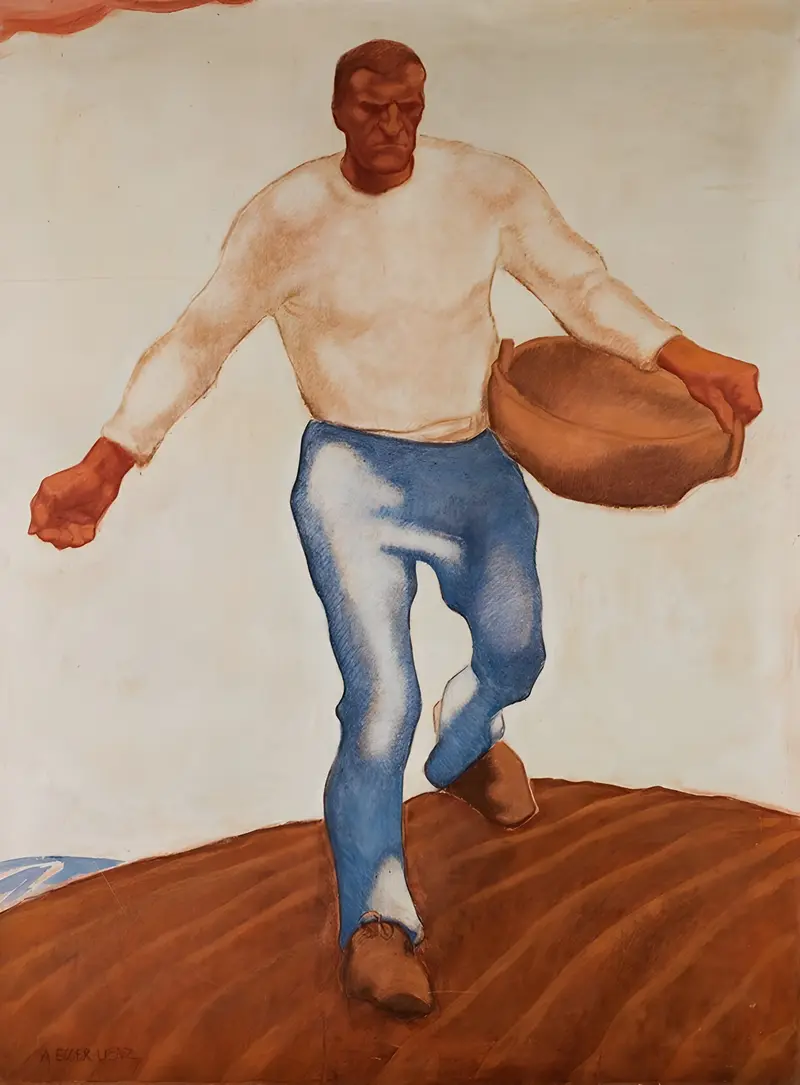
Der Sämann (The Sower)
Albin Egger Lienz
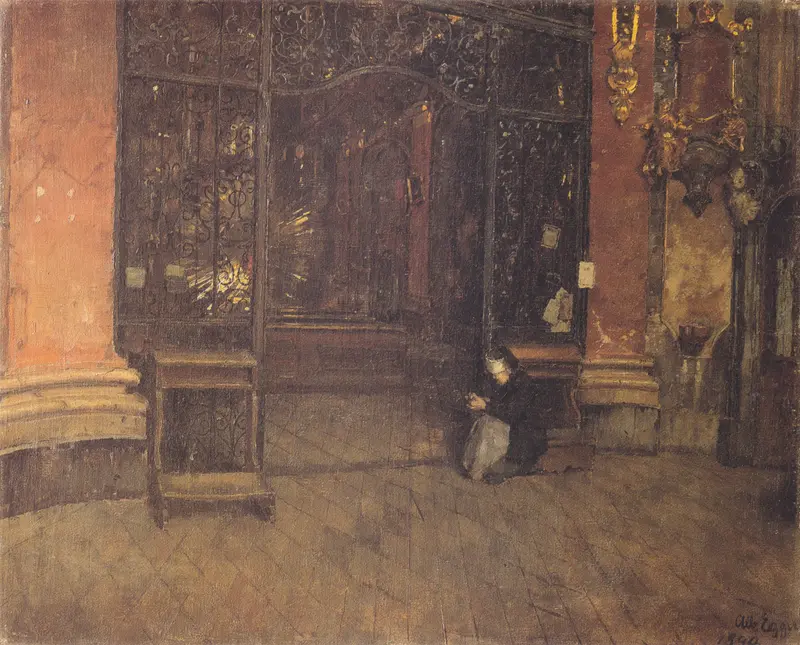
Inneres Der Johanneskirche In München
Albin Egger Lienz
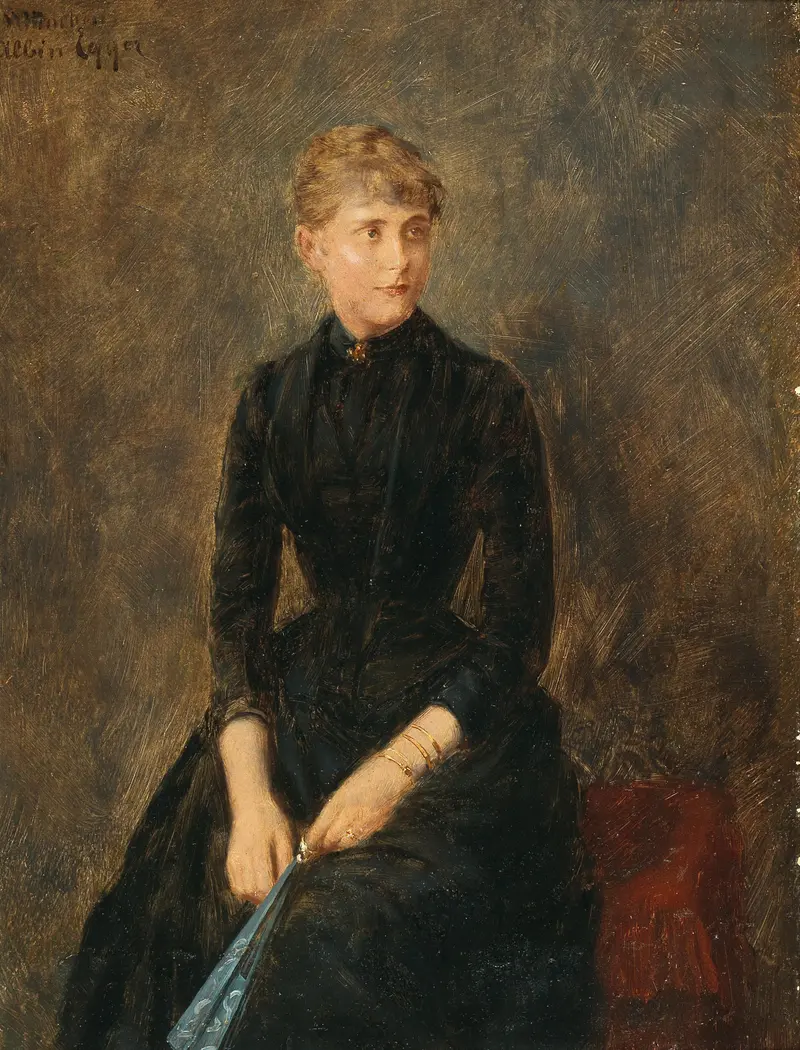
Portrait of the singer Hedwig Helbig
Albin Egger Lienz
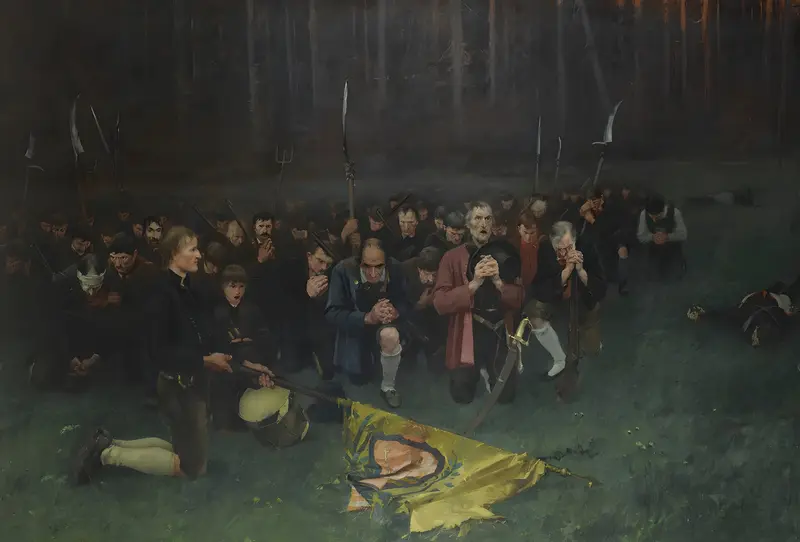
Prayer after the battle of Bergisel
Albin Egger Lienz
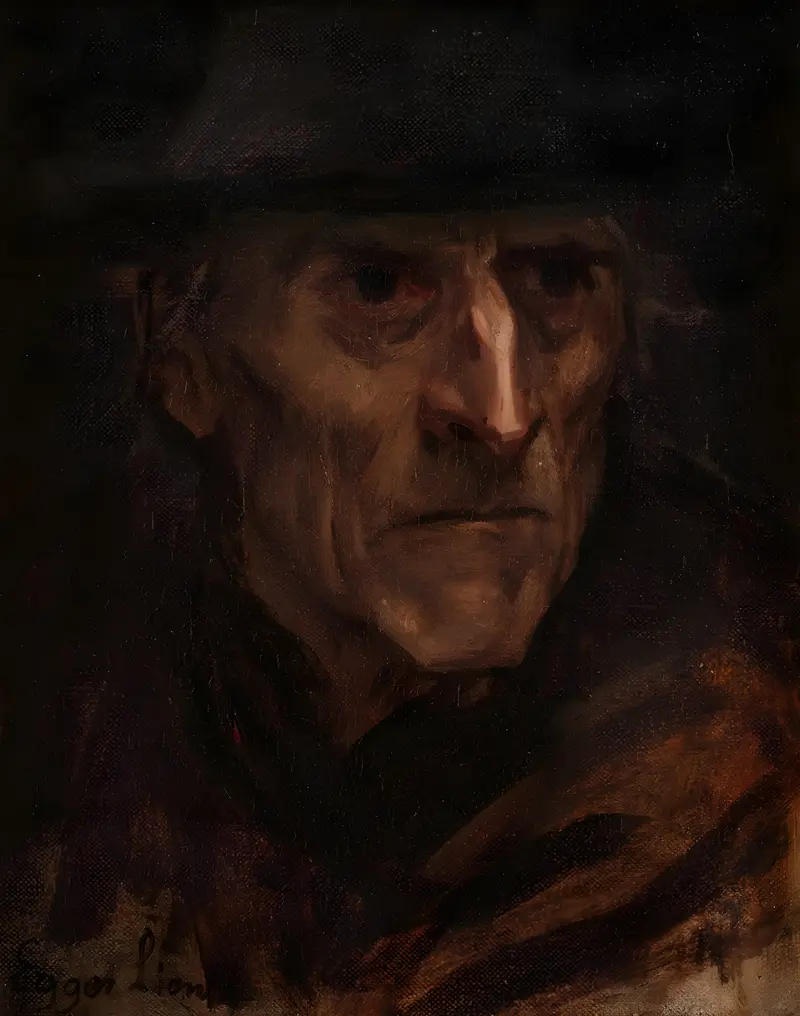
Study for the ‘Sensenmann’ in the ‘Das Kreuz’
Albin Egger Lienz
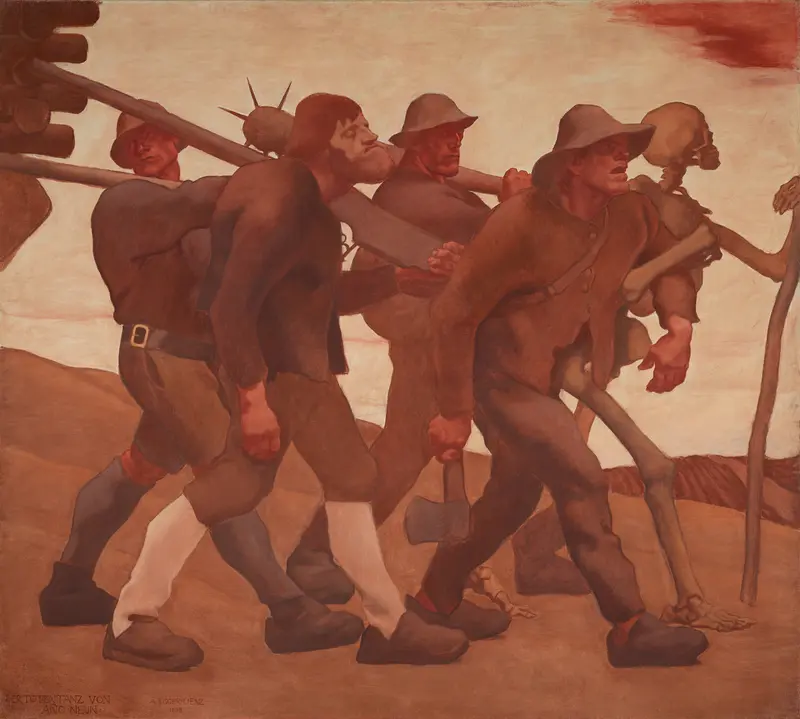
Der Totentanz Von Anno Neun
Albin Egger Lienz
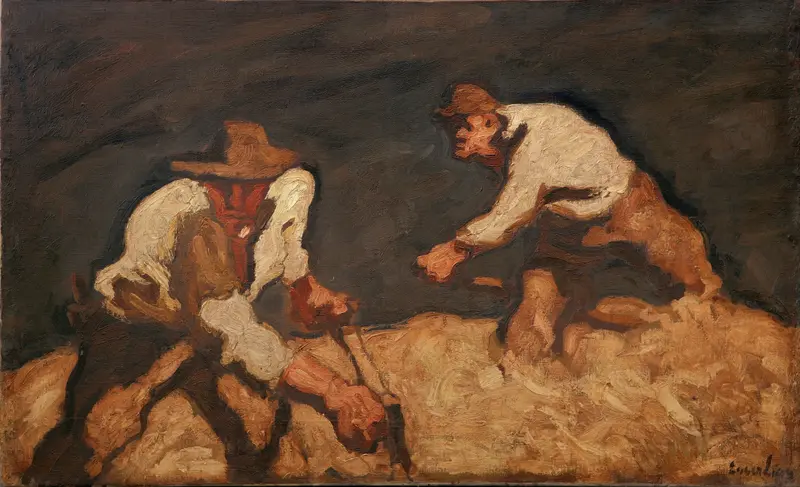
Reapers in a GatheringStorm
Albin Egger Lienz
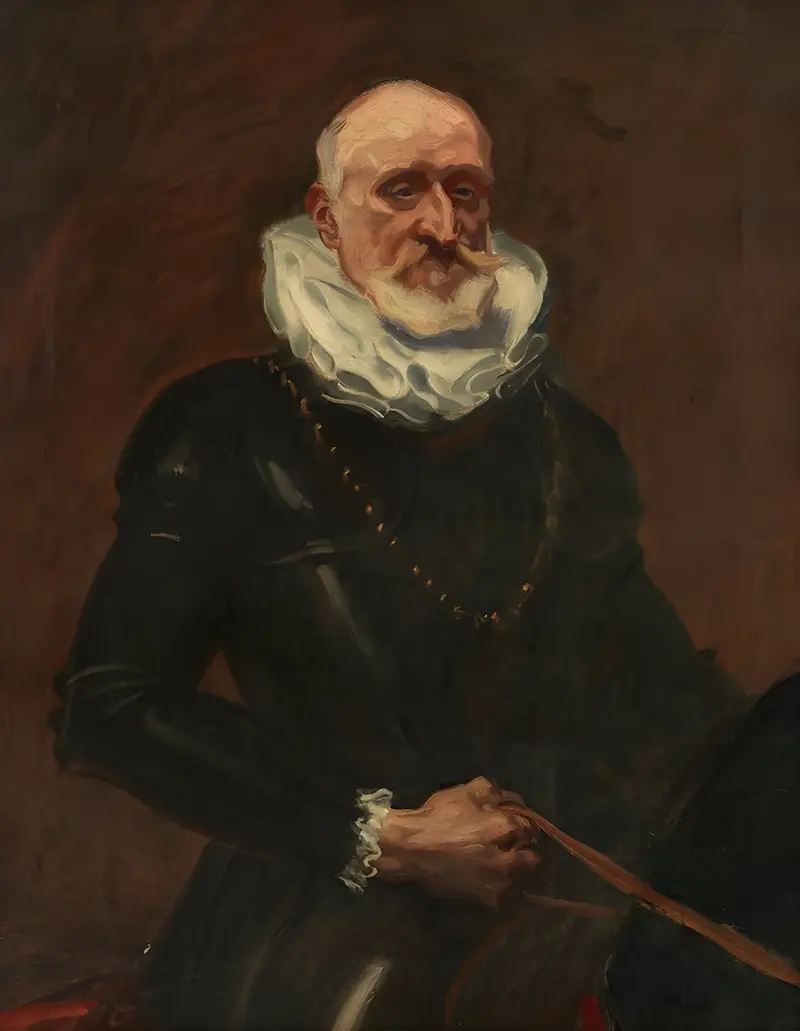
Carl Costenoble (Bildhauer und Stadtrat von Wien)
Albin Egger Lienz
Am Kalvarienberg In Bozen
Albin Egger Lienz
Kalvarienberg bei Bozen
Albin Egger Lienz



