
Kamin-Ruinen in Ulm — History & Facts
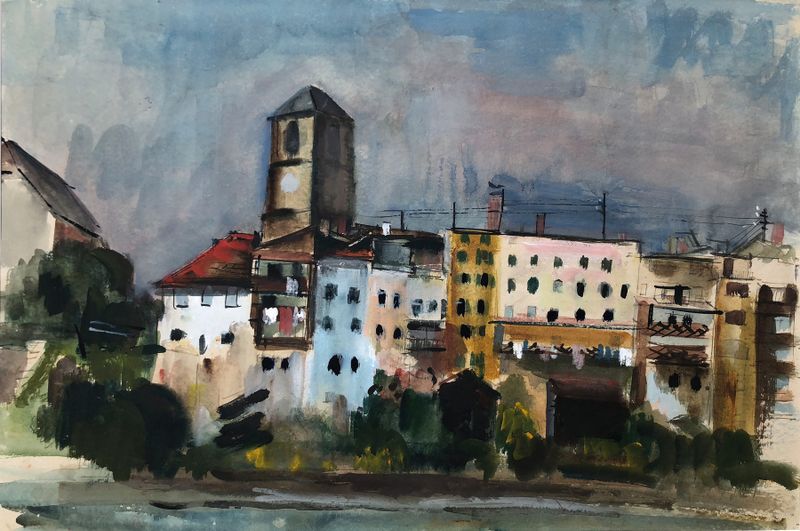
Is this a mirror — or a memory? The haunting landscape of Kamin-Ruinen in Ulm evokes a tangible sense of loss, enveloping the viewer in a melancholic stillness that resonates deep within the soul. Look to the left at the remnants of a once-thriving structure, its jagged edges silhouetted against a muted sky. Observe how the desaturated palette reinforces the emotional gravity, with grays and browns blending seamlessly into the backdrop, creating a sense of desolation. The brushstrokes are both deliberate and raw, capturing the ruins in stark detail that draws the eye, yet leaves a feeling of incompleteness, as if time itself has paused to mourn. Hidden within the rubble lies a contrast between decay and the potential for rebirth.
The crumbling bricks speak of histories lost, while the sparse greenery peeking through hints at resilience and the slow return of life. Each element invites reflection, suggesting that from the void of destruction, memories linger, waiting to be acknowledged. The interplay of shadow and light in this work raises questions about memory’s fragility, making the viewer contemplate their own past and the weight of what remains. Created in the aftermath of World War II in 1946, Kamin-Ruinen in Ulm reflects Otto Geigenberger’s contemplations of a ravaged landscape.
Living in Germany during this tumultuous time, he grappled with the scars left by conflict while channeling his experiences into a poignant exploration of loss and renewal. This artwork represents not only a response to his surroundings but also a broader commentary on the war’s enduring impact on a nation in search of identity.
More Artworks by Otto Geigenberger
Browse all →
Hohe Munde bei Seefeld in Tirol
Otto Geigenberger
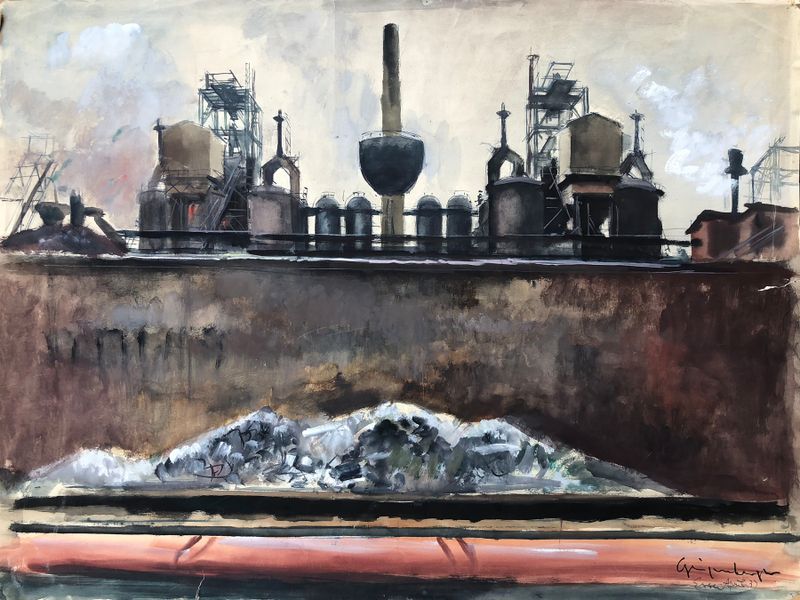
Stahlwerk Krupp in Essen
Otto Geigenberger

Landschaft mit Kirche
Otto Geigenberger

Passau am Inn 2
Otto Geigenberger
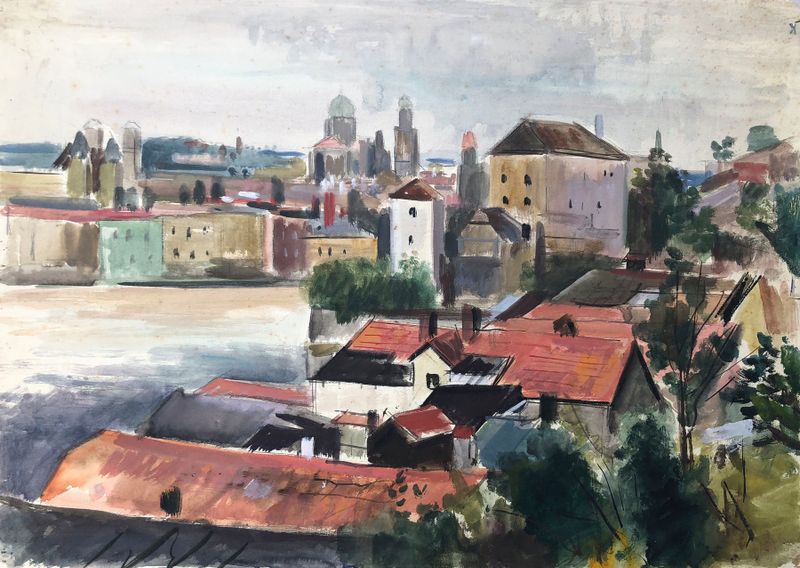
Passau am Inn
Otto Geigenberger
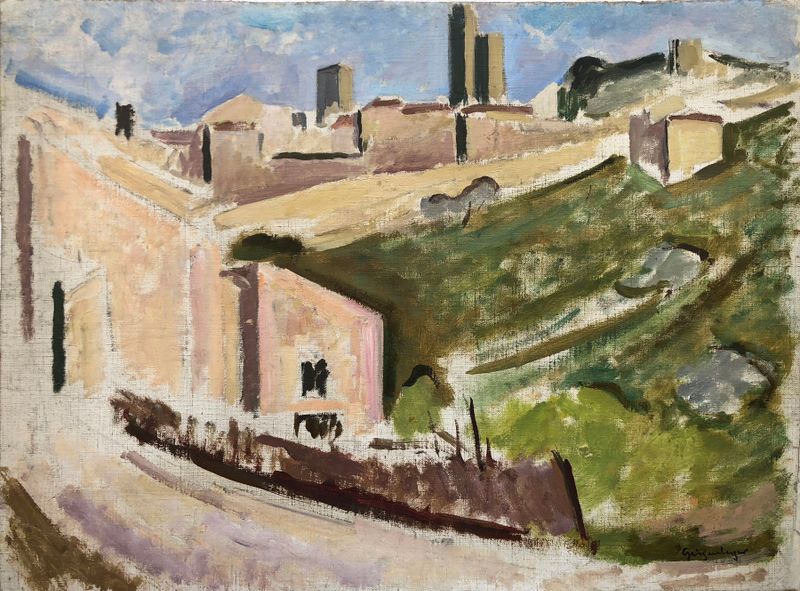
Südliche Stadt auf einem Hügel
Otto Geigenberger

Wasserburg am Inn – Häuserpartie am Inn
Otto Geigenberger

Wasserburg am Inn – Innfront
Otto Geigenberger
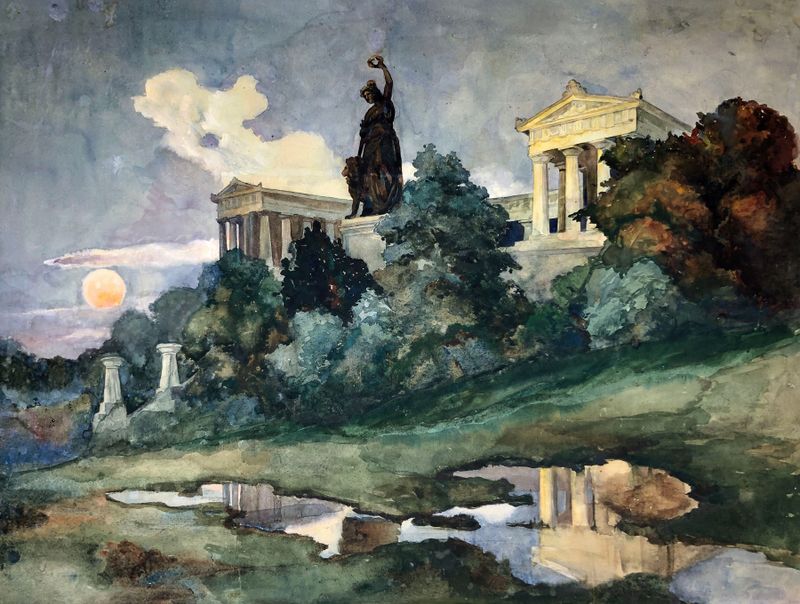
Sonnenuntergang an der Bavaria und Ruhmeshalle in München
Otto Geigenberger
Wasserburg am Inn – Innfront.
Otto Geigenberger





