
Kirchenruine — History & Facts
In the stillness of desolation, the emptiness within a canvas can speak louder than words. Ludwig Halauska captures a moment where silence echoes through the remnants of a bygone world, inviting us to confront the void. Look closely at the center of the composition, where the crumbling altar stands in solemn defiance against the cascading twilight. Notice how the soft, muted palette of grays and browns envelops the scene in a shroud of melancholy.
The artist’s brushwork reveals the fragile beauty of decay, emphasizing the interplay of light that filters through the broken arches, creating a haunting contrast between the sacred and the forsaken. This painting embodies the tension between reverence and abandonment. The delicate shadows dart across the cracked stone, suggesting memories of prayers once uttered in this sacred space. Yet, there is an undeniable resignation in the stillness, as nature begins its slow reclamation, hinting at the cyclical nature of existence.
The emptiness here is not mere absence; it speaks of lost connections, lingering echoes of life that once thrived. Halauska painted this work in 1864, during a period when the Romantic movement was giving way to modern sensibilities. Living in Austria, he faced personal and artistic challenges, reflecting a society grappling with the aftermath of revolution and the decline of traditional institutions. This context of upheaval infused Kirchenruine with an urgency that resonates still, as it captures a moment of profound reflection on both the individual and the collective human experience.
More Artworks by Ludwig Halauska
Browse all →
Der Schneeberg in Niederösterreich von Gutenstein aus gesehen
Ludwig Halauska

A View of Klamm Castle near Imst in the Inntal in Tyrol
Ludwig Halauska
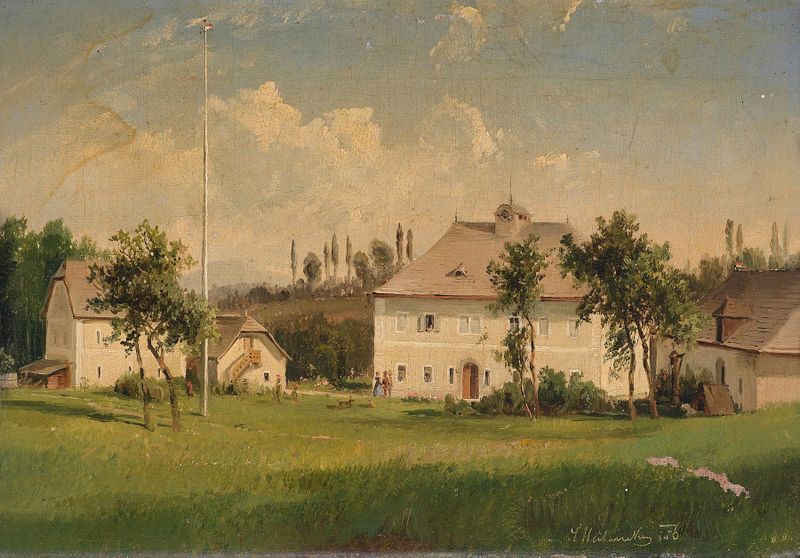
Blick auf einen Gutshof
Ludwig Halauska

Blick auf das Dorf Tutschach bei Aflenz
Ludwig Halauska
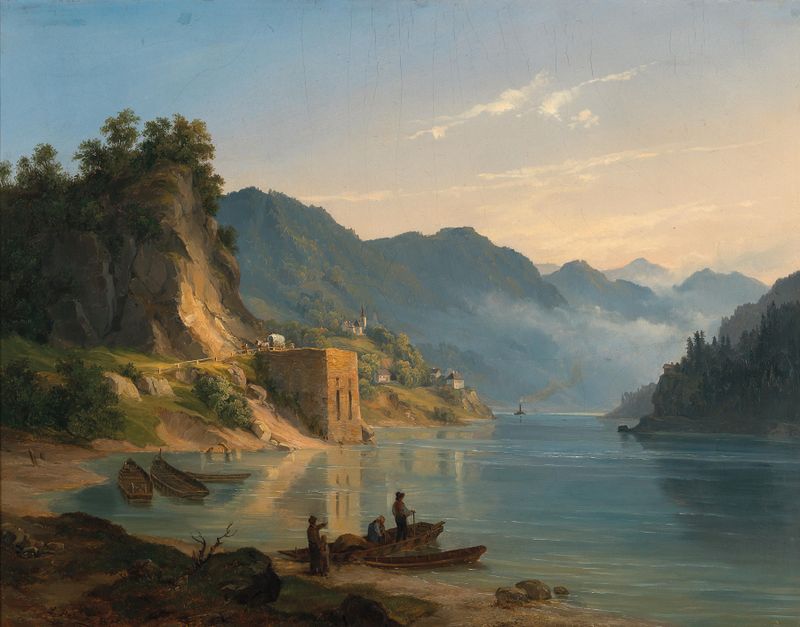
St. Nikola im Strudengau
Ludwig Halauska

Blick auf das Dorf Tutschach bei Aflenz mit dem Jauringbach im Vordergrund
Ludwig Halauska

Landschaft bei Flintsbach am Inn
Ludwig Halauska

Partie aus Mittenwald am Karwendelgebirge
Ludwig Halauska

Sommerlandschaft
Ludwig Halauska
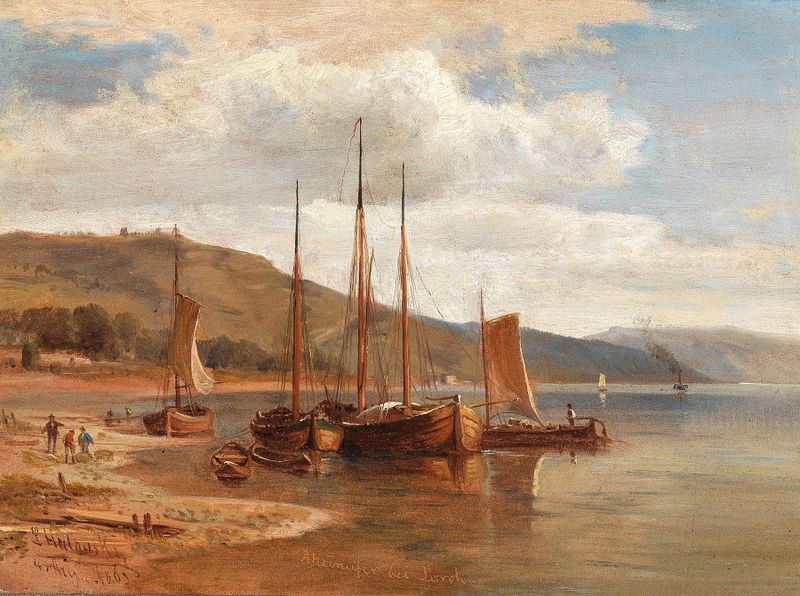
Rheinufer bei Lorch
Ludwig Halauska
More Architecture Art
Browse all →
The statue of Liberty
Frédéric Auguste Bartholdi

View of Houses in Delft, Known as ‘The Little Street’
Johannes Vermeer

View of Houses in Delft, Known as ‘The Little Street’
Johannes Vermeer

The Cathedral in Rouen. The portal, Grey Weather
Claude Monet

The yellow house
Vincent van Gogh

The Church in Auvers-sur-Oise, View from the Chevet
Vincent van Gogh