
A View of Klamm Castle near Imst in the Inntal in Tyrol — History & Facts
Can beauty exist without sorrow? In the serene landscape depicted, a castle rises majestically, yet its presence hints at secrets hidden beneath the tranquil facade. Look to the center where Klamm Castle stands, framed by towering mountains. Halauska’s meticulous brushwork captures the play of light across the castle’s stone walls, revealing a spectrum of colors—from warm ochres to cool blues. The lush greenery wraps around the structure like a protective embrace, yet the distant clouds loom, casting a shadow that suggests unease.
Each stroke conveys both grandeur and vulnerability, drawing the viewer into the paradox of beauty entwined with underlying tension. Upon closer inspection, the juxtaposition of light and shadow evokes a sense of betrayal. The castle, while robust and commanding, almost seems to whisper of the stories it has witnessed over centuries—tragedies and triumphs that lie locked within its walls. The idyllic setting, dotted with serene rivers and verdant pastures, contrasts starkly with the castle’s austere fortress-like appearance, symbolizing the complex nature of existence, where appearances can mislead and beauty can mask deeper scars. In 1856, Halauska painted this scene while navigating the artistic currents of his time, drawing inspiration from the Romantic movement’s fascination with nature and the sublime.
Living in Austria, he found himself in an era marked by political upheaval and a yearning for both nostalgia and connection to the past. The artist’s choice to capture this landscape reflects a longing for permanence amid a rapidly changing world, allowing viewers to ponder the bittersweet nature of beauty and the betrayals it may conceal.
More Artworks by Ludwig Halauska
Browse all →
Der Schneeberg in Niederösterreich von Gutenstein aus gesehen
Ludwig Halauska
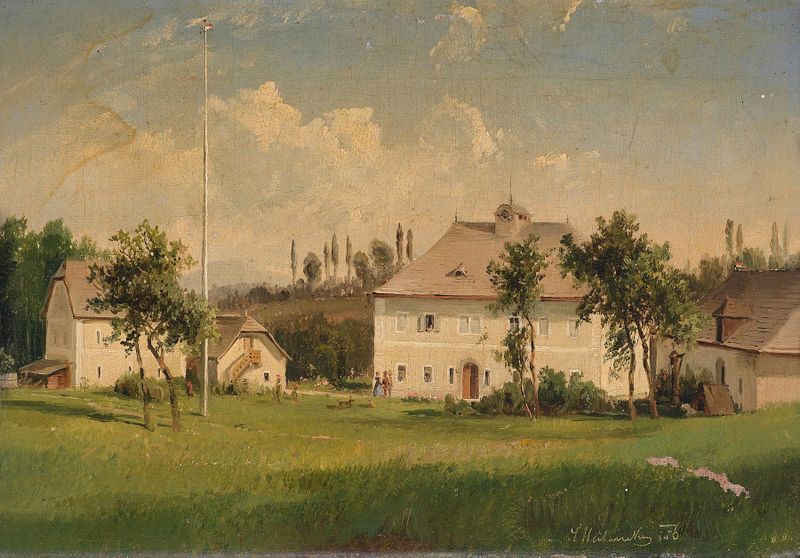
Blick auf einen Gutshof
Ludwig Halauska

Blick auf das Dorf Tutschach bei Aflenz
Ludwig Halauska
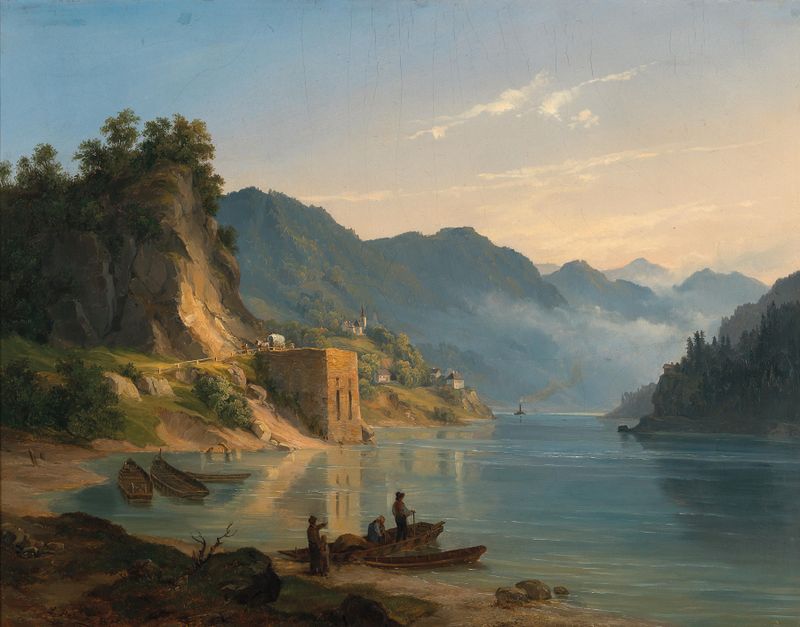
St. Nikola im Strudengau
Ludwig Halauska

Blick auf das Dorf Tutschach bei Aflenz mit dem Jauringbach im Vordergrund
Ludwig Halauska

Landschaft bei Flintsbach am Inn
Ludwig Halauska
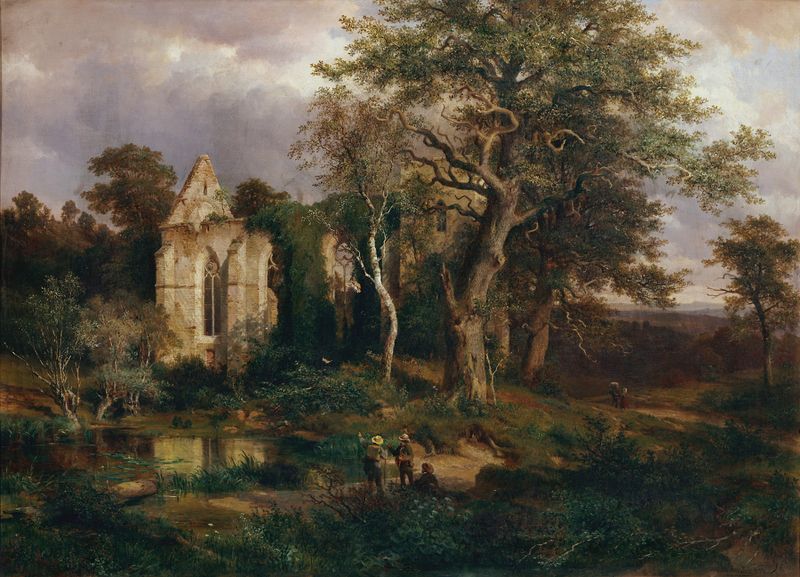
Kirchenruine
Ludwig Halauska

Partie aus Mittenwald am Karwendelgebirge
Ludwig Halauska

Sommerlandschaft
Ludwig Halauska
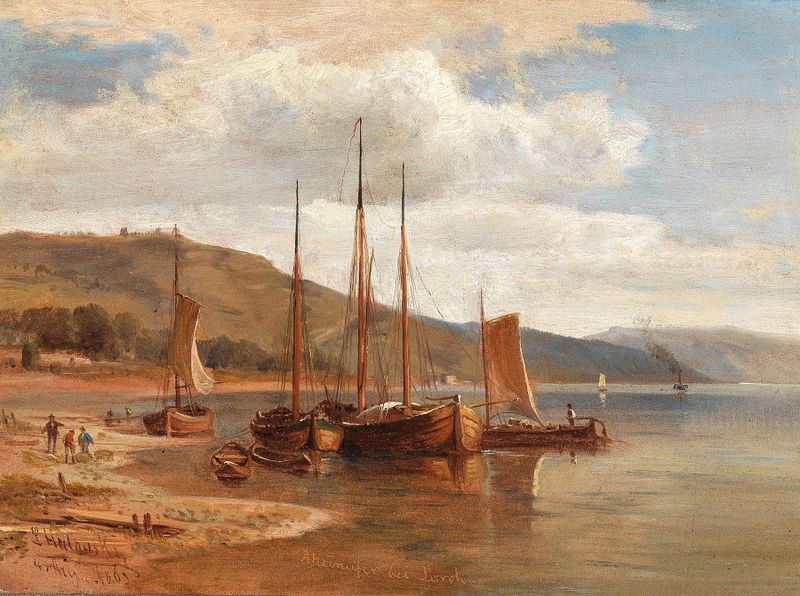
Rheinufer bei Lorch
Ludwig Halauska





