
Landschaft bei Flintsbach am Inn — History & Facts
In the stillness of nature, there lies a yearning that transcends the visible world. The landscape whispers secrets to those who dare to listen, inviting contemplation and reflection. Look to the left at the serene, rolling hills that gently cradle the village nestled within their embrace. Notice the delicate brushstrokes that evoke a sense of tranquility, as soft greens and muted browns harmonize with the gentle blues of the sky.
The way the light spills over the undulating terrain creates a luminous effect, inviting the viewer to wander through the scene while evoking feelings of nostalgia and longing. Amid the pastoral beauty, the vibrant yet subdued colors capture the tension between the peace of rural life and the weight of human existence. The tiny figures in the distance, almost indistinguishable, hint at lives lived beneath the vast sky, suggesting an emotional depth that reflects a shared human experience. The juxtaposition of the expansive landscape against the infinitesimal presence of humanity speaks to the loneliness often found in vast spaces. Ludwig Halauska painted this work in 1858, during a period marked by the rise of Romanticism in Austria, where artists sought to connect deeply with nature.
At this time, Halauska was establishing his career, deeply influenced by his surroundings and the changing dynamics of life in the countryside. The world was witnessing industrial growth, and these landscapes served as a poignant reminder of a simpler, slower pace, resonating with both personal and cultural yearnings.
More Artworks by Ludwig Halauska
Browse all →
Der Schneeberg in Niederösterreich von Gutenstein aus gesehen
Ludwig Halauska

A View of Klamm Castle near Imst in the Inntal in Tyrol
Ludwig Halauska
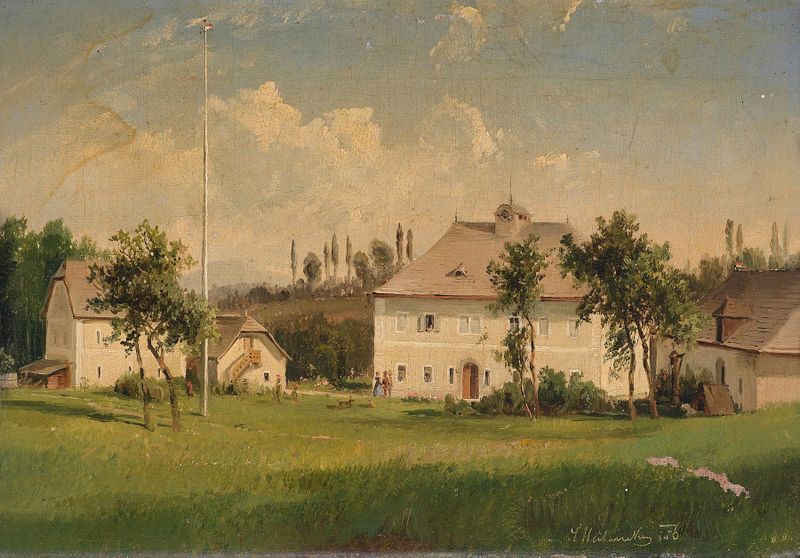
Blick auf einen Gutshof
Ludwig Halauska

Blick auf das Dorf Tutschach bei Aflenz
Ludwig Halauska
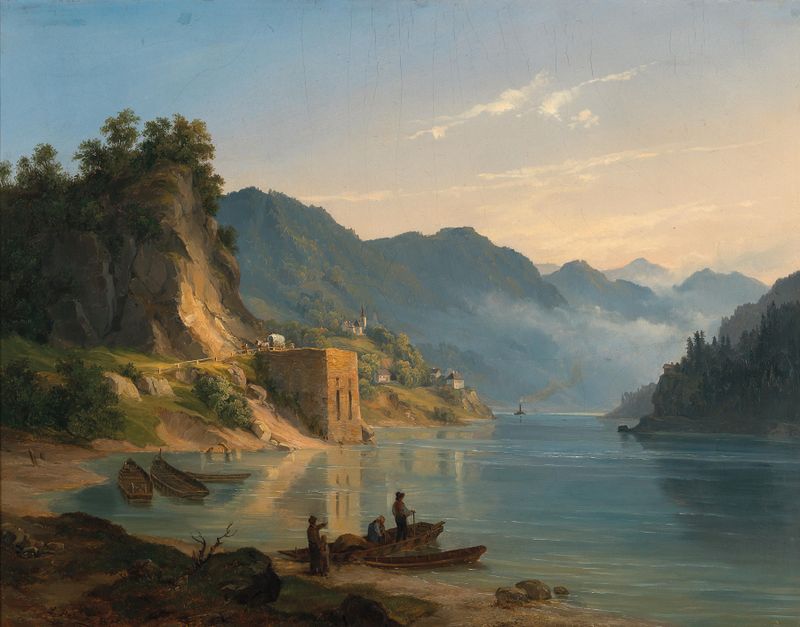
St. Nikola im Strudengau
Ludwig Halauska

Blick auf das Dorf Tutschach bei Aflenz mit dem Jauringbach im Vordergrund
Ludwig Halauska
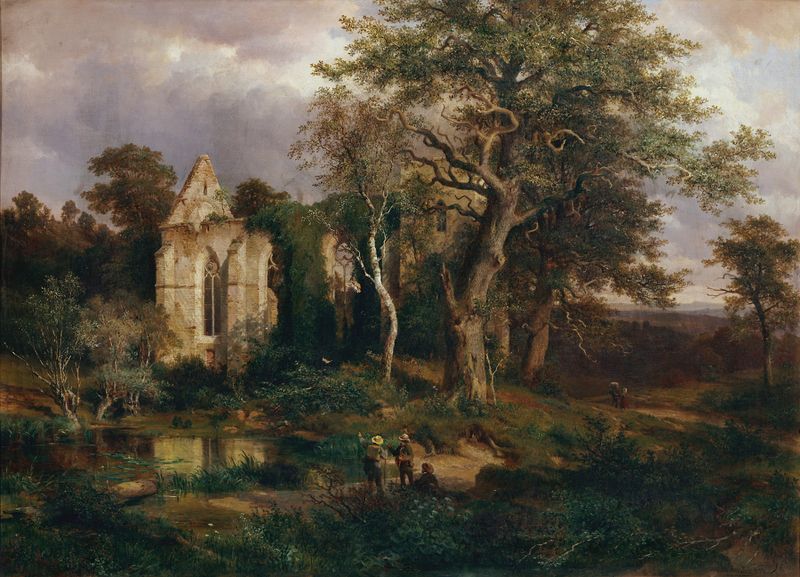
Kirchenruine
Ludwig Halauska

Partie aus Mittenwald am Karwendelgebirge
Ludwig Halauska

Sommerlandschaft
Ludwig Halauska
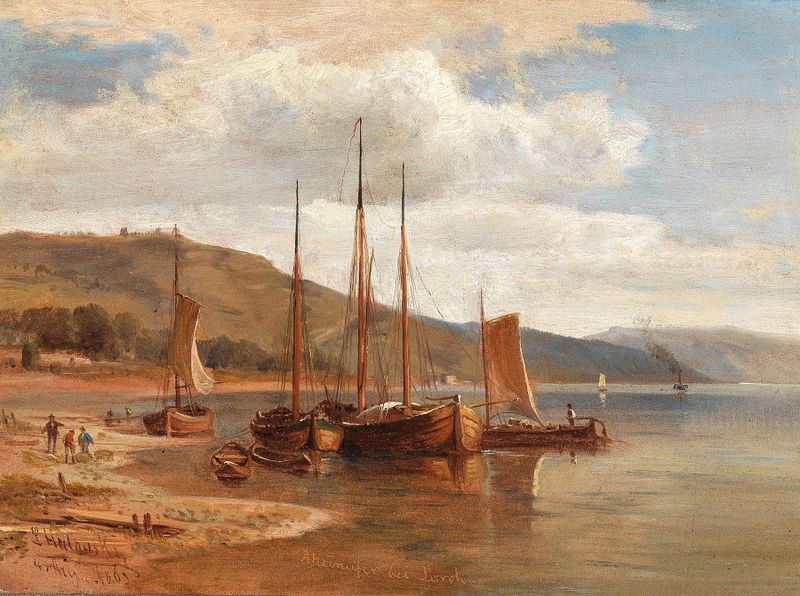
Rheinufer bei Lorch
Ludwig Halauska





