
Klipper i skråning, Raumünzach — History & Facts
Can paint confess what words never could? The quiet whispers of longing resonate through the canvas, inviting the viewer to delve into a world where nature and emotion intertwine. Look to the foreground, where a gentle slope greets the viewer with a cascade of emerald greens and subtle browns, hinting at the lush terrain of Raumünzach. The artist’s brushstrokes, both soft and deliberate, create a tapestry of texture that breathes life into the meandering figures of the klippers. Notice how the dappled sunlight filters through the canopy, casting playful shadows that dance on the water’s surface, drawing the eye towards the serene river that winds its way through the landscape. In this harmonious composition, contrasts emerge between the serenity of the flowing water and the rugged cliffs that loom beyond.
The figures, though diminutive, convey a sense of purpose, their bodies caught in a moment of labor and unity, echoing a shared yearning to connect with their surroundings. The lush foliage embraces them, yet the distant mountains serve as a reminder of life’s untouchable aspirations, a poignant tension between earthly toil and the sublime. Hans Gude painted this work in 1865, a period marked by his profound admiration for nature and the burgeoning Romantic movement. Living in Germany, Gude was influenced by the landscapes of Norway, which he had explored years earlier.
This painting captures the essence of his artistic journey, reflecting a deeper connection to the natural world while revealing the emotions tethered to the human experience.
More Artworks by Hans Gude
Browse all →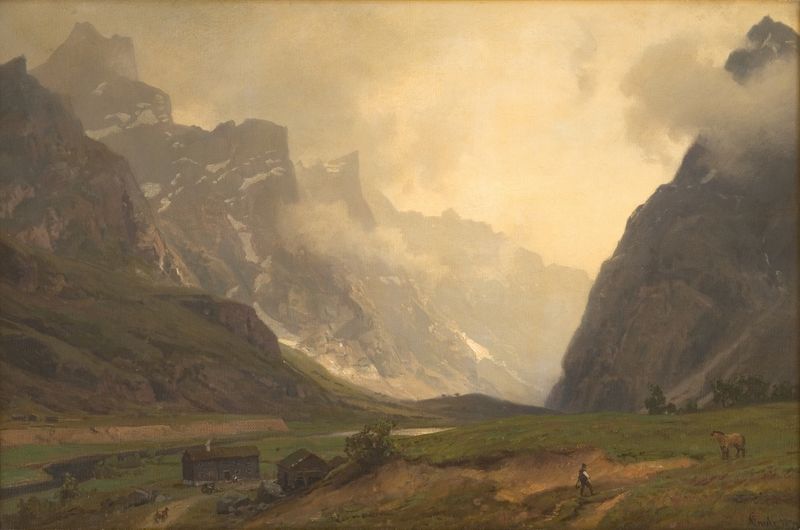
The Troll Peaks in Romsdalen, The Foot of Romsdalshorn to the Right
Hans Gude
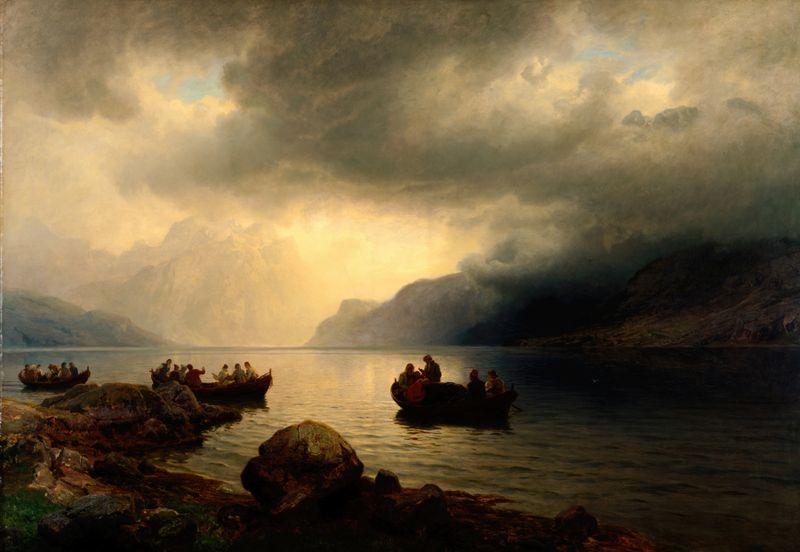
Funeral Procession on the Sogne Fjord
Hans Gude
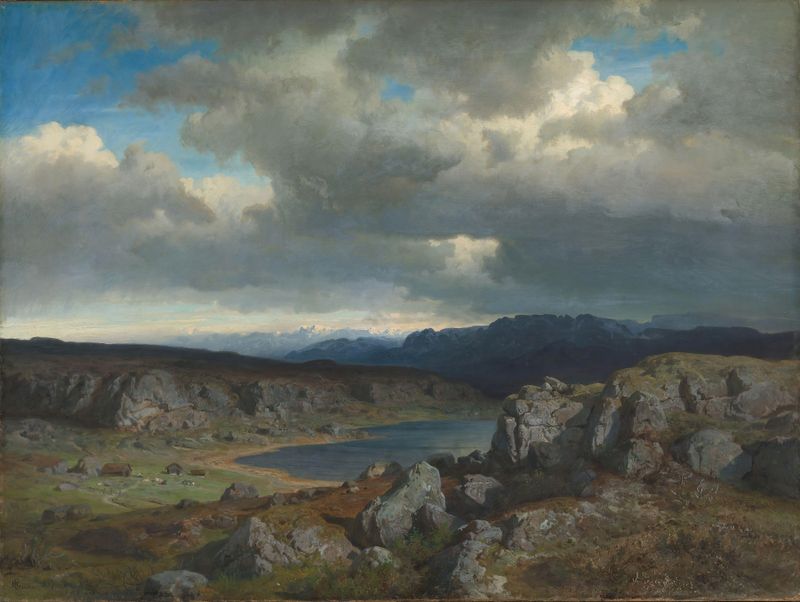
Norwegian Highlands
Hans Gude
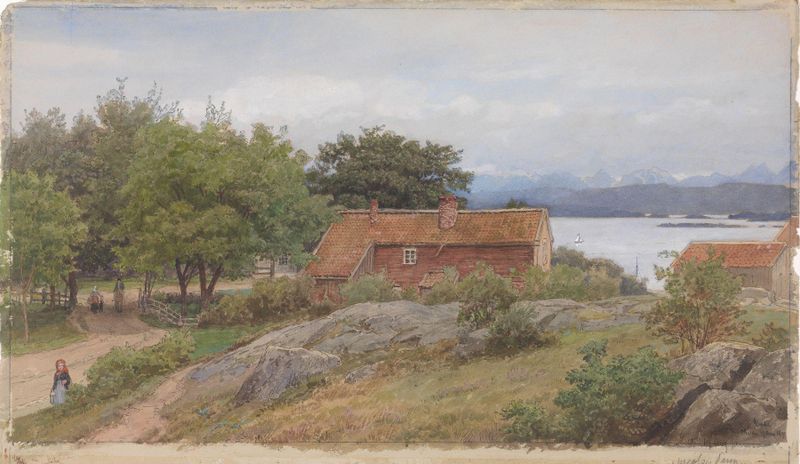
Landskap med bondegård ved Molde
Hans Gude
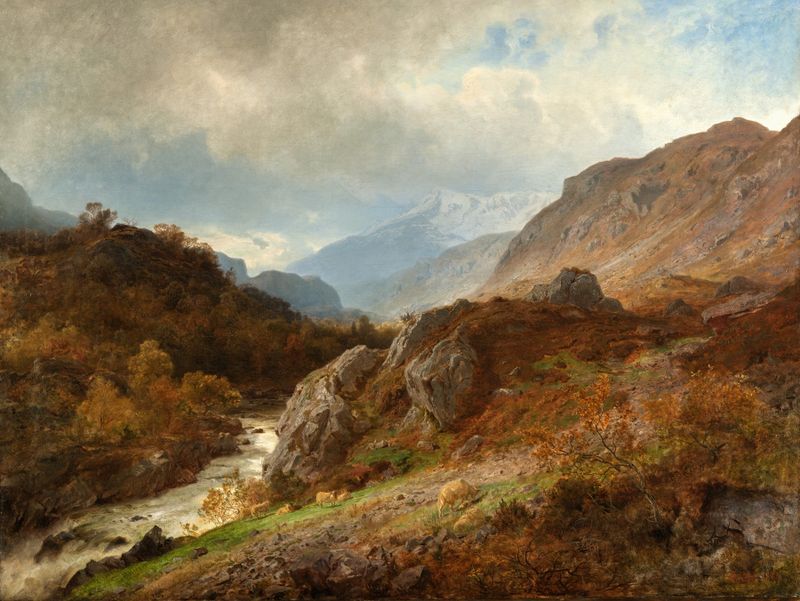
Mountain Landscape
Hans Gude
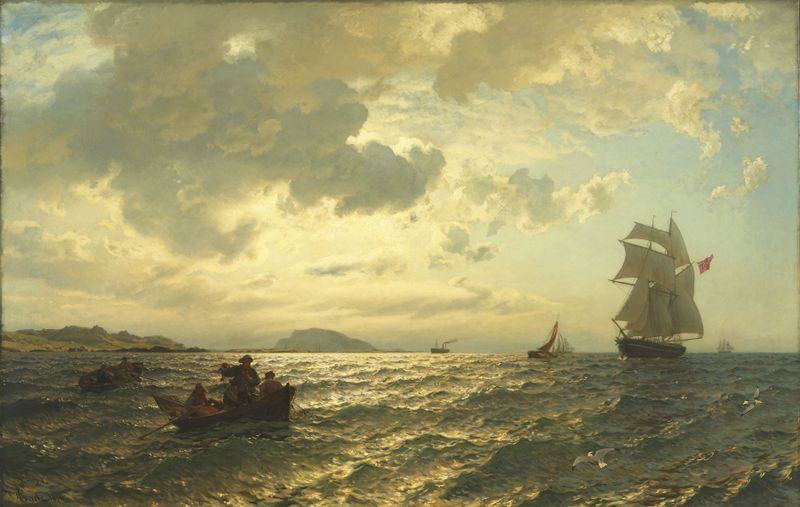
Fresh Breeze on the Norwegian Coast
Hans Gude
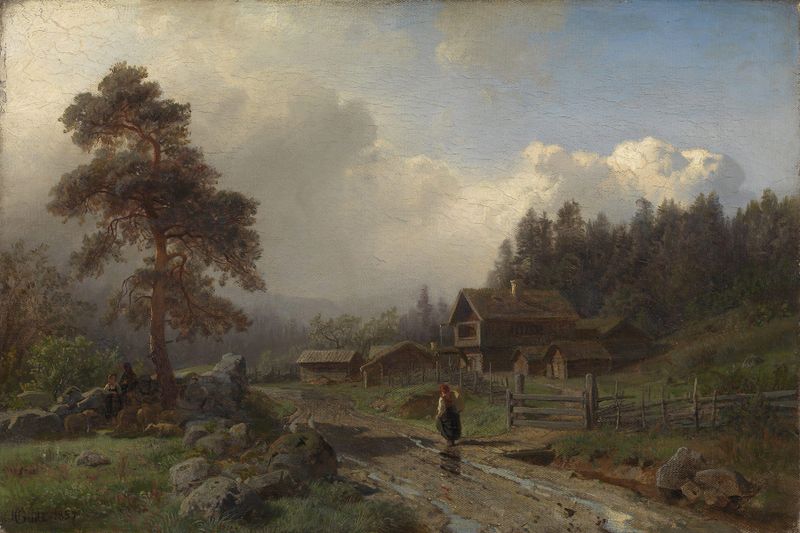
Norwegian Landscape in Rain
Hans Gude
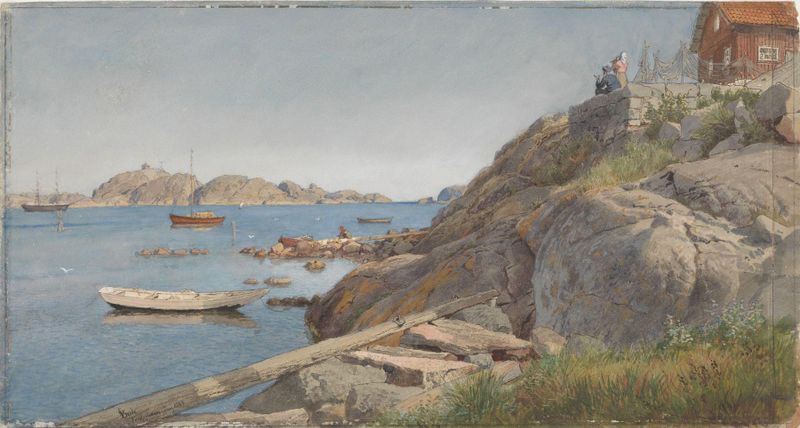
Landscape by Stavern
Hans Gude
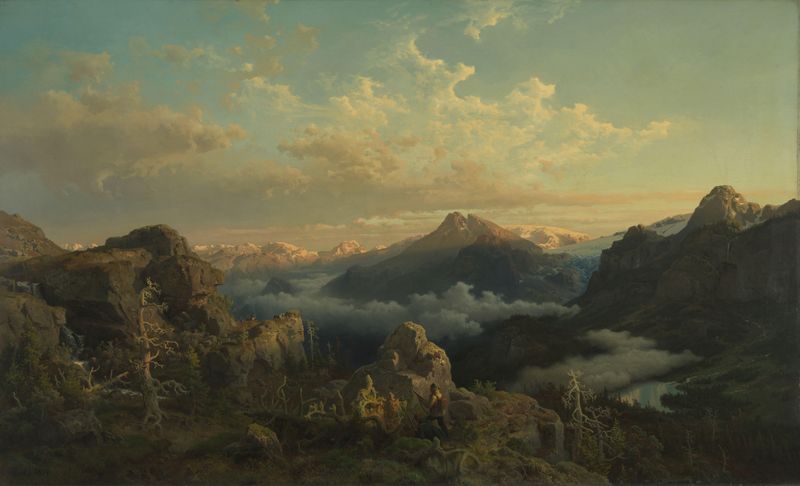
Norwegian Highlands in Sunrise
Hans Gude
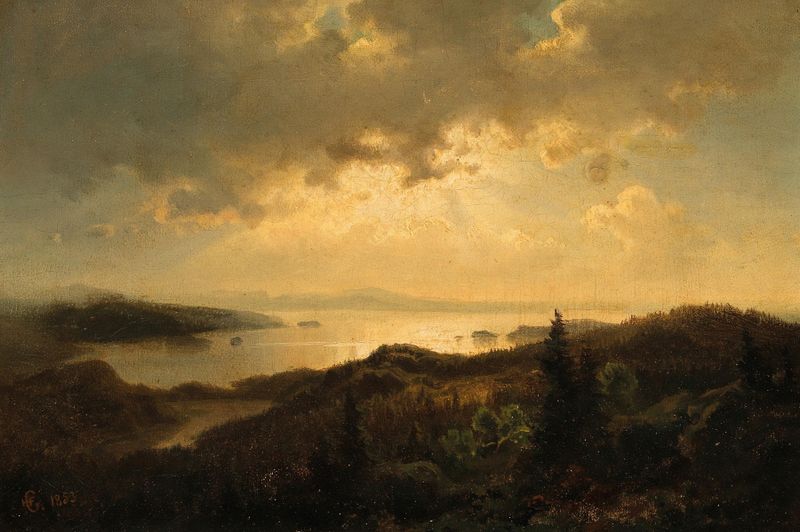
A Scene at Dusk in Norway
Hans Gude





