Klosterneuburg im Winter — History & Facts
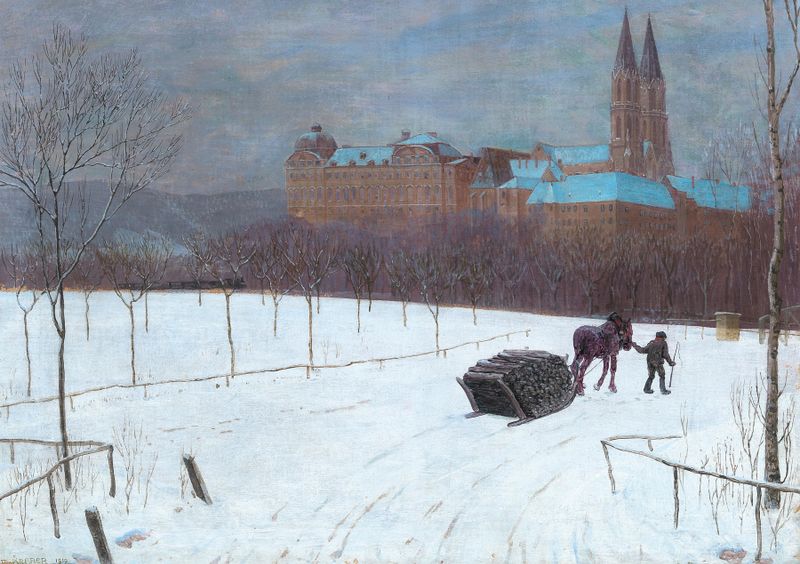
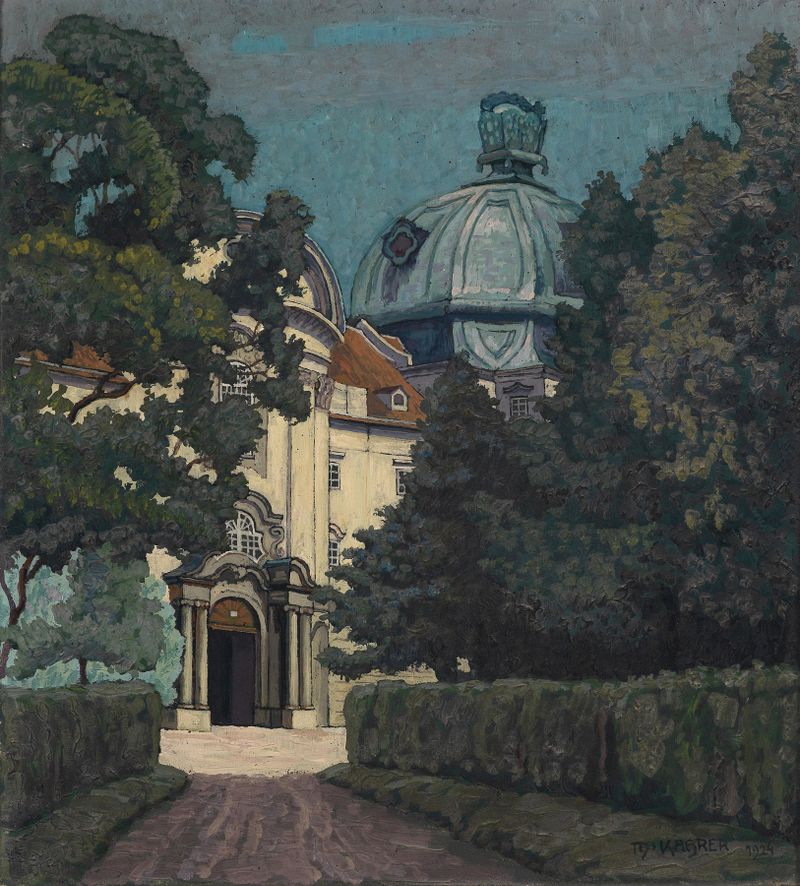
The stillness of winter can unveil the fragile edges of the mind, where beauty dances dangerously close to madness. Look to the center of the canvas, where the austere architecture of Klosterneuburg rises against the snow-laden landscape. The muted palette of blues and whites invokes a chilling serenity, while the jagged outlines of the monastery contrast sharply with the soft, undulating drifts of snow. Notice how the light, filtered through a heavy, overcast sky, casts a diffused glow; it envelops the structures but never fully penetrates their shadowed facades, mirroring the shadows lurking within human consciousness. Hidden beneath this tranquil surface is a tension between the serene beauty of the scene and the underlying sense of isolation.
The stark lines of the monastery suggest both refuge and confinement, as if sheltering the secrets of the mind while simultaneously imprisoning them. The cold, barren trees appear to reach out towards the building, yearning for connection yet remaining distant, emblematic of the emotional isolation that can accompany madness. This duality evokes a profound sense of introspection, inviting viewers to question their own silences. In 1924, Max Kahrer was immersed in the vibrant yet tumultuous art scene of Austria, grappling with the echoes of World War I and the rising tide of modernism.
Living in Vienna, he sought to capture both the external world and the internal landscapes of the human experience. Klosterneuburg im Winter reflects not only his technical skill but also his contemplative exploration of silence, memory, and the delicate balance between beauty and despair in a rapidly changing world.