Winter landscape at Klosterneuburg — History & Facts
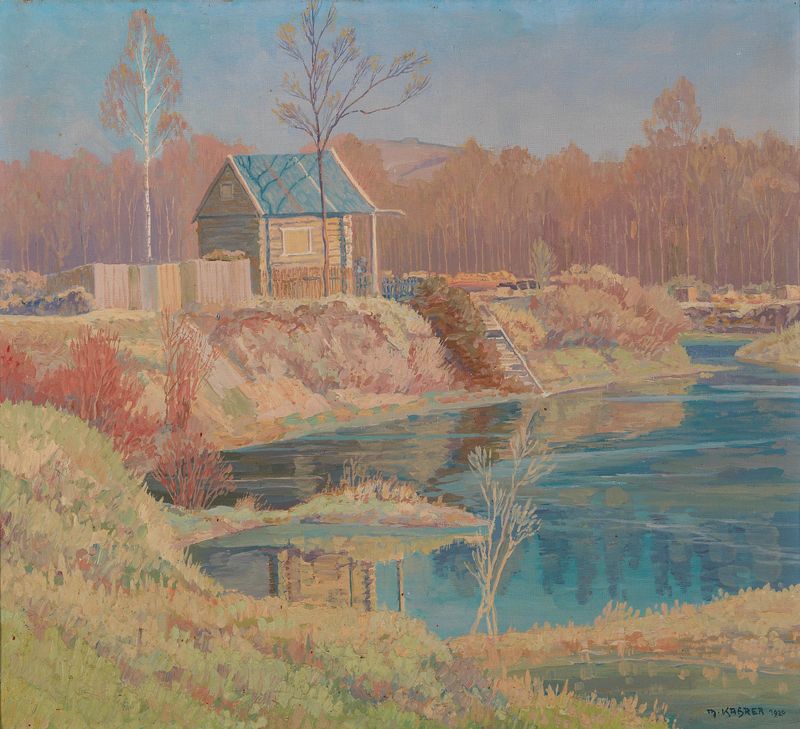
In the stillness of winter, divinity whispers through the snow-draped landscape, inviting us to ponder the sacred nature of solitude. Look to the soft expanse of white where the ground meets the rolling hills, each curve gently embracing the tranquil scene. The painting’s palette is muted, with cool blues and grays punctuated by the faint warmth of the distant trees, their branches heavy with snow. Notice how the light illuminates the snowflakes, transforming them into tiny jewels that glisten under the pale winter sun, while shadows extend languidly, hinting at the vastness of the space around them. Within this serene winter tableau lies a profound contrast between the stillness of nature and the potential for divine encounters.
The absence of figures speaks to an introspection that evokes both peace and yearning, allowing the viewer to fill the void with their own reflections. The quietude of the landscape holds a duality: it is both a sanctuary and an invitation to confront one’s inner thoughts, as if the snow itself harbors secrets waiting to be unearthed. In 1910, Kahrer was immersed in a world that was changing rapidly, both politically and artistically. Working in Austria, he was influenced by the burgeoning modernist movements, yet his focus remained on the spiritual and existential layers within natural scenes.
This emphasis on the divine echoing through winter landscapes marked a significant contribution to the art of his time, as he captured not just the physicality of the world, but its ethereal essence.