
Knave of Hearts Mother Goose — History & Facts
What leaps out first in Knave of Hearts Mother Goose is the sense of lively mischief, as if the page itself is caught mid-chase. The Knave, arms full of stolen tarts, dashes away with a grin that borders on the conspiratorial, while his pursuer—baton raised—seems more comic than menacing. Denslow’s line is bold and his palette is pared down to just a few colors, focusing the eye on the heart motifs that tie both characters to their storybook roles.
The exaggerated, almost puppet-like gestures freeze the action at its most playful, inviting the viewer to linger on the Knave’s impish delight and the comic futility of the chase. Every detail, from the heart-topped hats to the oversized shoes, is designed to amuse and reassure, making the threat of punishment as gentle as a nursery rhyme. Published in 1901, this illustration belongs to a golden age of children’s book art, when artists like William Wallace Denslow brought nursery rhymes to life with wit and clarity. The turn of the twentieth century saw a flourishing of illustrated editions, often commissioned for middle-class families eager to fill their parlors with beautifully made books.
Denslow’s work, preserved today in the Library of Congress, is part of this larger movement—his style instantly recognizable for its blend of American humor and Arts and Crafts simplicity. While history has kept few traces of this specific page’s journey, its cheerful energy and crisp design invite us to imagine the generations of small hands that have turned it, eyes bright with the promise of a story well told.
More Artworks by William Wallace Denslow
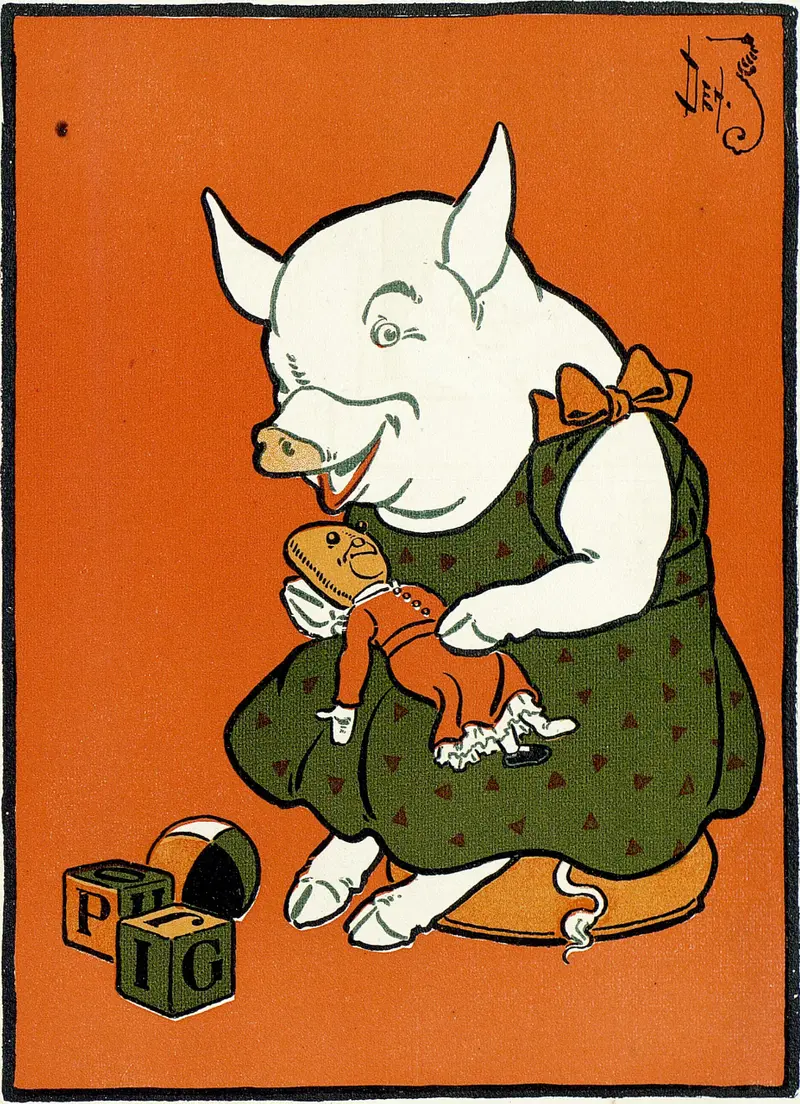
Denslow's 5 Little Pigs (page 7 crop)
William Wallace Denslow

Denslow's 5 Little Pigs
William Wallace Denslow
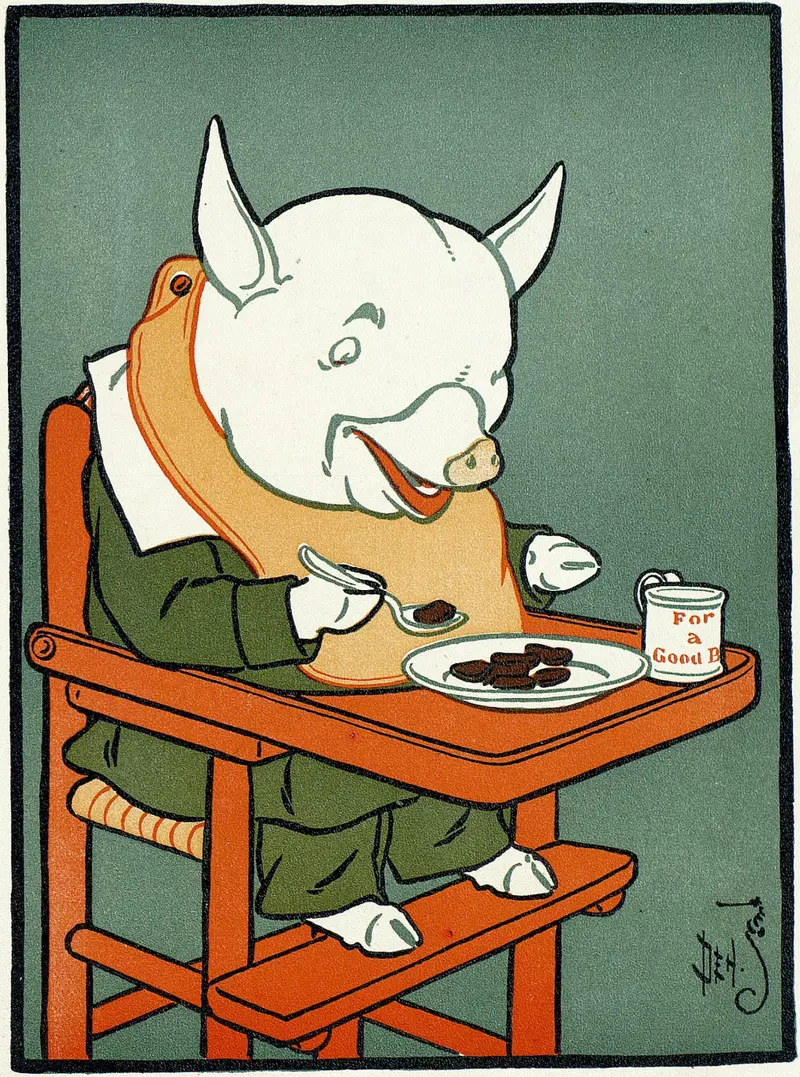
Denslow's 5 Little Pigs (page 9 crop)
William Wallace Denslow
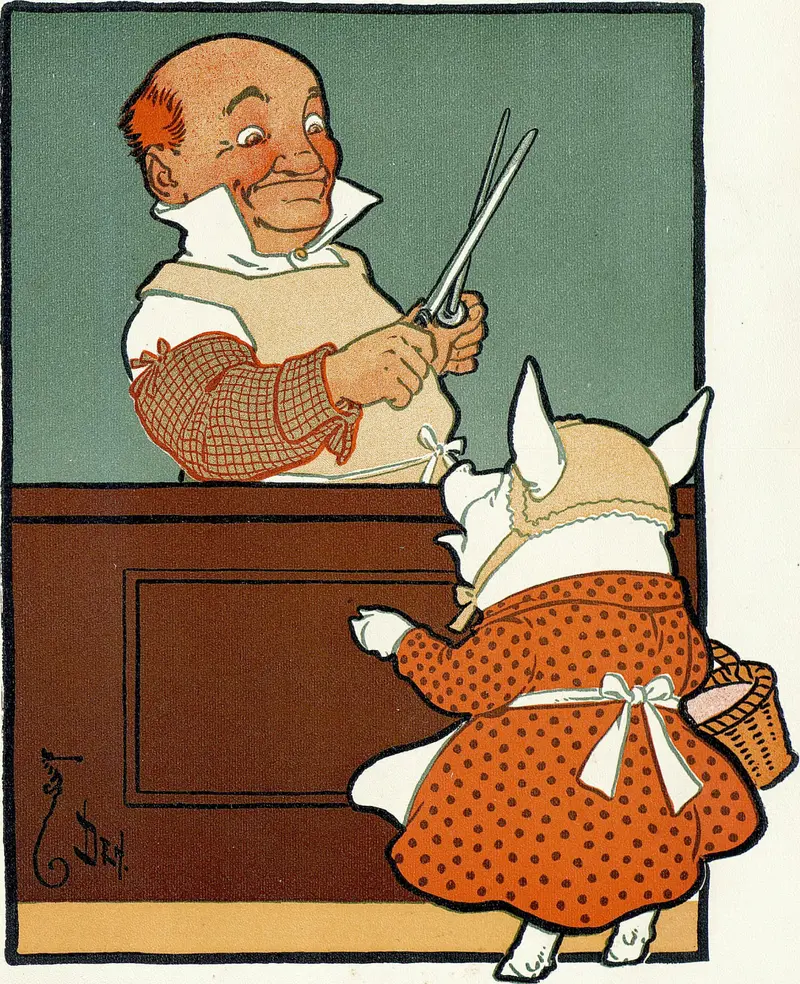
Denslow's 5 Little Pigs (page 5 crop)
William Wallace Denslow

Denslow's 5 Little Pigs (page 11 crop)
William Wallace Denslow

Denslow's 5 Little Pigs (page 15 crop)
William Wallace Denslow

Denslow's 5 Little Pigs (page 13 crop)
William Wallace Denslow

Pearl and Pumpkin-book pg-000 cover
William Wallace Denslow
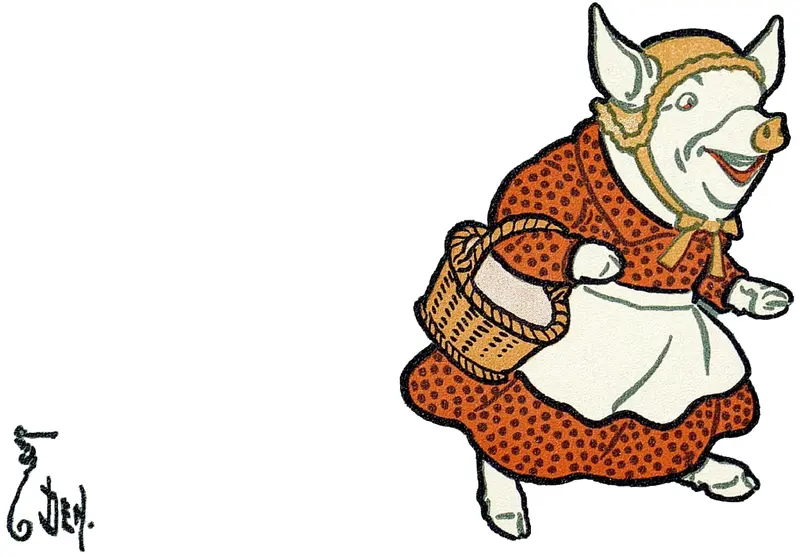
Denslow's 5 Little Pigs page p4b
William Wallace Denslow
Denslow's 5 Little Pigs page 3
William Wallace Denslow





