Küstenlandschaft — History & Facts
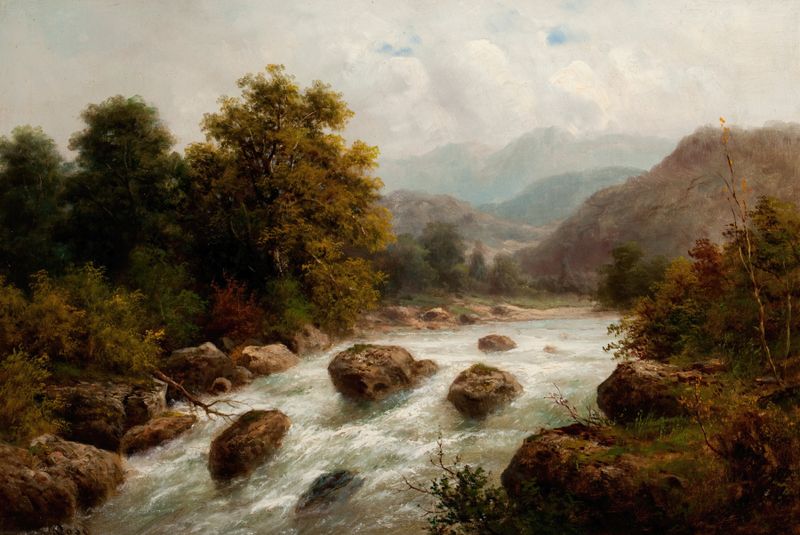
The essence of nostalgia is woven into the very fabric of painting, capturing moments that linger in memory like the soft touch of a summer breeze. Look to the center of the canvas, where rolling hills meet a tranquil sea, a harmony of greens and blues blending seamlessly. The brushwork is both deliberate and energetic, lending a sense of movement to the landscape. Notice how the light dances on the surface of the water, reflecting hints of a fading sunset, while soft, muted hues evoke a feeling of calm and introspection. Deep beneath the surface, the painting holds a tension between the fleeting moments of beauty and the inevitable passage of time.
The undulating hills may symbolize the rise and fall of life’s experiences, while the expansive sky suggests boundless possibilities and dreams long cherished. The viewer can almost feel the weight of nostalgia, as the colors seem to whisper secrets of forgotten days spent by the shore. Julius Rose painted Küstenlandschaft during a time when Europe was embracing modernity yet yearning for the simplicity of past landscapes. Though the exact date remains unknown, it is clear that Rose's work reflects a desire to connect with nature and reminisce about tranquil moments amidst the chaos of a rapidly changing world.
This piece stands as a testament to a period where art sought refuge in the serene beauty of the natural environment.