Lovrana near Fiume — History & Facts
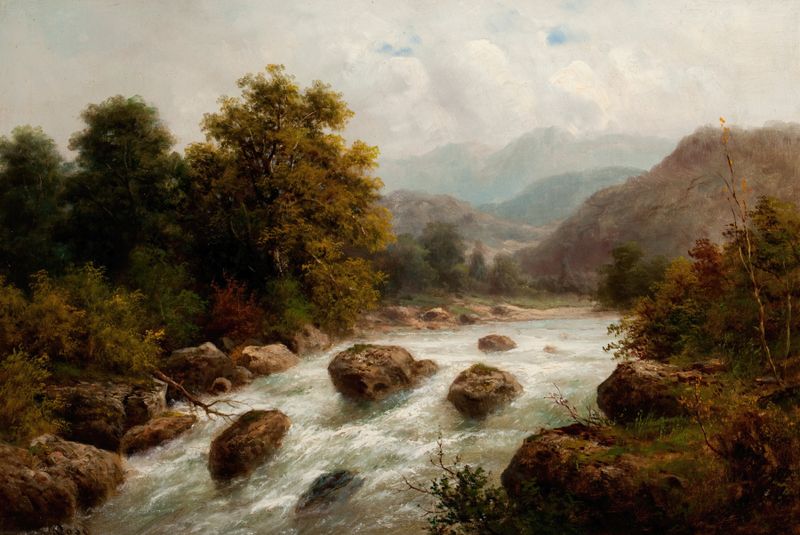
What if beauty was never meant to be finished? The essence of a place lingers, capturing the heart in its ever-evolving dance of light and shadow. Look to the left at the sweeping hills, their soft curves intertwining with the horizon. The rich greens and earthy browns evoke a sense of tranquility, inviting the eye to wander through the undulating landscape. Notice how the sunlight filters through the clouds, casting gentle highlights on the water's surface, where the blues of the sky seamlessly blend into the sea.
The brushwork is both delicate and confident, showing the artist's hand in every stroke yet leaving room for nature's own unraveling narrative. Delve deeper into the contrast between the serene landscape and the hint of tumultuous skies above. The tension between calmness and the impending weather suggests a world in flux, where beauty exists in the balance of chaos and harmony. Tiny details emerge—perhaps a distant boat or the flowering trees—each element whispering secrets of life and solitude, urging the viewer to contemplate not just the scene before them but the fleeting moments that define existence. Julius Rose painted this scene during a time of artistic exploration, likely in the late 19th century, when the fascination with nature and light was blossoming in the world of art.
Working from a coastal vantage in Lovrana, near the bustling port of Fiume, he was influenced by his contemporaries in the plein air movement, who sought to capture the ever-changing beauty of their surroundings. Amidst personal and artistic transitions, his brush became a tool for both expression and reflection, exemplifying a moment where nature's beauty remains unbound and timeless.