A Mountain Mill with Fisherman at a Creek — History & Facts
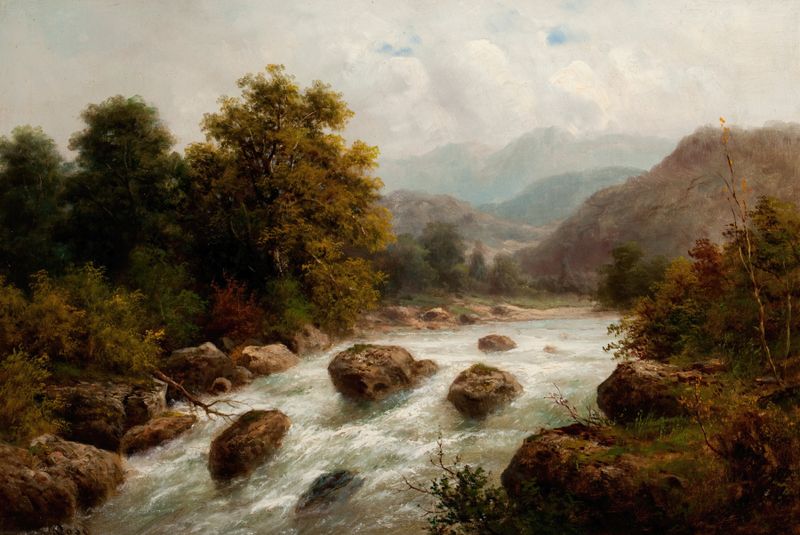
Within the delicate strokes of this artwork, lies a tribute to the enduring legacy of nature and human endeavor. It invites contemplation on the fleeting moments we often overlook in our daily lives. Look to the center, where the soft ripples of the creek merge with the sturdy structure of the mill. Notice how the artist employs a palette of earthy greens and browns, creating a harmonious yet dynamic interplay between the foreground and the background.
The glimmering water reflects the light in a way that draws the eye, inviting you to explore the gentle movement of fish beneath the surface, while the mill stands resolute against the passage of time. Beneath this tranquil scene lies a profound tension between permanence and transience. The fisherman, poised in his quest, symbolizes the ceaseless human pursuit of sustenance, while the mill embodies the legacy of craftsmanship that endures through generations. The surrounding nature, rich yet vulnerable, hints at the balance we must maintain with our environment.
Each element speaks to the interconnectedness of life and history, inviting us to reflect on our own place within this continuum. Julius Rose painted this piece during a period when the world was beginning to grapple with industrialization's impact on the natural landscape. While the exact date remains unknown, it is clear that his work resonates with the early 20th-century movements seeking to capture and preserve the essence of rural life amidst rapid change. In many ways, A Mountain Mill with Fisherman at a Creek serves as a reminder of the beauty and importance of legacy—both created and inherited.