
La Bièvre — History & Facts
In Armand Guillaumin's La Bièvre, serenity envelops the viewer, inviting contemplation and quietude. The artwork captures a moment suspended in time, where the gentle flow of the river harmonizes with the lush scenery, whispering secrets of nature’s tranquility. Focus on the vivid greens that dominate the canvas, drawing your gaze to the verdant banks of the river. Notice how the sunlight casts a golden hue upon the water, creating a shimmering pathway that beckons the eye further into the landscape.
The brushstrokes are bold yet soft, blending seamlessly to evoke the rich textures of foliage and the fluidity of the water, encapsulating the essence of a serene retreat from the chaos of urban life. Hidden beneath the peaceful surface lies a deeper narrative. The contrasting hues of warm yellows and cool blues evoke emotional tension, suggesting the interplay between light and shadow in both nature and the human experience. Each stroke tells a story of solitude and the sublime, inviting viewers to reflect on their own inner calm and the fleeting nature of time.
The trees, thick with life yet still, appear to listen, bearing witness to the quiet moment carved out by the artist. During the period from 1915 to 1945, Guillaumin painted La Bièvre, embracing a post-impressionistic style that emphasized the emotional resonance of color. Living in France amidst the tumult of World War I and the ensuing changes in art, he found solace in representing the landscapes that defined his surroundings, capturing the essence of tranquility in a world marked by turmoil.
More Artworks by Armand Guillaumin
Browse all →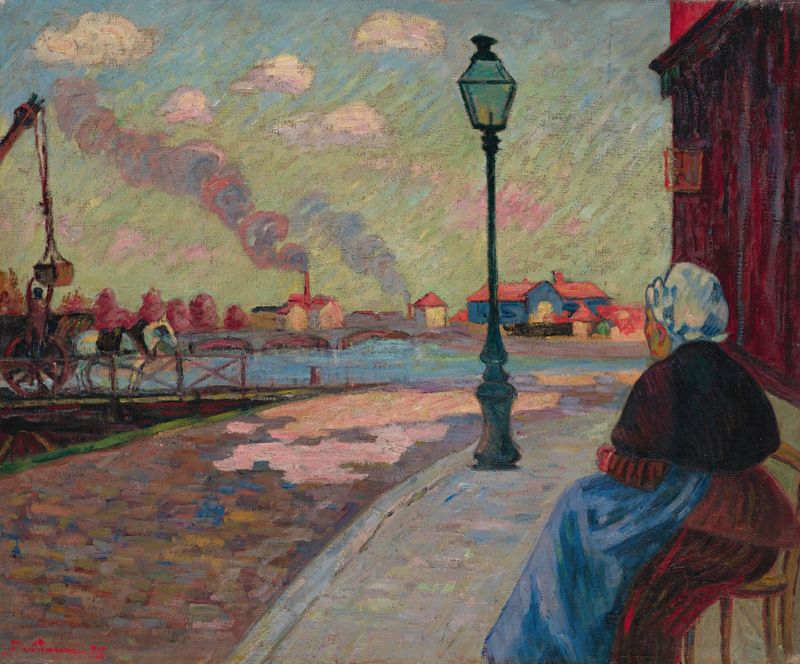
La Seine À Charenton
Armand Guillaumin
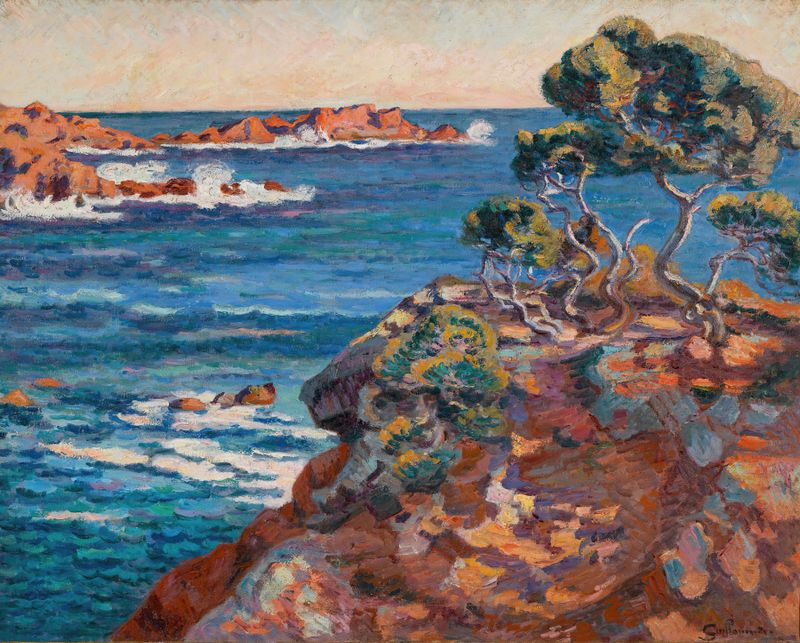
Bord De Mer À Agay
Armand Guillaumin
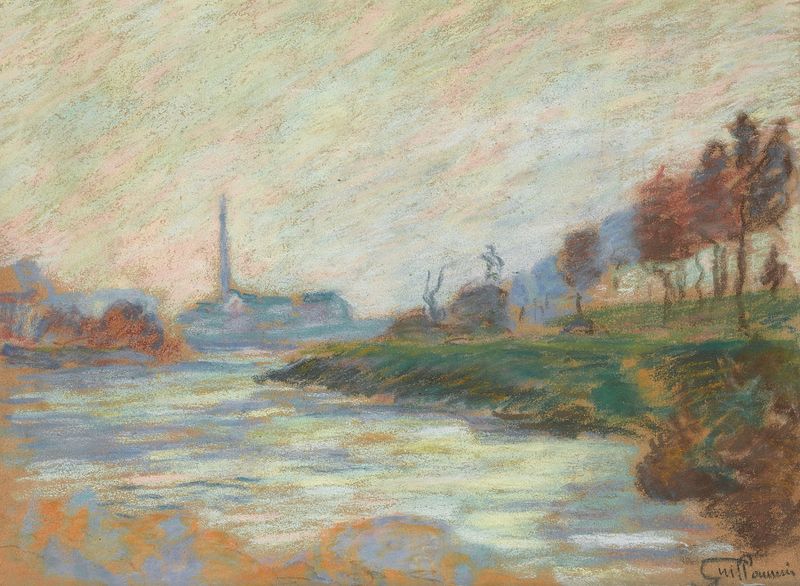
Confluent De La Marne Et De La Seine, Île De La France
Armand Guillaumin

Le Ravin de la folie, vue de Chateau Crozant
Armand Guillaumin
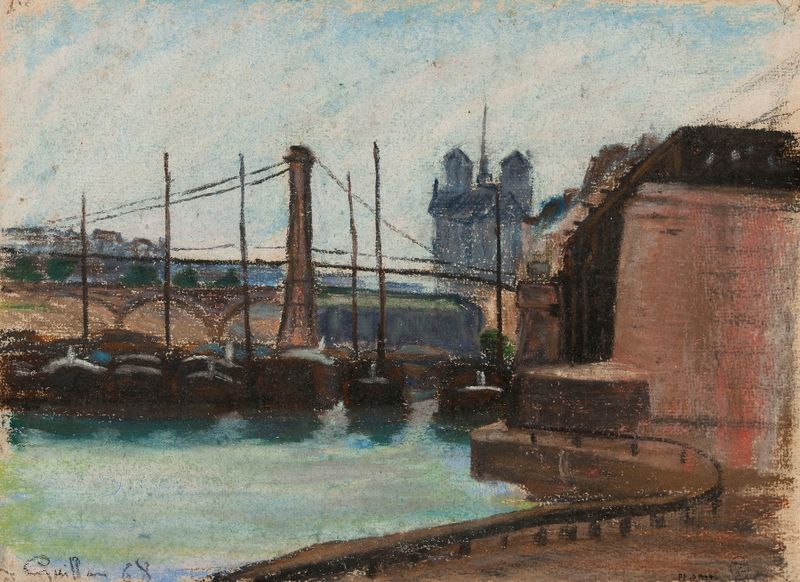
Le Pont d’Austerlitz
Armand Guillaumin

Paysage de Printemps
Armand Guillaumin
Crozant, Le Ravin De La Sedelle À La Folie
Armand Guillaumin
Paysage
Armand Guillaumin

La vallée de la creuse
Armand Guillaumin

L’Eglise Saint-Sulpice, Paris
Armand Guillaumin





