
La Chapelle — History & Facts
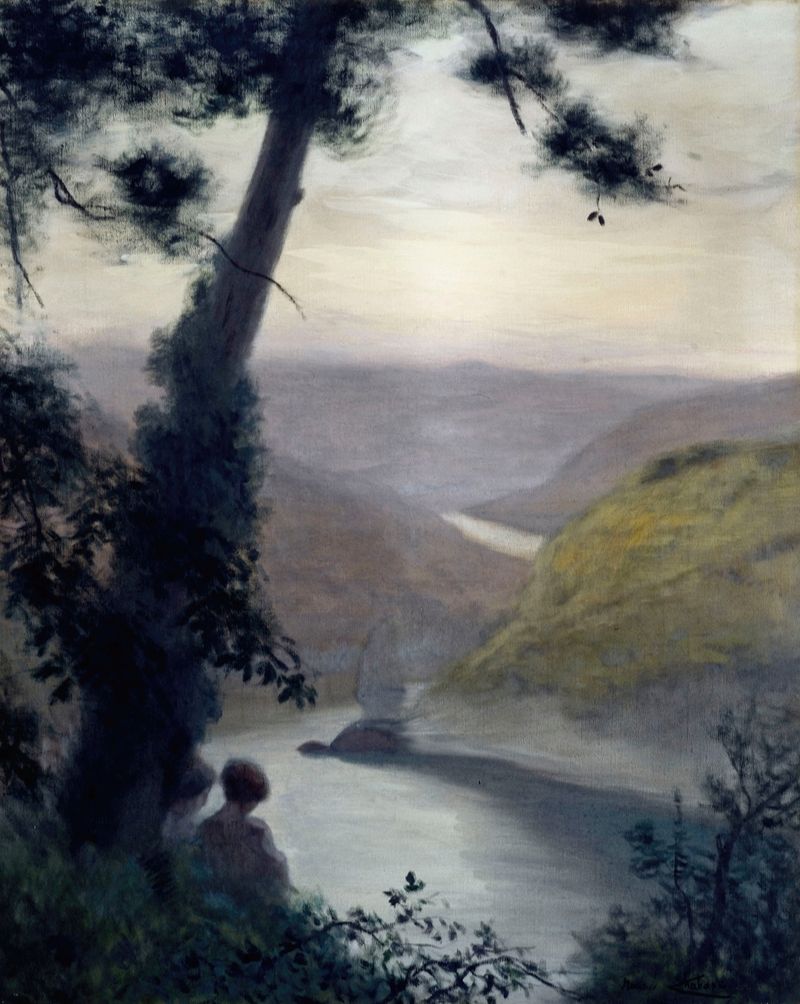
This sentiment resonates through the wistful echoes of nostalgia that permeate La Chapelle, inviting the viewer into a realm where memory and longing intertwine. Look to the left at the delicate interplay of light and shadow that bathes the chapel's weathered stones, illuminating their soft textures. The warm golden hues contrast elegantly with cool blue shadows, highlighting the architecture's graceful lines and evoking a sense of serene melancholy. Notice how the branches of the trees bend gently, framing the chapel like a protective embrace, suggesting both shelter and solitude. Within the composition lies an emotional depth that speaks of loss and yearning.
The chapel, though beautiful, stands isolated against the backdrop of a fading landscape, symbolizing the passage of time and the ephemerality of beauty. Each curved arch and flickering light reflects a moment from the past, inviting us to ponder what once was, reminding us that memories often lie in the spaces between silence and sound. Created in 1898, during a period of personal reflection for the artist, La Chapelle emerged from Maurice Chabas’s search for meaning and identity in a changing world. Living in France, he was deeply influenced by the Symbolist movement, which sought to express the deeper truths of existence through evocative imagery.
This painting captures both the essence of that era and Chabas’s own exploration of nostalgia, revealing a moment that resonates with universal human experience.
More Artworks by Maurice Chabas
Browse all →


More Architecture Art
Browse all →
The statue of Liberty
Frédéric Auguste Bartholdi

View of Houses in Delft, Known as ‘The Little Street’
Johannes Vermeer

View of Houses in Delft, Known as ‘The Little Street’
Johannes Vermeer

The Cathedral in Rouen. The portal, Grey Weather
Claude Monet

The yellow house
Vincent van Gogh

The Church in Auvers-sur-Oise, View from the Chevet
Vincent van Gogh