Plateau de Gravelles — History & Facts
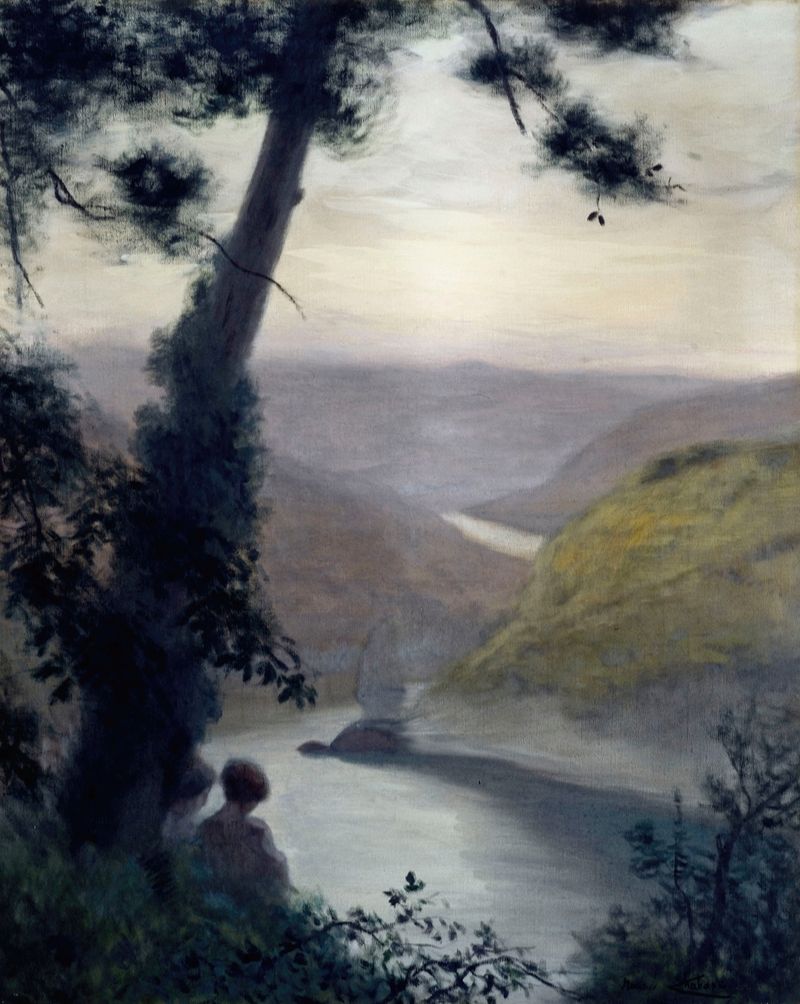
Can beauty exist without sorrow? In Plateau de Gravelles, the enchanting landscape invites us to contemplate the interplay of light and shadow, revealing the multifaceted emotions embedded in nature's embrace. Look to the left at the sweeping hills, their rich greens and golds shimmering under a gentle sun. The artist deftly employs a soft palette, blending hues to create an atmosphere that feels both serene and ephemeral. Notice how the delicate brushstrokes suggest a gentle breeze, breathing life into the foliage, while the horizon hints at distant mysteries waiting to be uncovered.
The composition leads our gaze upward, drawing us into the vast expanse of sky, where clouds float lazily, evoking a sense of longing and peace. Hidden within this tranquil scene lies a tension between abundance and transience. The vibrancy of the landscape contrasts with the fleeting nature of beauty, reminding us that even the most breathtaking vistas are subject to the passage of time. Observe the subtle play of light, illuminating certain areas while casting others into shadow, a metaphor for the coexistence of joy and sorrow in life's journey.
Each detail beckons us to reflect on our own experiences, bridging the gap between the viewer and the world depicted. In 1898, Maurice Chabas was immersed in the Symbolist movement, creating works that often explored themes of nature and the human condition. He painted Plateau de Gravelles during a period of artistic exploration, when Impressionism and Post-Impressionism were reshaping perceptions of color and form. This was a time when many artists sought to express emotional depth and transcendence through their work, capturing not just the appearance of a scene, but the essence of experience itself.