
La clairière — History & Facts
In its stillness, it invites contemplation, whispering of divinity hidden within nature's embrace. Look to the left, where a winding path beckons the viewer deeper into the verdant landscape. The vibrant greens of the trees and grass sing in contrast to the soft, warm hues of the sky, an invitation to explore the harmony between earth and ether. Pissarro’s brushwork, alive with dappled light, captures the fleeting moments of day, each stroke revealing textures and layers that breathe life into the scene. Beneath the surface lies a poignant juxtaposition: the serenity of the clearing stands in contrast to the restlessness of modern life encroaching beyond its borders.
The figures, small and distant, seem to bask in the divine tranquility of the moment, yet they are mere spectators in a world transforming under industrial pressure. This tension between peace and progress invites reflection on the sacredness of nature and the fragility of these quiet havens. In 1875, Pissarro painted this work while in the midst of his search for artistic identity, participating in the burgeoning Impressionist movement in France. At this time, he grappled with the shift from realism to abstraction, capturing the transient beauty of rural life as Parisian society underwent rapid industrialization.
His canvas became a sanctuary, a testament to the divine whispers found within the simplicity of nature, illustrating a moment that resists the relentless march of time.
More Artworks by Camille Pissarro
Browse all →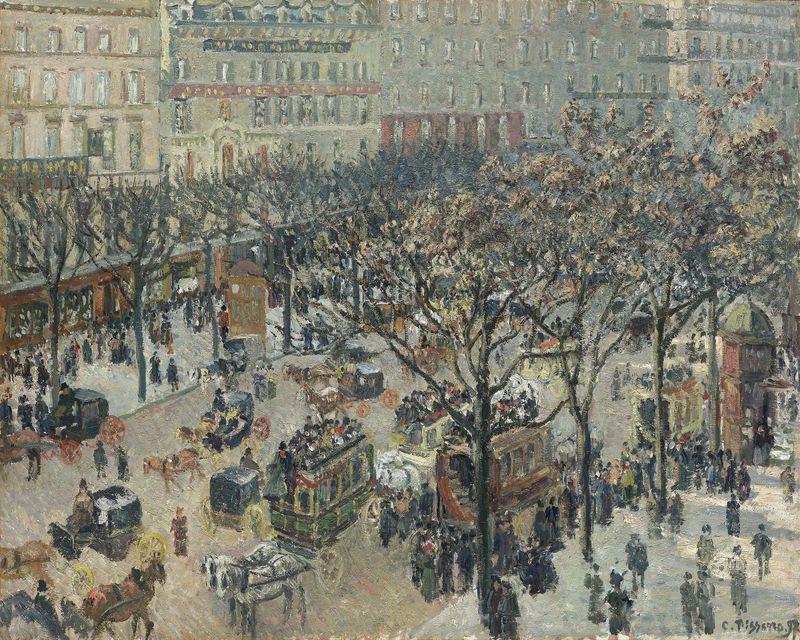
Boulevard des Italiens,Morning_Sunlight
Camille Pissarro
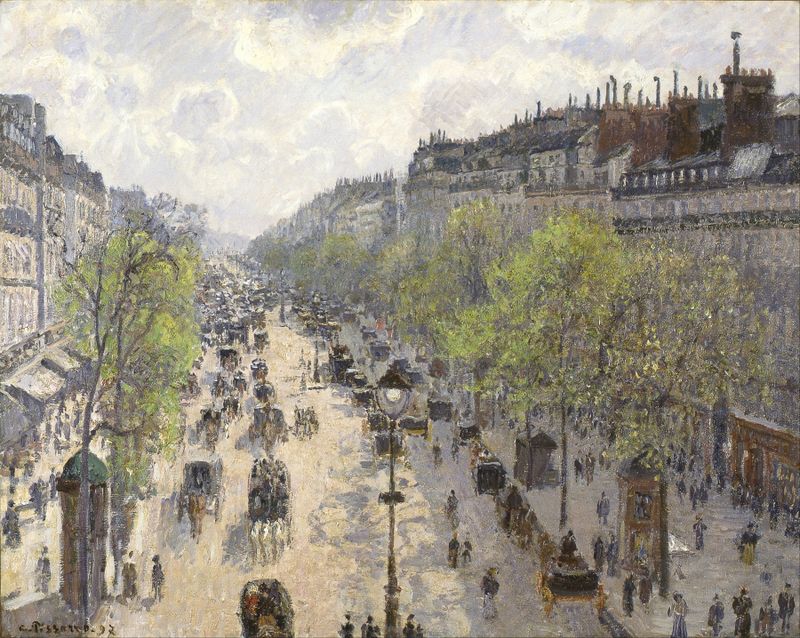
Boulevard Montmartre, Spring
Camille Pissarro
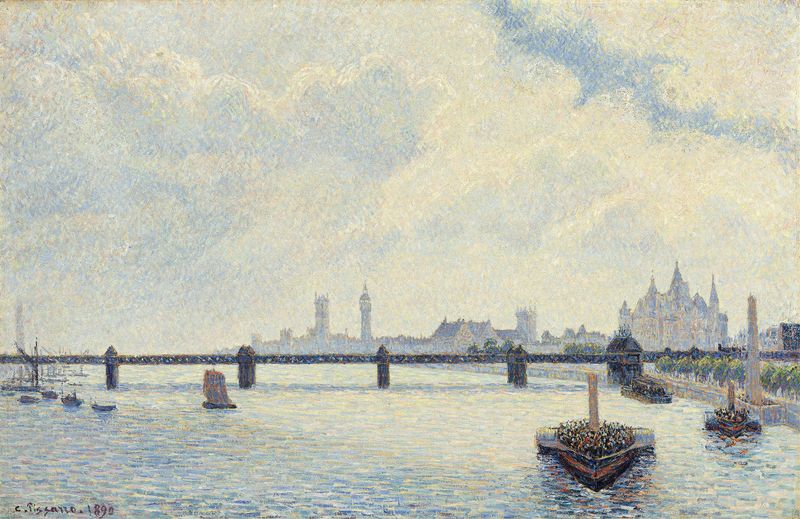
Charing Cross Bridge,London
Camille Pissarro
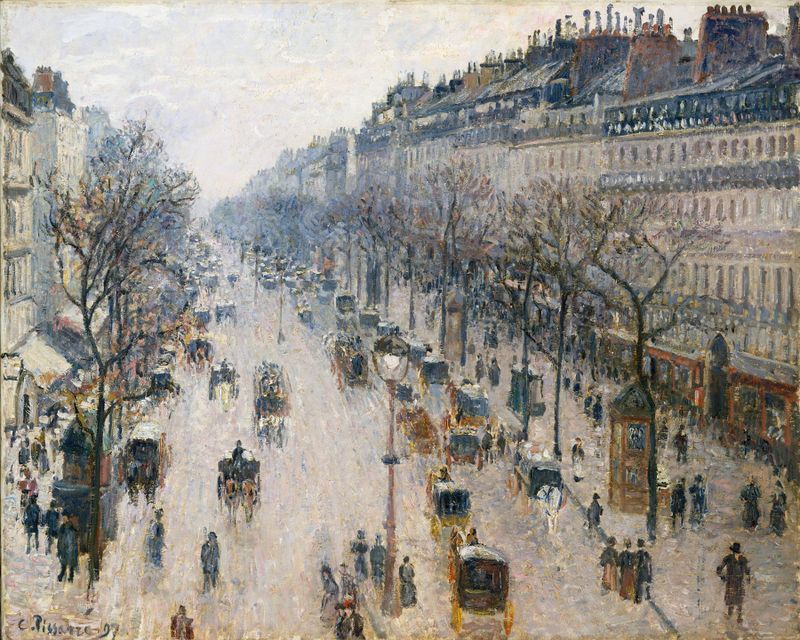
The Boulevard Montmartre on a Winter Morning
Camille Pissarro
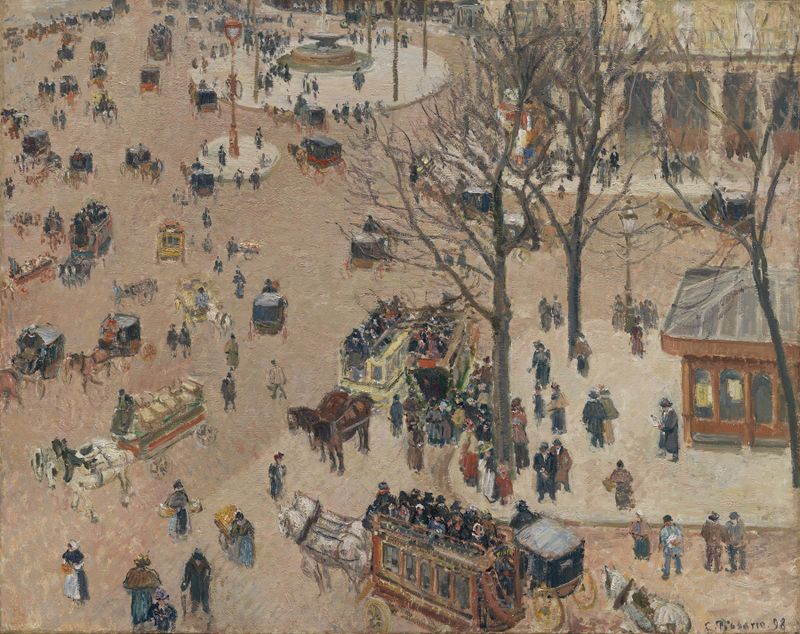
La Place du Théâtre Français
Camille Pissarro

Rue Saint-Lazare, Paris
Camille Pissarro
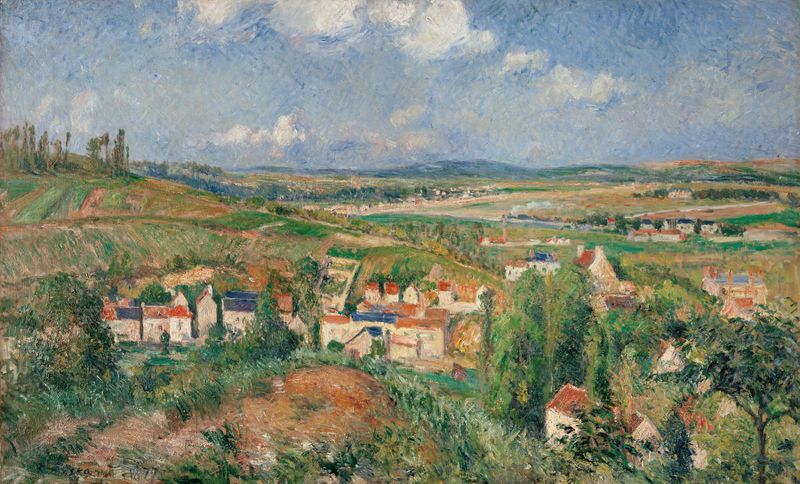
L’hermitage En Été, Pontoise
Camille Pissarro

Place du Theatre Francais,Fog Effect
Camille Pissarro
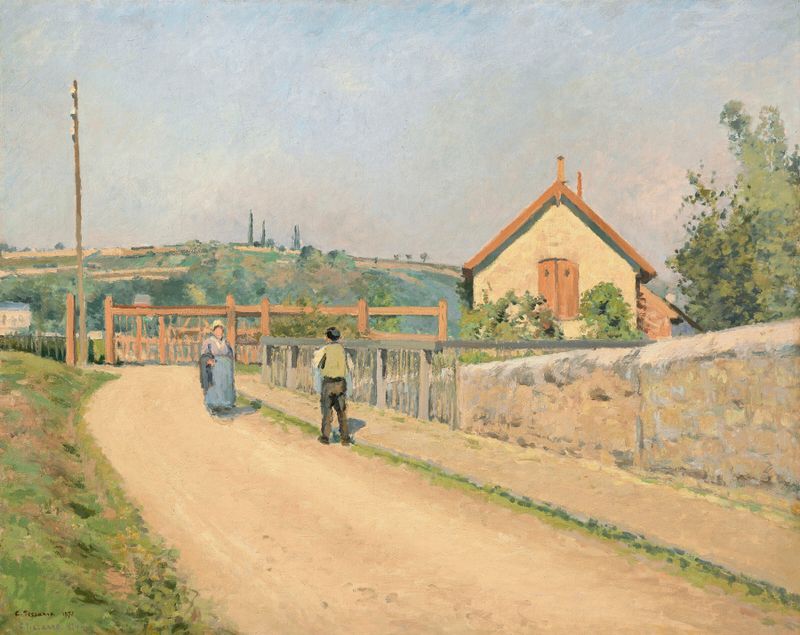
La barrière du chemin de fer, aux Pâtis près Pontoise
Camille Pissarro
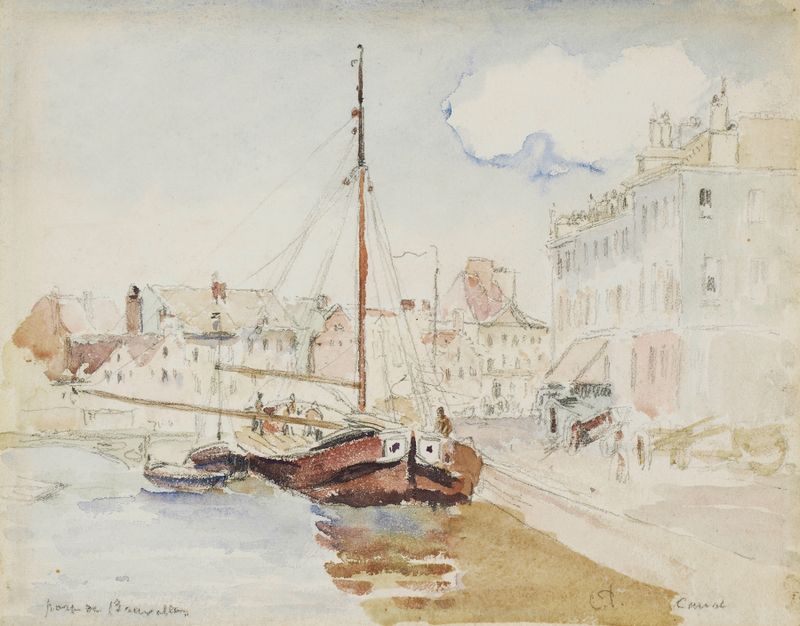
Port de Bruxelles
Camille Pissarro





