
La Démolition de l’église Saint-Jean-en-Grève, en 1800 — History & Facts
The ruins of the past whisper through the dust of time, revealing the fragile line between creation and destruction. How do we reconcile our history with the visions of a future yet to unfold? Look closely at the center of the canvas, where the church’s once-majestic structure is reduced to fragmented remains. The light dances through the debris, illuminating the remnants of sacred architecture that once stood proud against the skyline.
Notice the soft palette of ochres and muted greens, evoking an ethereal quality, yet the somber undertones remind us of loss. The composition draws the eye along the crumbled walls and towards the horizon, suggesting an endless cycle of decay and rebirth. Beneath the surface, this work speaks of the transient nature of human endeavors, highlighting the contrast between the resilience of nature and the vulnerability of our creations. The juxtaposition of the serene sky against the chaotic ruins encapsulates a poignant revelation: beauty often emerges from devastation.
Small details, such as the figures laboring amidst the wreckage and the creeping vines taking over the stones, symbolize the relentless passage of time and the inevitability of change. In 1800, Hubert Robert painted this piece during a period of significant transition in France, marked by the upheavals of the Revolution and the Napoleonic era. Living in Paris, he witnessed the clash between the old world and the new, capturing the essence of a city in flux. This painting reflects not only his personal experiences but also the broader changes in the art world, as artists began to explore themes of nostalgia and the sublime in the wake of societal transformation.
More Artworks by Hubert Robert
Browse all →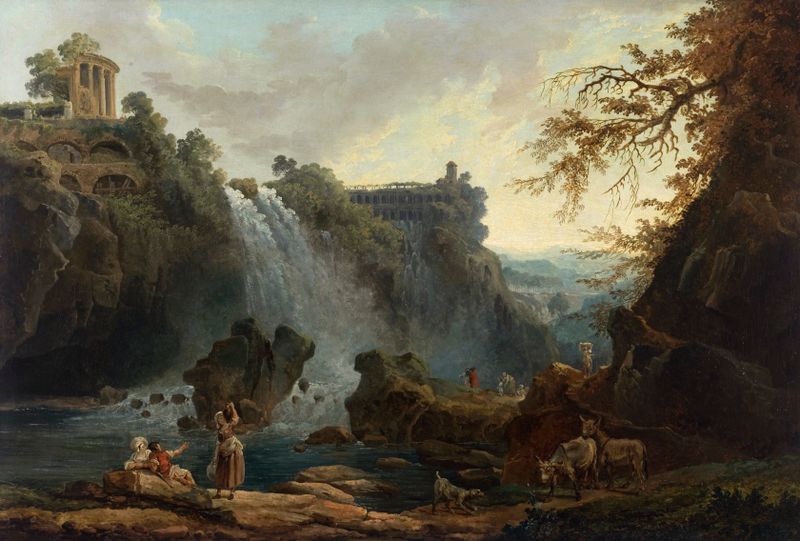
Les Cascatelles de Tivoli
Hubert Robert
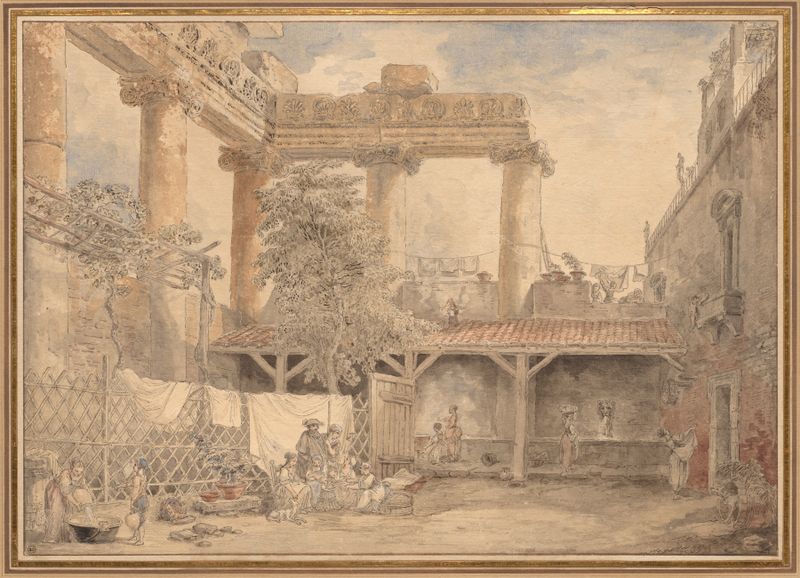
Roman Ruins, Villa Pamfili
Hubert Robert

The Rustic Bridge, Château de Méréville, France
Hubert Robert

The Portico of a Country Mansion
Hubert Robert

Architectural Capriccio
Hubert Robert

The Obelisk
Hubert Robert
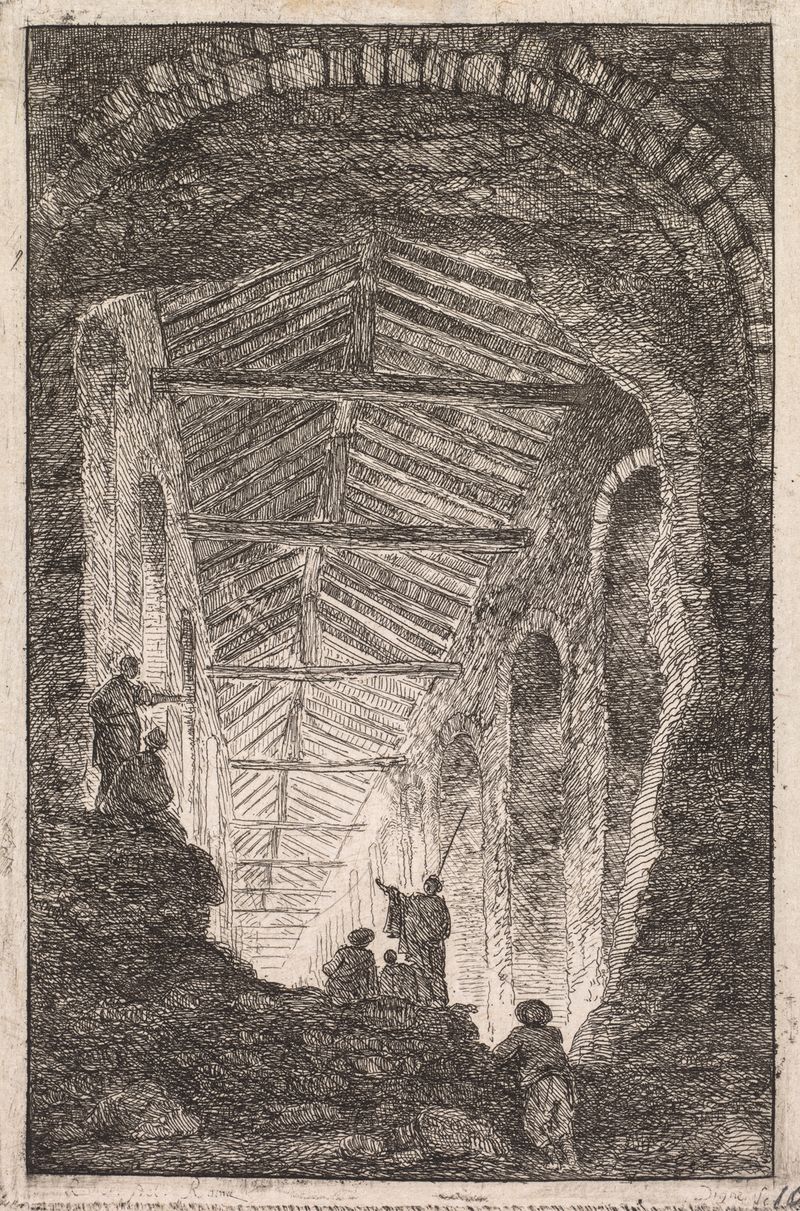
The Antique Gallery
Hubert Robert

L’incendie de l’Opéra, vu des jardins du Palais-Royal, le 8 juin 1781
Hubert Robert
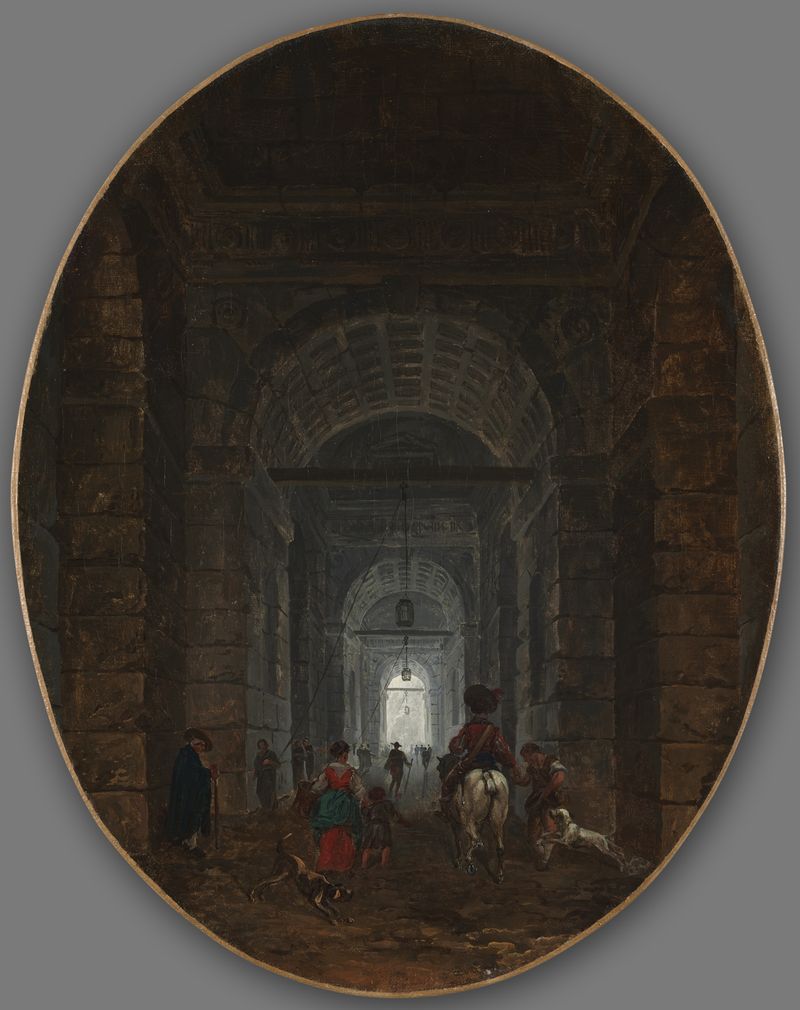
The Grotto of Posillipo
Hubert Robert

Architectural Capriccio with ruins of the Temple of Saturn and the Colosseum in the background
Hubert Robert
More Architecture Art
Browse all →
The statue of Liberty
Frédéric Auguste Bartholdi

View of Houses in Delft, Known as ‘The Little Street’
Johannes Vermeer

View of Houses in Delft, Known as ‘The Little Street’
Johannes Vermeer

The Cathedral in Rouen. The portal, Grey Weather
Claude Monet

The yellow house
Vincent van Gogh

The Church in Auvers-sur-Oise, View from the Chevet
Vincent van Gogh