
La Fontaine — History & Facts
The tumult of nature's wildness balances precariously with the order of human intent, revealing a dance between madness and harmony. Focus first on the delicate interplay of light and shadow across the cascading water, where the fountain’s joyful splashes seem to leap from the canvas. Look closely at the surrounding architecture; the ruins stand like silent witnesses, their crumbling stones softened by lush greenery. The palette of earthy tones contrasted with vibrant greens captures not only the scene's beauty but the tension of decay and life in a singular moment. Within this serene tableau, the hidden narrative unfolds.
The gushing water symbolizes the relentless passage of time, while the overgrowth hints at nature’s reclamation of man-made structures. Consider how the figures, engaged in quiet contemplation, evoke a myriad of emotions—serenity mingled with an unspoken chaos, suggesting that madness may lurk just beneath the surface of tranquility. Created in the 18th century, La Fontaine finds its roots in the artist's exploration of picturesque landscapes and architectural ruins during France's Enlightenment period. Hubert Robert, a prominent figure of this era, often sought to reflect the relationship between humanity and nature, and in this work, he encapsulated the delicate balance between beauty and madness, mirroring both personal and societal complexities of his time.
More Artworks by Hubert Robert
Browse all →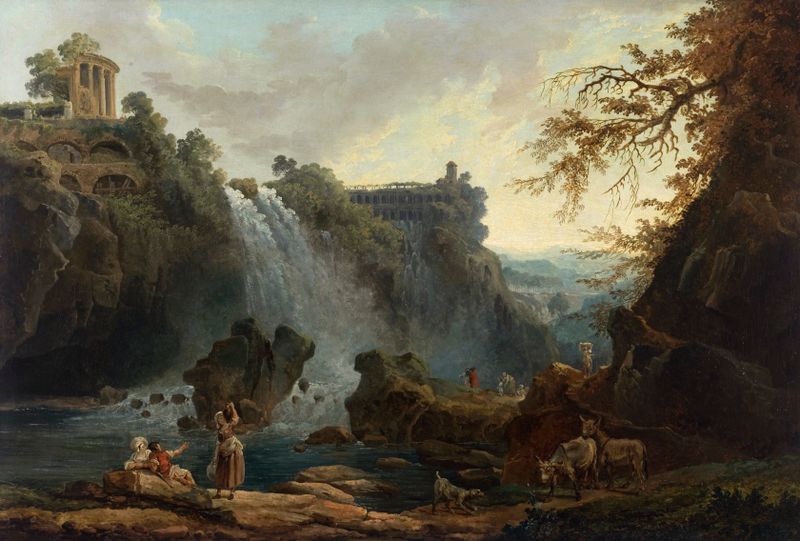
Les Cascatelles de Tivoli
Hubert Robert
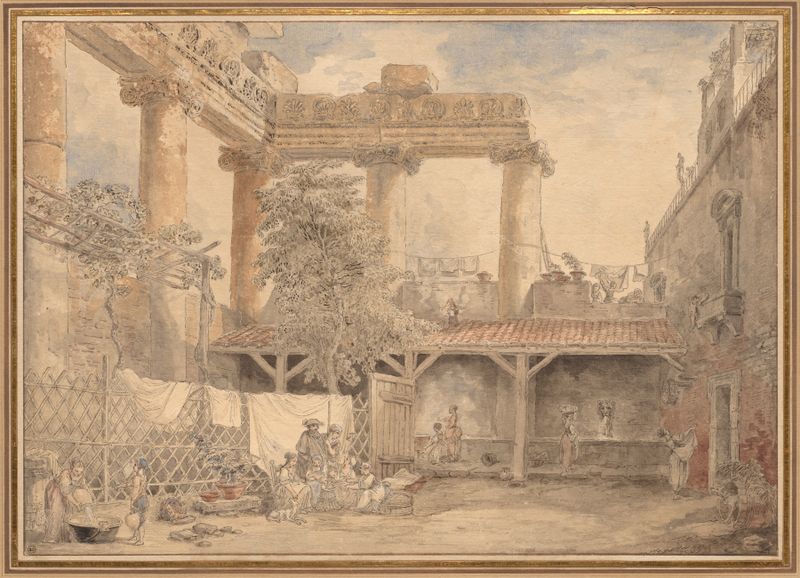
Roman Ruins, Villa Pamfili
Hubert Robert

The Rustic Bridge, Château de Méréville, France
Hubert Robert

The Portico of a Country Mansion
Hubert Robert

Architectural Capriccio
Hubert Robert

The Obelisk
Hubert Robert
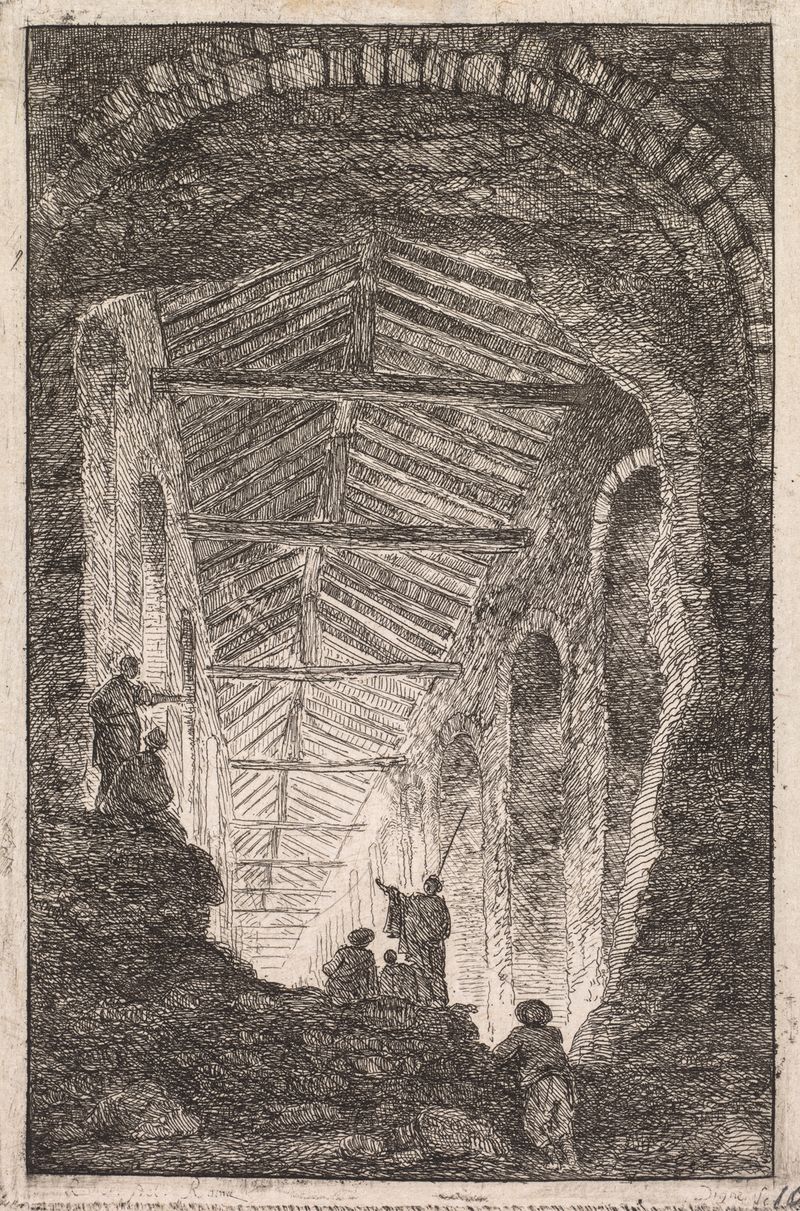
The Antique Gallery
Hubert Robert

L’incendie de l’Opéra, vu des jardins du Palais-Royal, le 8 juin 1781
Hubert Robert
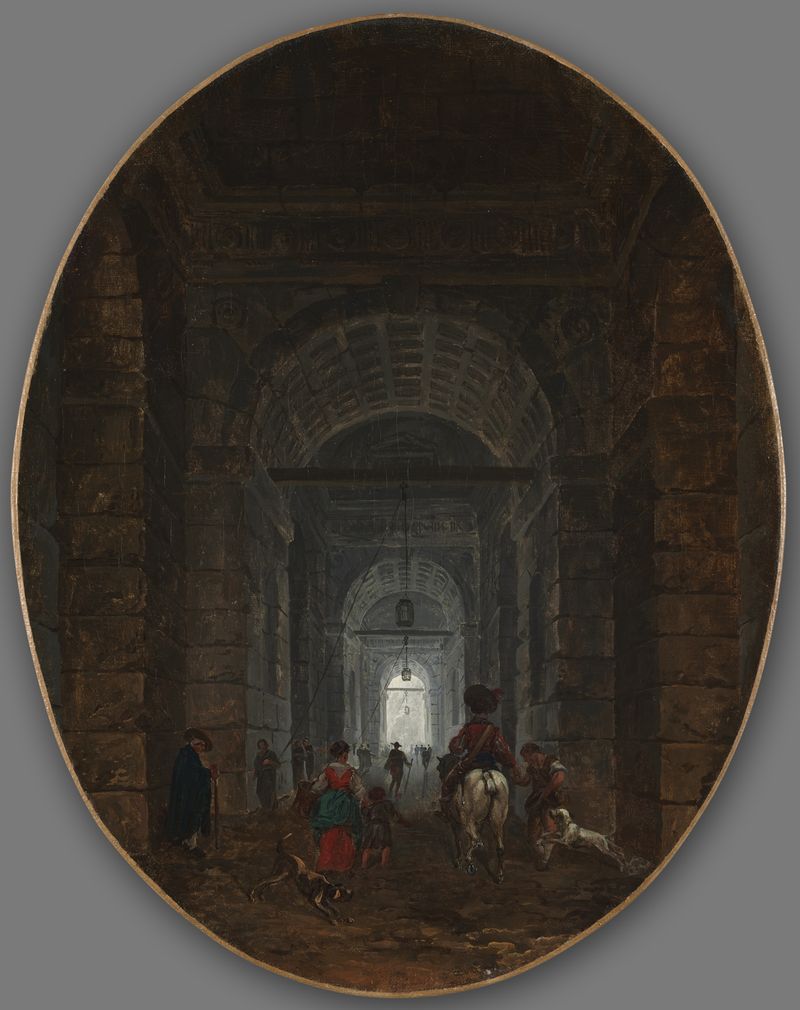
The Grotto of Posillipo
Hubert Robert

Architectural Capriccio with ruins of the Temple of Saturn and the Colosseum in the background
Hubert Robert





