
La Giralda de Séville Musée du Louvre Peintures INV 3686 ; LP — History & Facts
What first draws the eye is the sheer vertical sweep of the Giralda, rendered with such clarity and warmth that the tower seems to rise not just above Seville, but above the very century that produced this painting. The sun strikes the stonework at a sharp angle, picking out the intricate Moorish patterns and the later Renaissance belfry in a play of gold and shadow. Look closer: the lower half of the image is alive with quiet movement—figures in 19th-century dress gather in the orange-tree courtyard, their smallness emphasizing the monumentality of the architecture above.
The painter leads us from the cool, shaded garden into the dazzling light, inviting us to experience the space as a living place rather than a relic. Painted in 1839, this work belongs to a moment when European artists, especially those from France, were captivated by the allure of Spain’s architectural past. Such paintings were often made for travelers, collectors, or those who longed for the romance of distant cities—before photography, these images were the closest one could come to standing in the shadow of the Giralda itself. The artist’s careful attention to both the historic stone and the everyday life beneath it speaks to a broader 19th-century fascination with the meeting of civilizations: Islamic, Christian, and modern.
Today, the painting resides in the Louvre’s collection, a reminder that even the most familiar monuments can be seen anew through the eyes of a visitor from another age. Let your gaze linger on the figures in the courtyard; their presence is the painter’s invitation to step into the scene yourself.
More Artworks by Adrien Dauzats
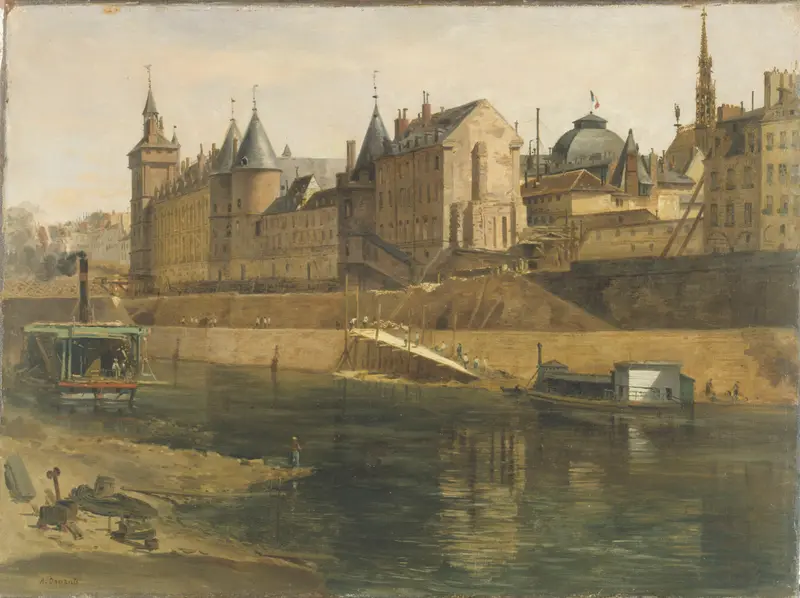
La Conciergerie pendant les travaux de reconstruction du Palais de Justice
Adrien Dauzats
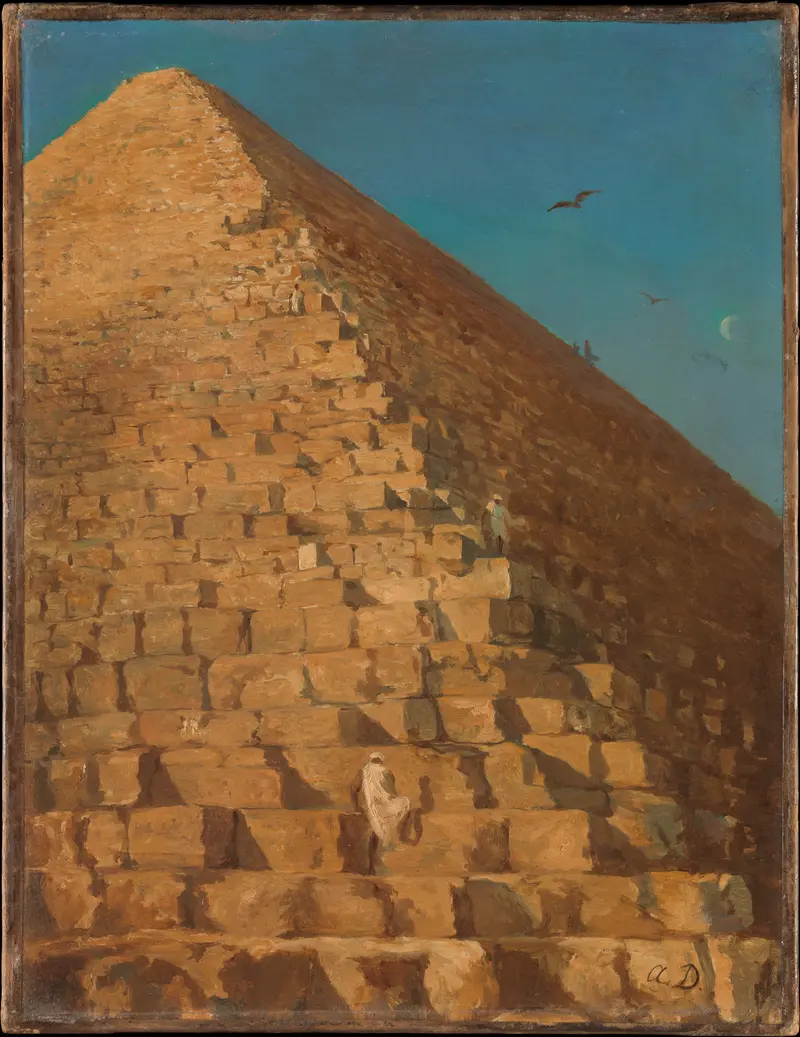
The Great Pyramid, Giza
Adrien Dauzats
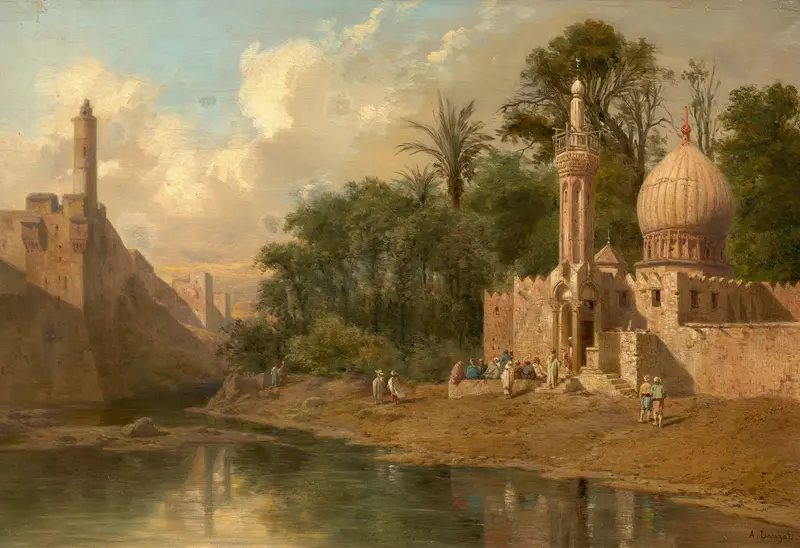
Vue de monuments, probablement au Caire
Adrien Dauzats
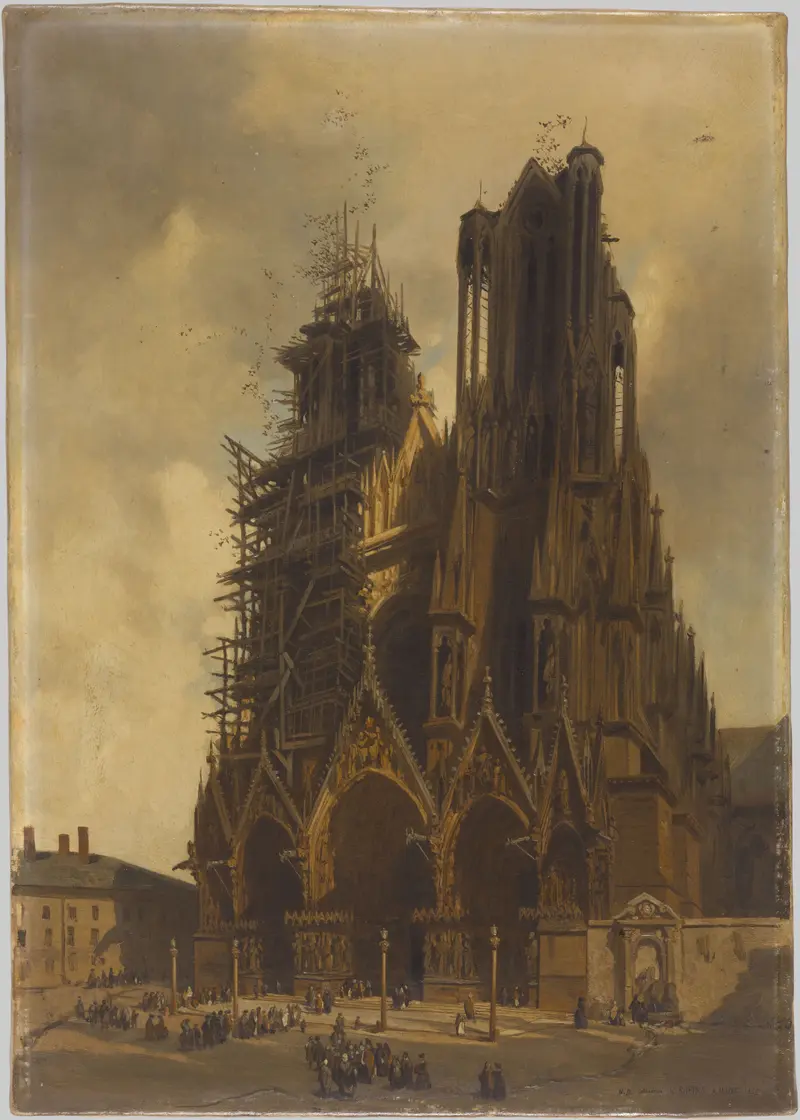
La Cathédrale de Reims
Adrien Dauzats
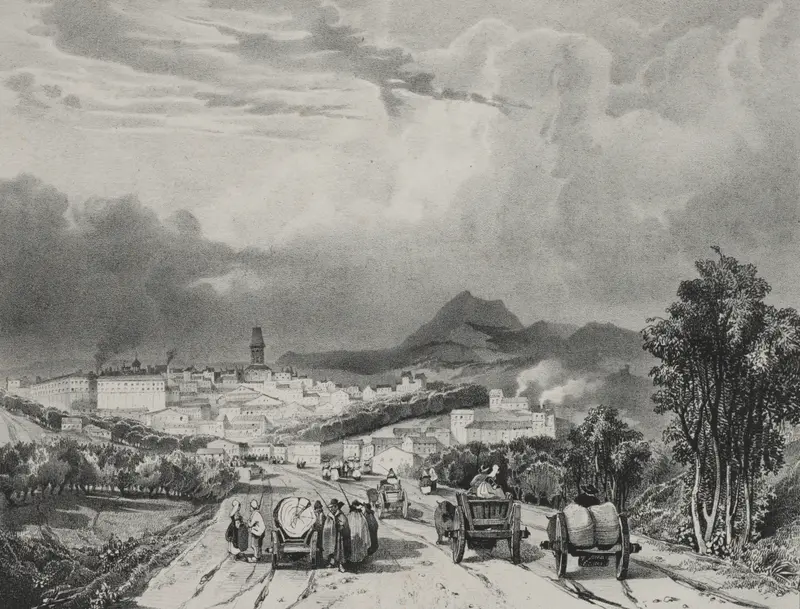
Vue generale de Riom, Auvergne
Adrien Dauzats
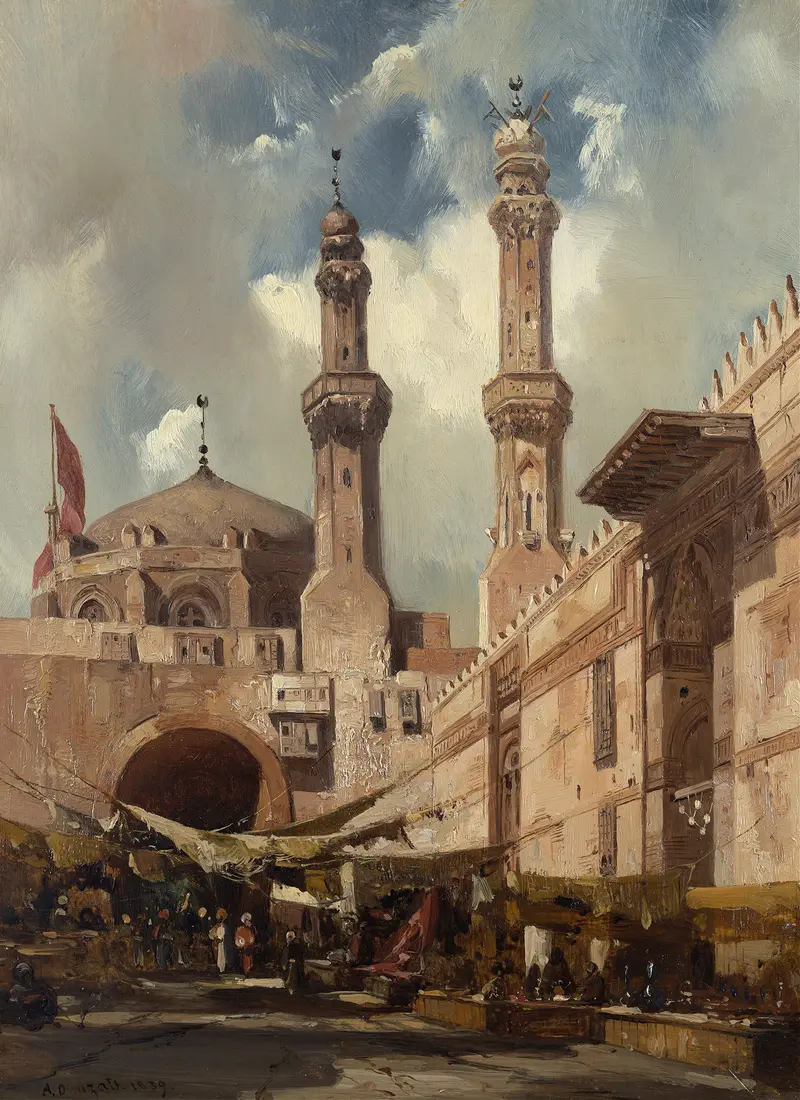
A Cairo Bazaar
Adrien Dauzats
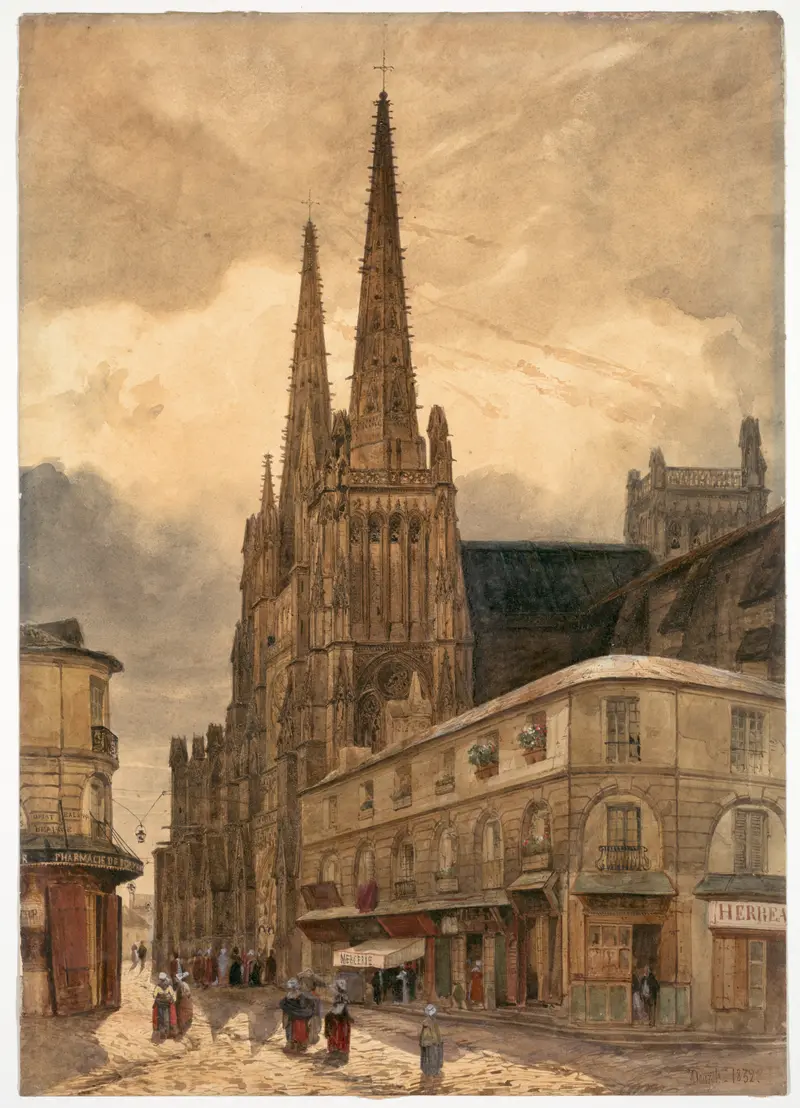
Cathédrale Sainte-André de Bordeaux
Adrien Dauzats
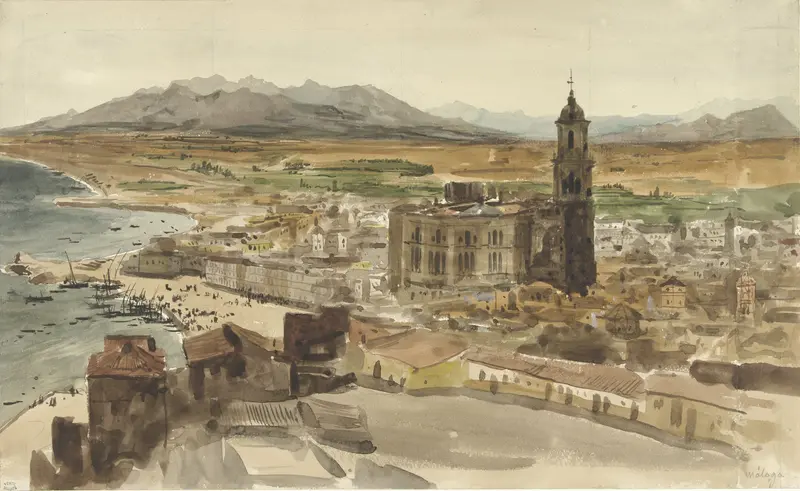
Gezicht op Malaga vanuit het Noorden
Adrien Dauzats
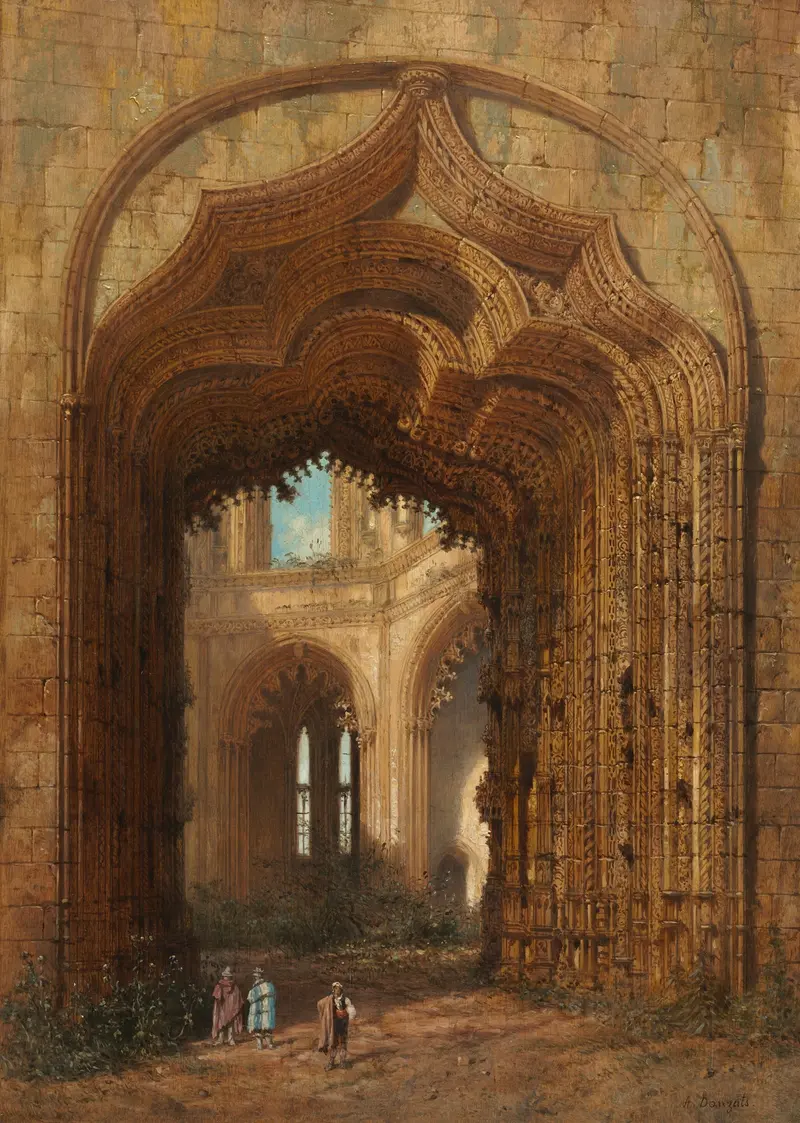
Ruined Church
Adrien Dauzats
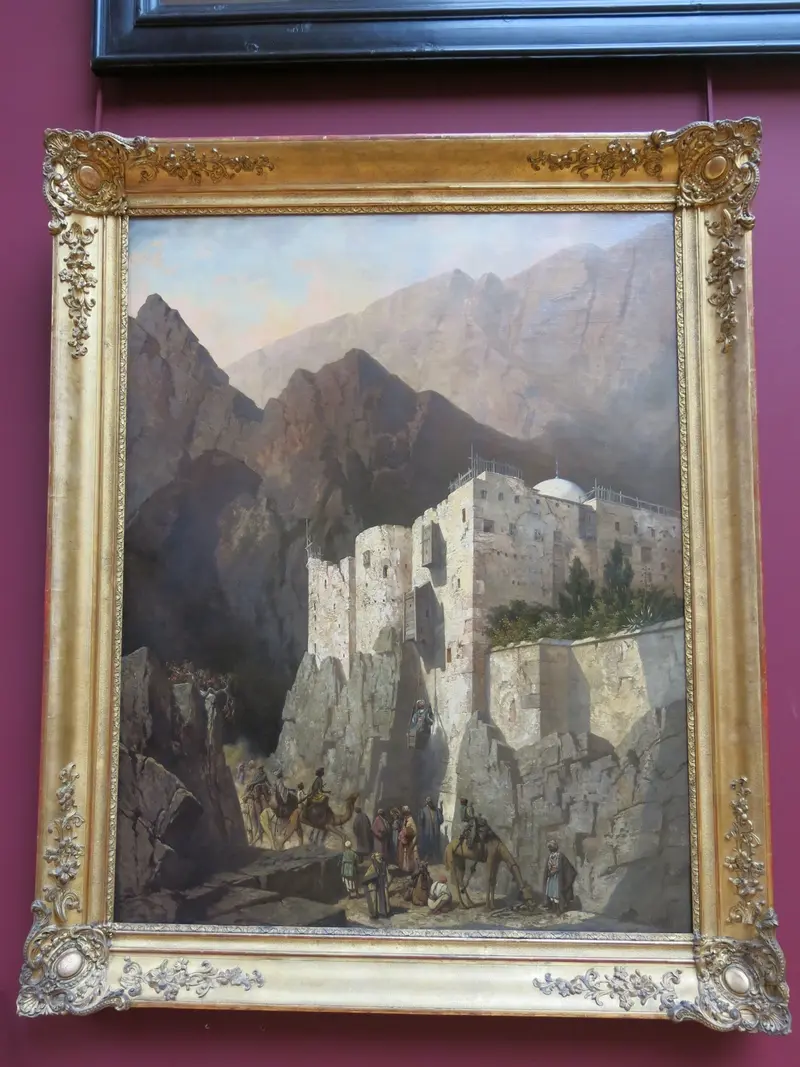
Le couvent de Sainte Catherine au mont Sinai (Louvre, INV 3689)
Adrien Dauzats





