
Le couvent de Sainte Catherine au mont Sinai (Louvre, INV 3689) — History & Facts
Sunlight pours over the ancient stone walls of the convent, casting the fortress-like structure into sharp relief against the sheer, violet-shadowed cliffs of Sinai. The eye is drawn first to the geometry of the building, perched improbably amidst jagged rock, then down to the bustle at its foot: a caravan of travelers, their camels kneeling, their garments bright against the dust. Every figure seems to be on a journey—some ascending the steps, others pausing in conversation, a few lost in their own thoughts.
The light here is not just illumination; it is a kind of revelation, picking out the convent as both sanctuary and threshold, a place where the world of stone and the world of spirit meet. The palette, dominated by warm ochres and cool shadows, creates a sense of both grandeur and enclosure, inviting the viewer to imagine the silence that must fall once the travelers have passed inside. Painted in 1845 by Adrien Dauzats, this view of the Saint-Katherine convent at Mount Sinai belongs to a moment when European artists were captivated by the landscapes and monuments of the East. Such works, often commissioned by collectors hungry for scenes of distant lands, blend documentary precision with a romantic sense of adventure.
Dauzats, known for his travels and his eye for architectural drama, brings both accuracy and atmosphere to this oil on canvas, now in the Louvre. History has kept few traces of the painting’s early journey, but its presence today in a Parisian gallery reminds us how the 19th century’s fascination with travel, faith, and the unknown continues to shape how we see places far from home. Look again at the travelers, dwarfed by stone and sky, and consider how the promise of arrival still echoes through the scene.
More Artworks by Adrien Dauzats

La Giralda de Séville Musée du Louvre Peintures INV 3686 ; LP
Adrien Dauzats
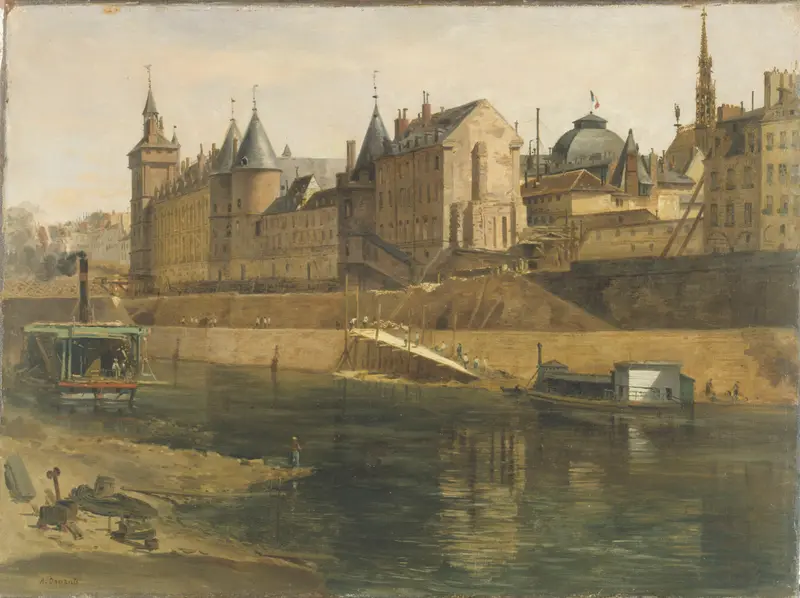
La Conciergerie pendant les travaux de reconstruction du Palais de Justice
Adrien Dauzats
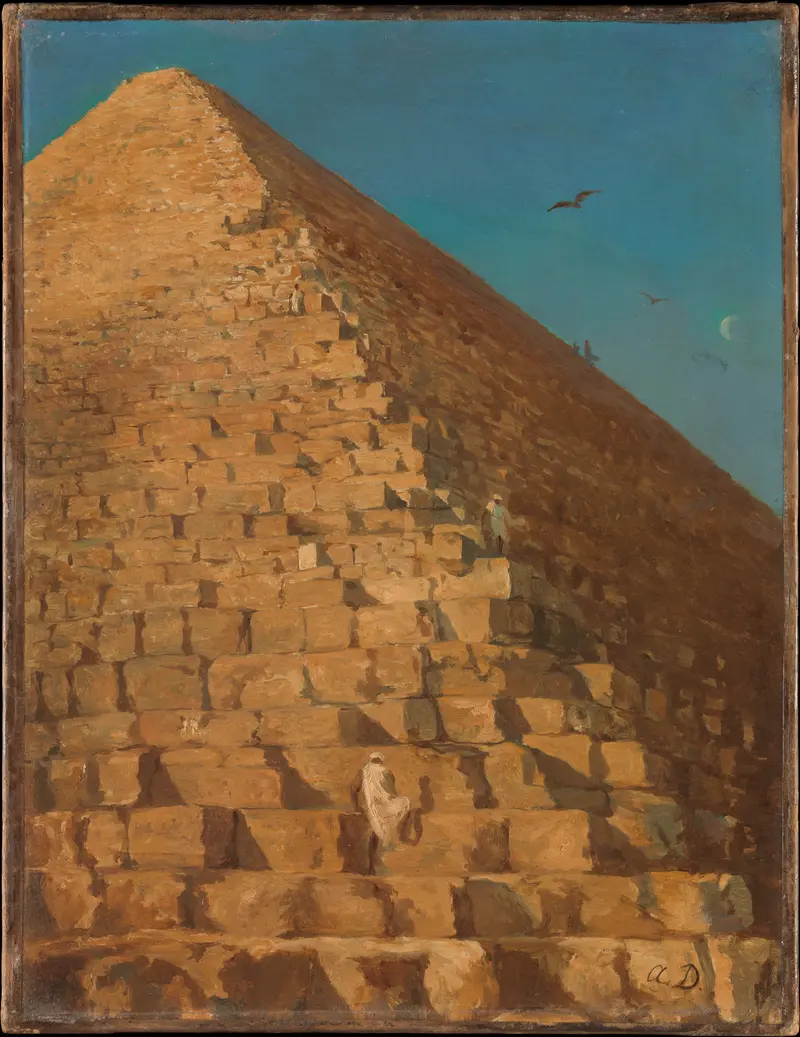
The Great Pyramid, Giza
Adrien Dauzats
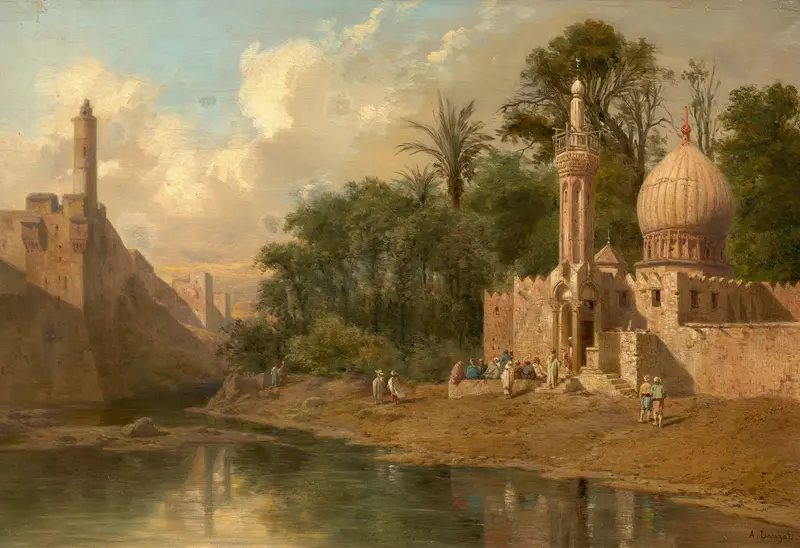
Vue de monuments, probablement au Caire
Adrien Dauzats
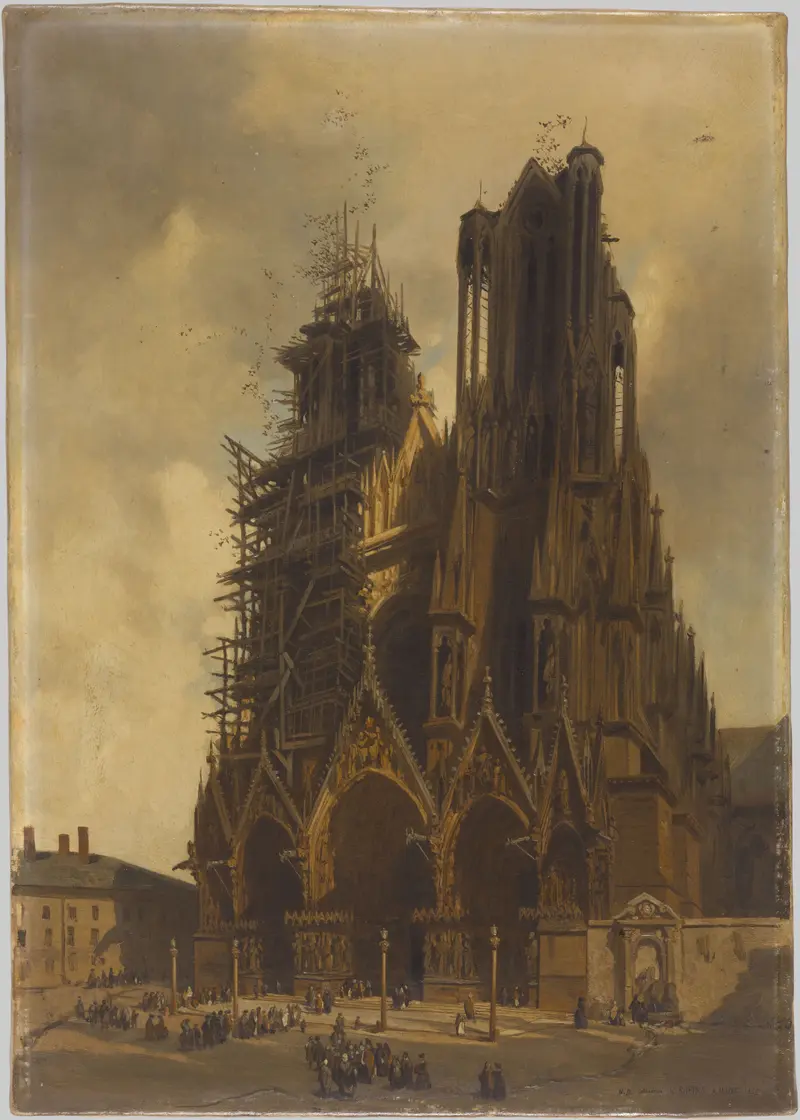
La Cathédrale de Reims
Adrien Dauzats
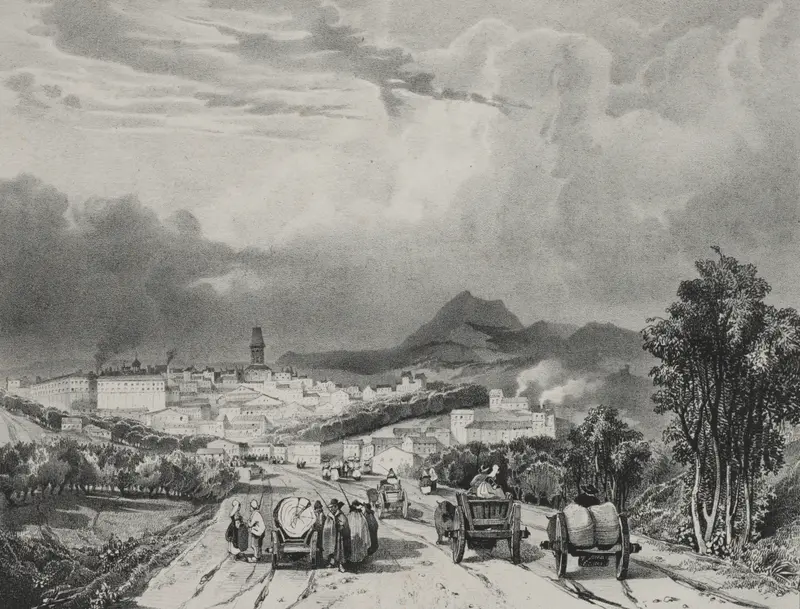
Vue generale de Riom, Auvergne
Adrien Dauzats
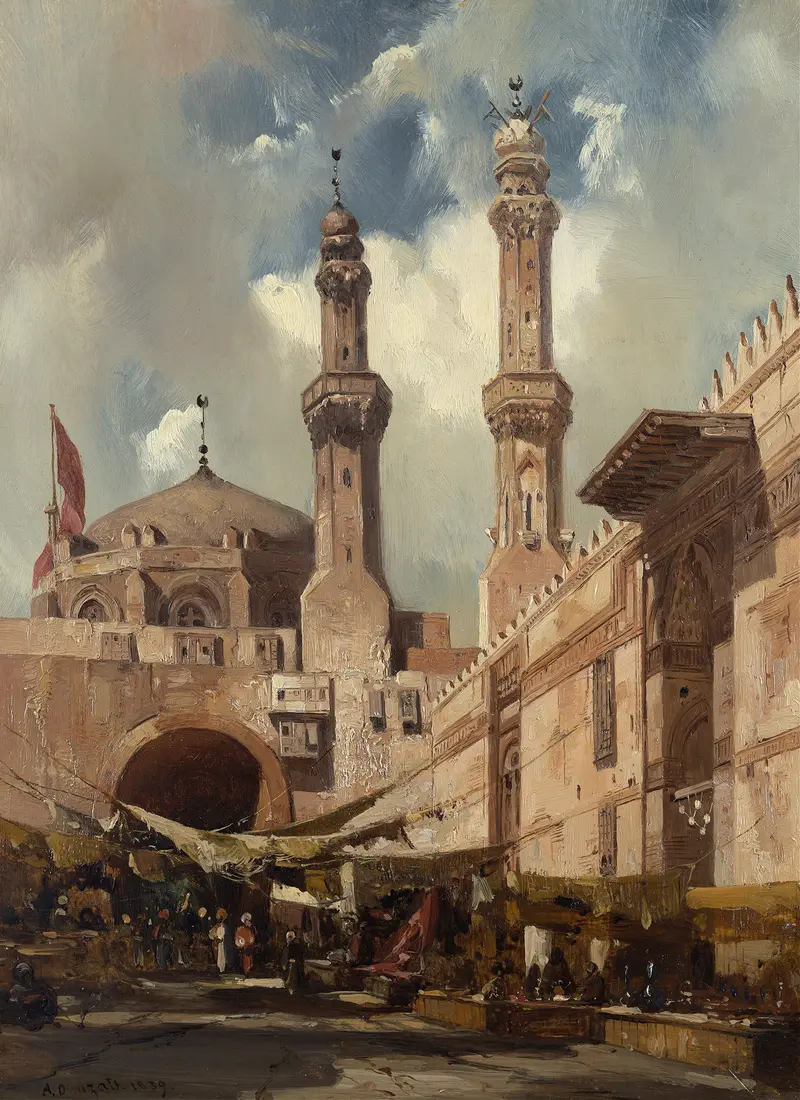
A Cairo Bazaar
Adrien Dauzats
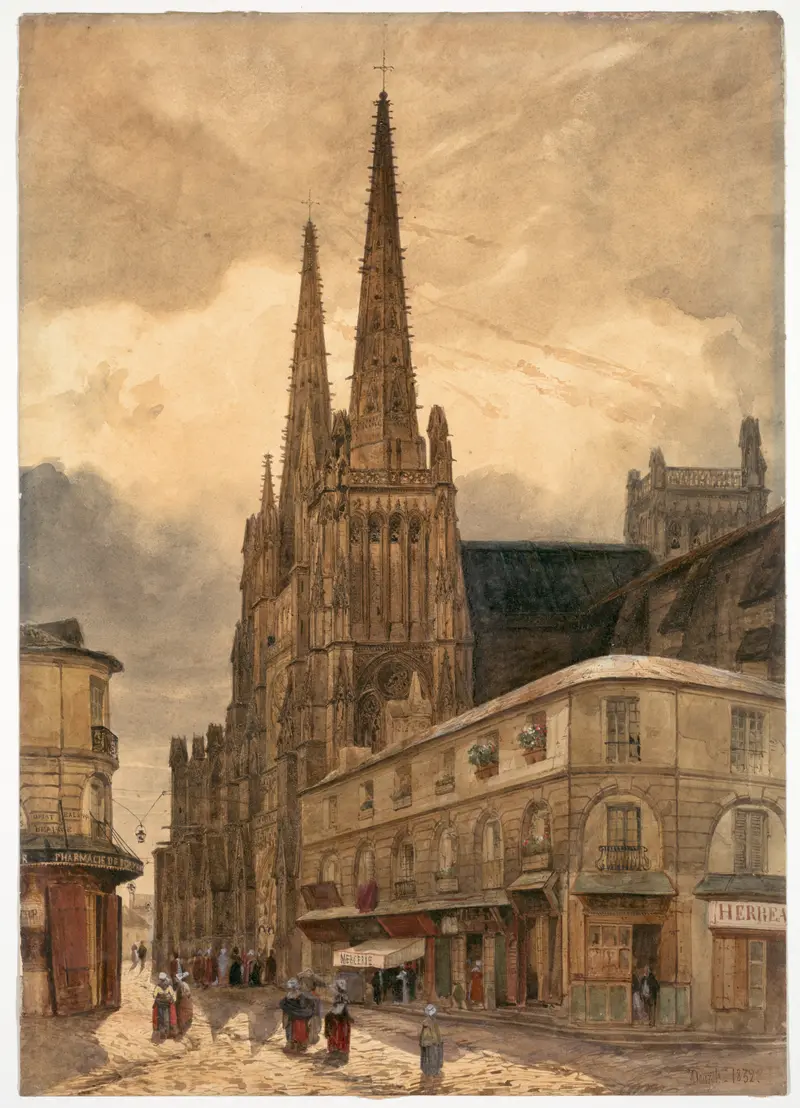
Cathédrale Sainte-André de Bordeaux
Adrien Dauzats
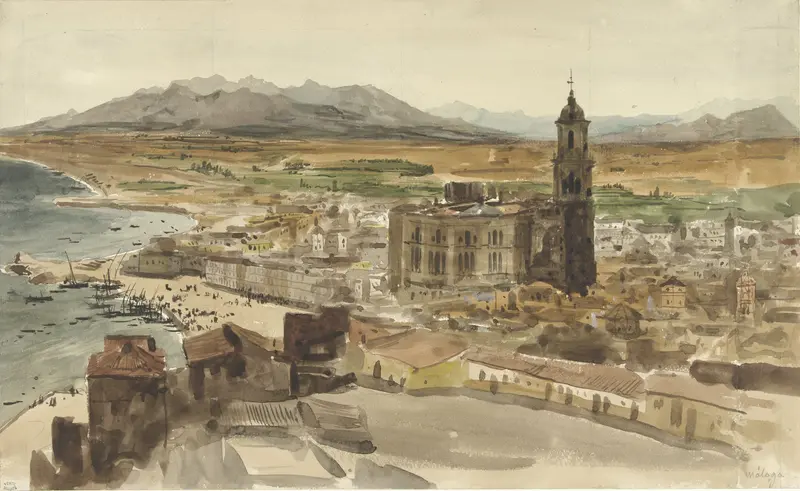
Gezicht op Malaga vanuit het Noorden
Adrien Dauzats
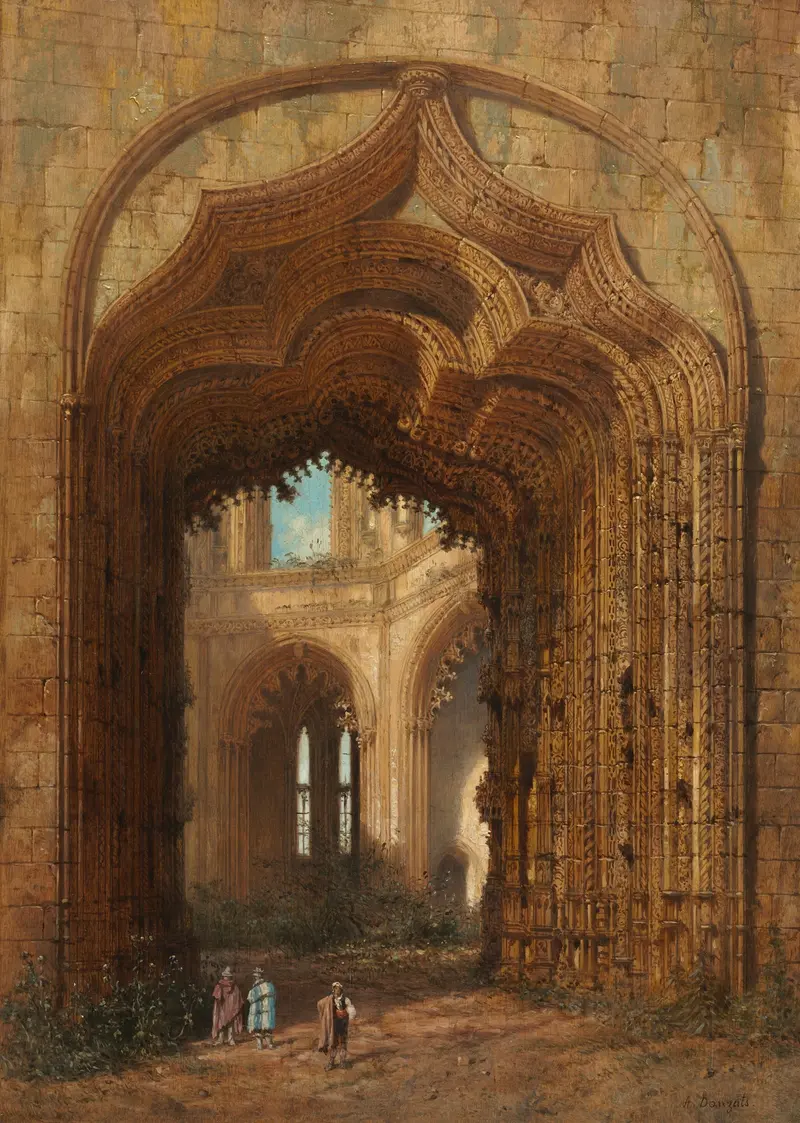
Ruined Church
Adrien Dauzats
More Landscape Art

The Starry Night
Vincent van Gogh

View of Delft
Johannes Vermeer

Water Lilies
Claude Monet

The Grand Canal, Venice, looking north-west from the Ca' Corner to the Ca' Contarini degli Scrigni, with the campanile of Santa Maria della Carità
Canaletto

Windsor Castle
Canaletto

The Grand Canal looking North-East from the Palazzo Dolfin-Manin to the Rialto Bridge
Canaletto