
La plage — History & Facts
Who listens when art speaks of silence? In the tranquil embrace of La plage, serenity unfolds like a soft whisper, inviting viewers to pause and reflect. Look to the center of the composition, where gentle waves lap against the shore, their rhythm mirrored by the subtle brushstrokes that suggest movement. The sandy beach, rendered in warm hues, draws the eye, while a calm sea stretches into the horizon, evoking a sense of vastness. Notice how the interplay of light and shadow creates a delicate balance, illuminating the tranquil scene with a soft glow that enhances the peaceful atmosphere. The contrast between the stillness of the beach and the fluidity of the water captures a moment suspended in time.
Small details, such as the distant silhouettes of figures, suggest a world beyond the canvas, sparking curiosity about their stories. This tension between presence and absence speaks to the emotional depth of the piece; it invites contemplation on solitude and connection, offering a refuge from the chaos of life. Peske created La plage during a period when he was exploring themes of nature and tranquility. While the exact date remains unknown, it reflects an era marked by a growing appreciation for impressionistic styles, where artists sought to capture fleeting moments.
The calmness in his work mirrors the artist's personal journey, as he navigated the complexities of life and the artistic landscape around him, cementing his legacy in the realm of serene imagery.
More Artworks by Jean Misceslas Peske
Browse all →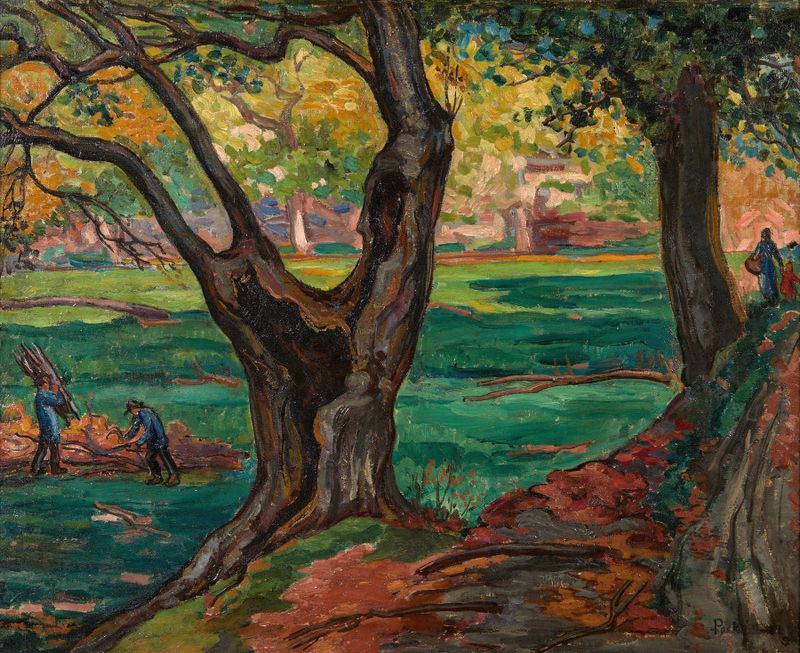
Dans les bois
Jean Misceslas Peske

Pont du Carroussel
Jean Misceslas Peske

Jardin du Bureau International du Travail à Genève
Jean Misceslas Peske
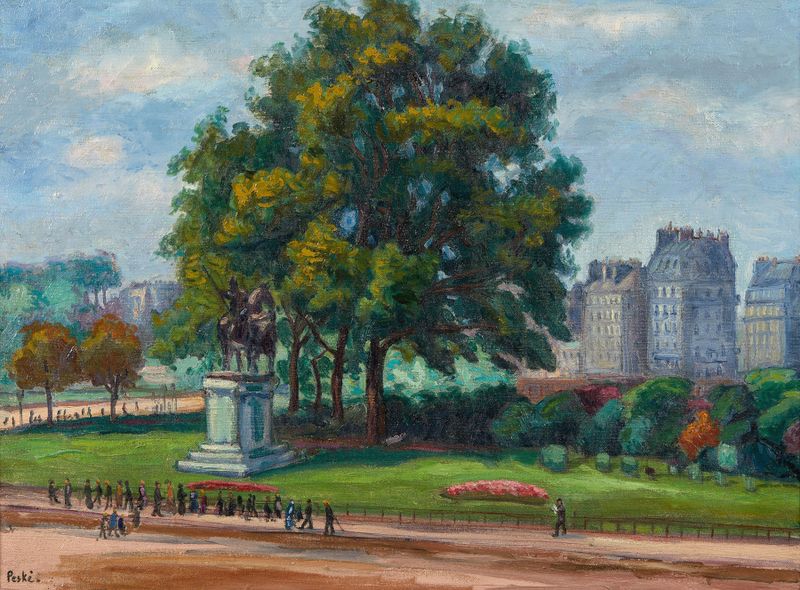
Statue de Charlemagne, parvis de Notre-Dame
Jean Misceslas Peske

Au jardin, la lessive
Jean Misceslas Peske
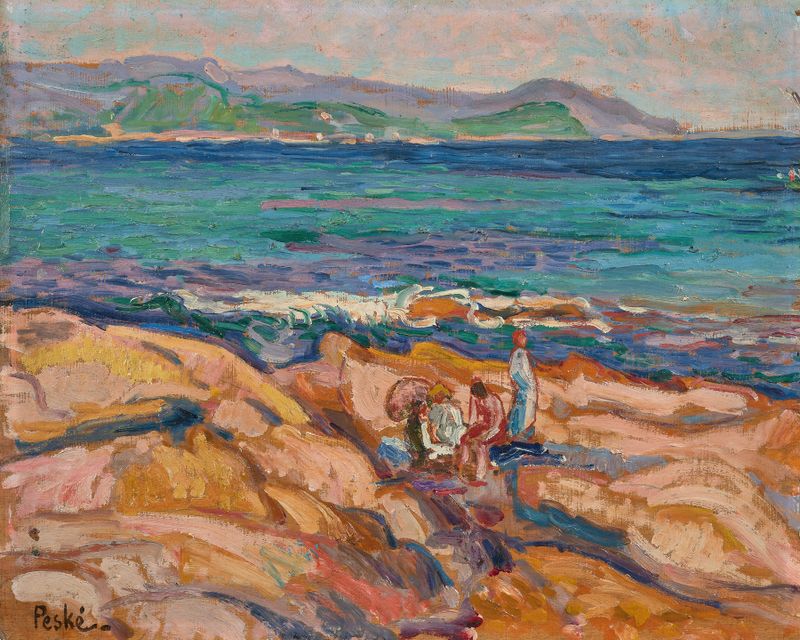
Côte rocheuses, personnages
Jean Misceslas Peske

Statue de Charlemagne sur le parvis de Notre Dame
Jean Misceslas Peske





