
La Promenade (Une Rue en Ile-de-France) — History & Facts
When did color learn to lie? In a world awash with beauty, it often masks truths that linger just beneath the surface. Look to the middle of the canvas, where the winding path beckons, inviting a stroll through the vibrant streets of Ile-de-France. The rich greens and soft blues create a lush backdrop, punctuated by dashes of sunlight filtering through the trees. Notice how the brushstrokes vibrate with energy, each stroke a heartbeat that propels the viewer through this serene yet bustling scene.
The figures, their outlines softened, occupy the space comfortably, giving the sense of life that pulses in the warm air. Yet, amid this idyllic representation, there lies a subtle tension—a contrast between the gentle beauty of nature and the fleeting nature of human engagement. The distant figures seem absorbed in their own world, perhaps unaware of the vibrancy surrounding them, evoking a sense of isolation amid tranquility. The interplay of light and shadow further complicates this vision, suggesting that beauty may distract as much as it enchants, challenging our perception of reality. Created in 1875, this work emerged when the artist was exploring the essence of Impressionism, seeking to capture the ephemeral qualities of light and color.
Living in France, Guillaumin was part of a revolutionary movement in art that sought to break away from traditional realism. During this time, the art world was buzzing with innovation, as artists began to embrace more personal expressions, reflecting the changing dynamics of society and the perception of beauty.
More Artworks by Armand Guillaumin
Browse all →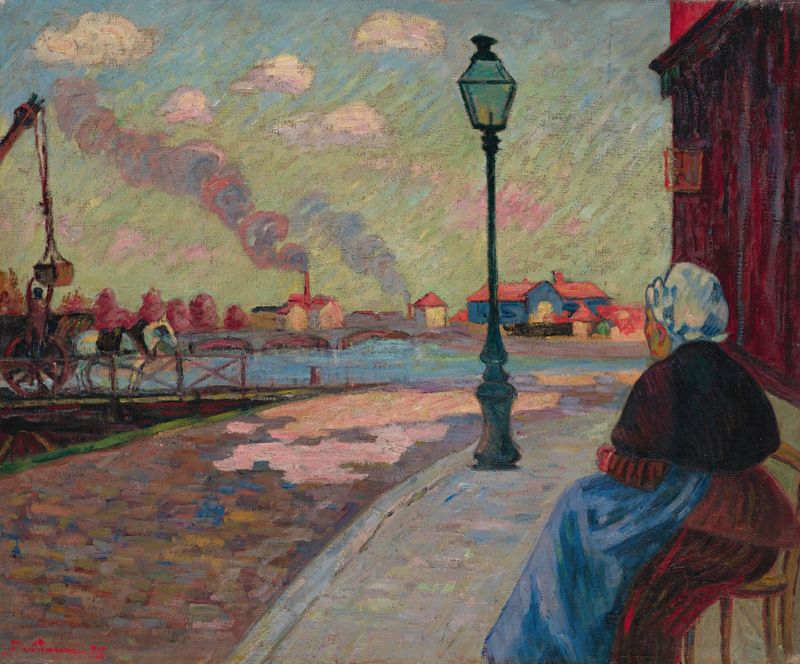
La Seine À Charenton
Armand Guillaumin
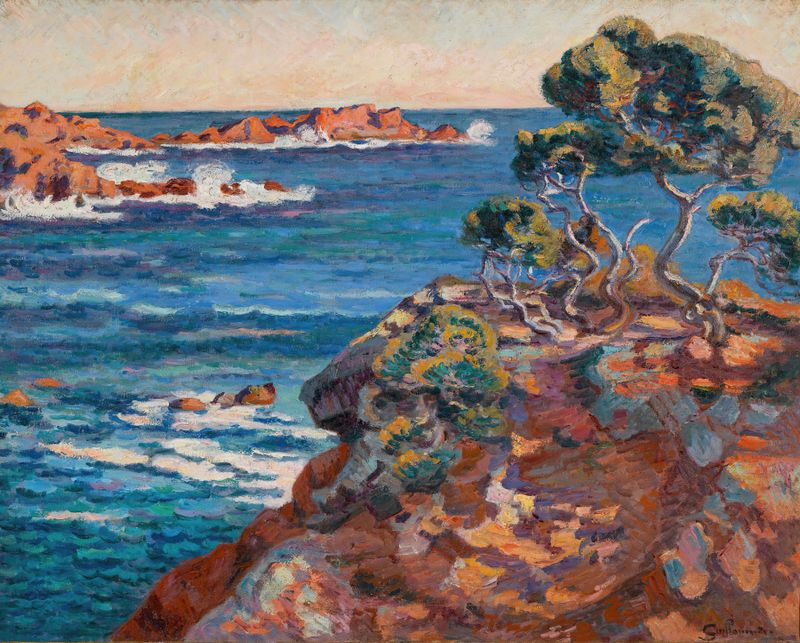
Bord De Mer À Agay
Armand Guillaumin
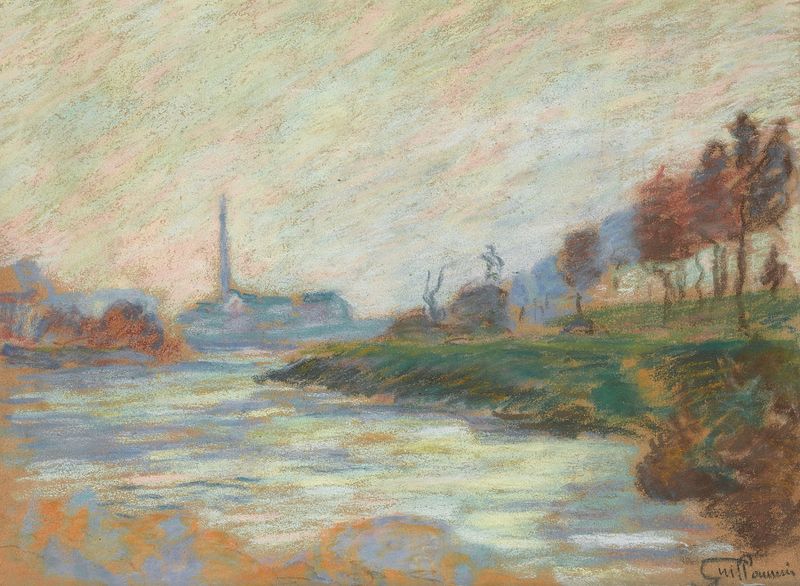
Confluent De La Marne Et De La Seine, Île De La France
Armand Guillaumin

Le Ravin de la folie, vue de Chateau Crozant
Armand Guillaumin
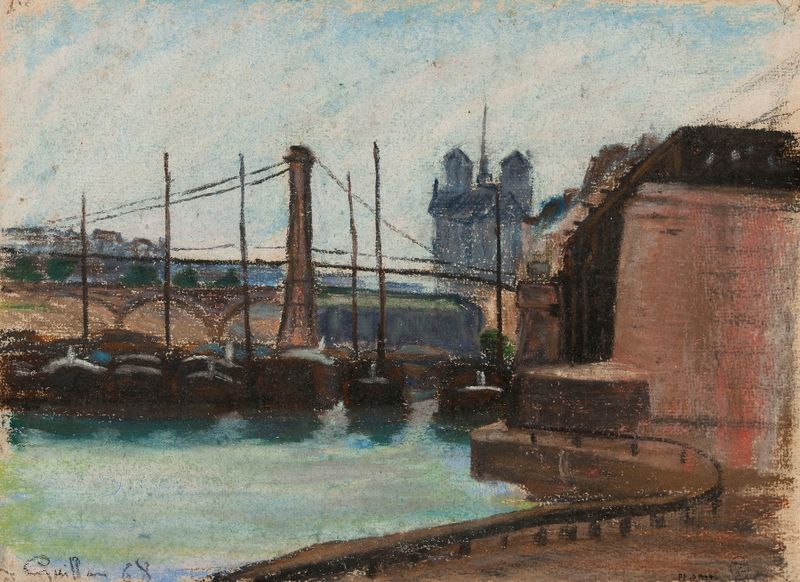
Le Pont d’Austerlitz
Armand Guillaumin

Paysage de Printemps
Armand Guillaumin
Crozant, Le Ravin De La Sedelle À La Folie
Armand Guillaumin
Paysage
Armand Guillaumin

La vallée de la creuse
Armand Guillaumin

L’Eglise Saint-Sulpice, Paris
Armand Guillaumin





