La remise des locomotives aux Batignolles — History & Facts
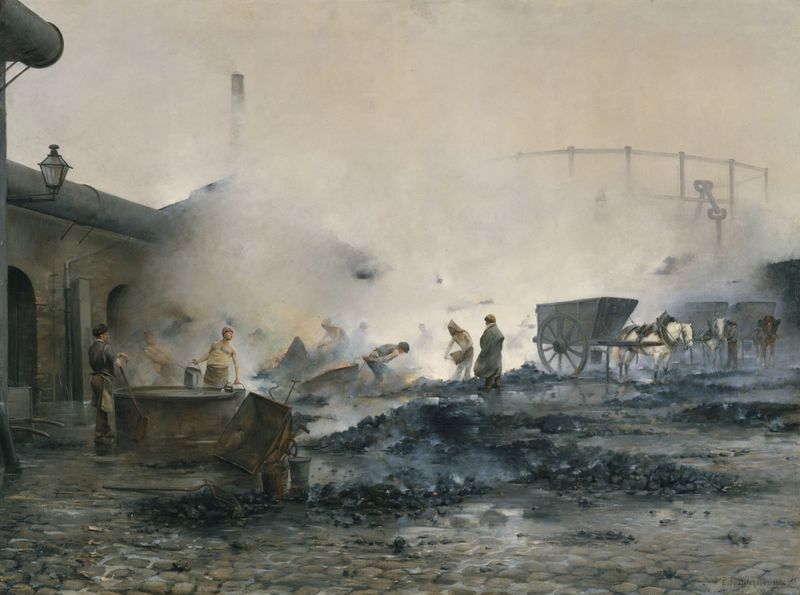
In La remise des locomotives aux Batignolles, the delicate interplay of machinery and artistry unfurls like a dream, revealing the fragile balance between progress and nostalgia. Focus on the intricate details of the locomotives, their gleaming surfaces reflecting the soft light streaming through the workshop’s windows. Notice how the rich hues of brown and gold contrast with the stark metallic tones, creating a sense of warmth amidst the cold steel. The composition draws your eye to the central locomotive, its powerful form encapsulating both industrial might and an almost poetic elegance, inviting you to explore the subtle shadows that dance across its contours. Within the painting lies a poignant tension; the juxtaposition of human endeavor and the relentless march of technology.
Each locomotive stands as a testament to innovation, yet their polished exteriors mask the labor and toil that birthed them. The carefully rendered figures of workers surround these machines, embodying a sense of reverence—part awed spectators, part dedicated artisans—blurring the line between creator and creation. This contradiction hints at a broader commentary on the era, where dreams of progress often came at the cost of simpler lifestyles. In 1891, Delahaye painted this piece during a time of rapid industrialization in France.
As the nation embraced the advancements of the 19th century, artists grappled with their identities in an evolving world. The artist sought to capture the essence of this transformative moment, merging the beauty of machinery with the humanity behind its creation, ultimately reflecting a society on the brink of modernity.